
Desserts
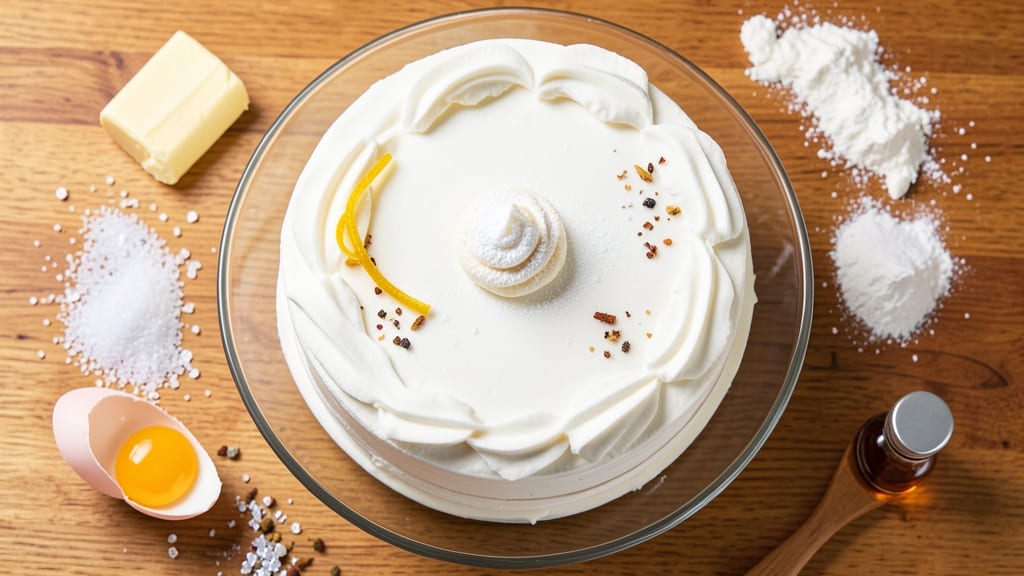
This bakery-quality white cake recipe delivers layers so light they practically disappear on your tongue, with a buttery frosting that melts at the first bite. The secret lies in precise technique—room-temperature ingredients, gentle folding, and a slow bake that creates that signature tender crumb. I've perfected this recipe after years of testing, and it never fails to impress even the most discerning cake lovers.
The foundation starts with a creaming method that incorporates air into the butter and sugar, creating that signature fluffy texture. Cake flour gives the delicate crumb structure without heaviness, while vanilla and a touch of almond extract add subtle depth. The key is patience: folding dry ingredients just until combined preserves that airy quality that makes this cake feel almost ethereal.
What you'll end up with is a cake that's perfectly moist but never soggy, with clean white layers that slice beautifully. The frosting—simple buttery vanilla—sticks to the cake without overwhelming it, creating that classic bakery presentation. Each bite reveals that signature tender crumb and sweet, clean flavor that makes this cake a showstopper.
Perfect for celebrations, special occasions, or simply treating yourself to something extraordinary. The same techniques work for cupcakes or sheet cakes, making this recipe infinitely versatile. Let's get started on creating your bakery-quality masterpiece.
Ingredients for bakery quality white cake
Precision ingredients for bakery-quality white cake with ethereal crumb and velvety frosting.
| Ingredient | Amount | Notes |
|---|---|---|
| Unsalted Butter (room temperature) 🧈 | 1 ½ cups | European-style preferred for flavor |
| Granulated White Sugar 🍚 | 2 ½ cups | Superfine if available for faster dissolving |
| Large Eggs (room temperature) 🥚 | 6 whole | Separate yolks and whites for folding |
| All-Purpose Flour 🌾 | 2 ½ cups | Sifted for light texture |
| Cake Flour 🌾 | 1 ½ cups | Essential for delicate crumb |
| Pure Vanilla Extract 🌿 | 2 tsp | Bourbon-infused for depth |
| Almond Extract 🌿 | ½ tsp | Subtle nutty undertone |
| Baking Powder 🧂 | 2 tsp | Aluminum-free for tender crumb |
| Salt 🧂 | ½ tsp | Fine sea salt preferred |
| Milk (room temperature) 🥛 | 1 cup | Whole milk for richness |
| Unsalted Butter (for frosting) 🧈 | 1 cup | Room temperature, European-style |
| Confectioners' Sugar 🍚 | 4 cups | Sifted for smooth texture |
| Heavy Whipping Cream 🥛 | 1 cup | Cold for stable peaks |
| Vanilla Bean Paste 🌿 | 1 tsp | For authentic vanilla flavor |
The butter is non-negotiable—European-style like Plugrá or Miyoko's delivers that rich, flavorful base. Room temperature is critical; if too cold, it won't cream properly. Sugar quality matters too: Domino Superfine dissolves instantly, creating a smoother batter. Cake flour from Bob's Red Mill gives that signature tender crumb, while all-purpose flour provides structure. For the vanilla, McCormick Pure Vanilla Extract is reliable, but a single vanilla bean yields superior depth. Almond extract should be pure, not imitation—Gourmet Gift Baskets carries a great brand. Pre-sifted flours save time, but if you're doing it yourself, a fine-mesh sieve is worth the investment.
No cake flour? Substitute with 1.5 cups all-purpose flour minus 2 tbsp—it won't be identical but works in a pinch. Short on almond extract? 1/4 tsp almond flavoring does the trick, though real extract adds complexity. For the frosting, powdered sugar from Wholesome Sweeteners dissolves better than store-brand versions. Heavy cream must be cold when whipped—let it sit in the fridge 30 minutes before using. The vanilla bean paste from Madagascar vanilla beans is a game-changer; if unavailable, 1 tsp pure extract suffices. Milk can be swapped for evaporated milk (same richness, less moisture). And for the butter? Ghee works in a bind, though it adds a subtle caramel note.
Store butter and eggs at room temperature for 24 hours before baking to ensure proper creaming. Frosting ingredients should be at room temperature too—microwave butter in 20-second bursts to just soften. The cake keeps well in an airtight container for 3 days at room temperature, or 1 week refrigerated. For longer storage, freeze the unfrosted layers for up to 3 months. Thaw overnight in the fridge before frosting. The frosting? It's best used within 2 days of making—whip it fresh for the most stable peaks. For serving, use a serrated knife for clean slices, and dust with extra powdered sugar if desired.
Why You'll Love This Recipe
- No-Fuss Mixing: I swear by the creaming method here—just butter and sugar until light and fluffy, then eggs one at a time. No electric mixer required (though it helps), and the cake turns out tender every time, even if I’m distracted by the dog.
- Butter-Sugar Magic: That room-temperature butter and sugar combo? Pure science-y goodness. The crumb is moist but never gummy, and the flavor? Rich enough to make store-bought frosting look sad by comparison.
- Occasion-Proof Base: Birthday? Brunch? A last-minute dessert for your boss’s surprise party? This cake handles it all—plain, layered, or as a simple sheet cake. I’ve even used it for savory twists (yes, with herbs) when I’m feeling wild.
- Budget-Friendly Luxury: Uses basic pantry staples—no fancy blends or expensive shortcuts—and a single batch feeds a crowd or gives me leftovers for days. (Pro tip: The cake keeps well wrapped, so I bake one, freeze half, and pretend I’m a genius.)
Step-by-step instructions for bakery-quality white cake
Here's the method I've perfected for achieving that signature bakery texture—light, tender layers with a flawless crumb.
Cream Butter and Sugars to Perfect Lightness
In a stand mixer fitted with the paddle attachment, beat the 1.5 cups unsalted butter (room temperature) and 2.5 cups granulated white sugar on medium speed for 5-7 minutes. You're looking for a pale, fluffy mixture that has nearly doubled in volume and leaves clean streaks on the sides of the bowl when you lift the paddle.
The reason we cream for this duration is to incorporate maximum air—this creates the signature lightness in white cake. I press my finger into the mixture occasionally to check for proper consistency; it should hold a slight indent but still be smooth. If using superfine sugar, this process will be even faster as it dissolves more quickly.
Incorporate Eggs and Extracts Gradually
Add the 6 whole large eggs (room temperature), one at a time, mixing on low speed after each addition until fully incorporated. Then add the 2 teaspoons pure vanilla extract and 0.5 teaspoon almond extract, mixing just until combined. The mixture should be thick and ribbony at this stage.
Adding eggs one at a time prevents the batter from becoming too dense. The almond extract here adds subtle depth that complements the vanilla beautifully. Don't overmix—just until the yolks are fully incorporated and the mixture is smooth and homogeneous.
Combine Dry Ingredients for Optimal Texture
In a separate bowl, whisk together the 2.5 cups all-purpose flour, 1.5 cups cake flour, 2 teaspoons baking powder, and 0.5 teaspoon salt. Sift the dry ingredients directly into the wet mixture on low speed, mixing just until combined. Add the 1 cup milk (room temperature) and mix until the batter is smooth and just barely holds its shape when dropped from a spoon.
The combination of all-purpose and cake flour gives us that perfect balance of structure and tenderness. Cake flour, with its lower protein content, creates a more delicate crumb, while the all-purpose flour provides just enough structure. Mixing on low speed prevents developing too much gluten, which would make the cake dense.
Bake in Two Perfect Layers
Divide the batter evenly between two 9-inch round cake pans lined with parchment paper and greased with butter. Bake in a preheated 350°F oven for 25-30 minutes, or until a toothpick inserted in the center comes out clean and the tops spring back gently when touched. Rotate the pans halfway through baking for even browning.
Don't overbake—white cake is best when it's just set in the center. The cake should have a slightly domed top and pull away cleanly from the sides of the pan. Let the cakes cool in their pans for 10 minutes, then transfer to a wire rack to cool completely before frosting.
Prepare the Buttery Vanilla Frosting
In a stand mixer fitted with the paddle attachment, beat the 1 cup unsalted butter (for frosting) on medium speed until smooth and creamy. Gradually add the 4 cups confectioners' sugar, mixing on low speed until combined. Add the 1 cup cold heavy whipping cream and 1 teaspoon vanilla bean paste, mixing until smooth and fluffy.
For the smoothest frosting, make sure all ingredients are at the correct temperatures. The cold heavy cream helps create stable peaks, while the vanilla bean paste adds that professional bakery quality vanilla flavor. Beat the frosting until it's light and spreadable but still holds its shape when piped.
Pro Tips For Making Bakery Quality White Cake
- CREAM BUTTER AND SUGAR LONG: I used to mix these together for 30 seconds and call it done. Wrong. Whip the butter and sugar until it’s pale, not just fluffy—about 3-4 minutes with a stand mixer. This lightens the texture and makes the cake tender, not dense. (Yes, your arm will hate you, but the result is worth it.)
- SIFT FLOURS TOGETHER: Don’t just dump the flour and cake flour into the bowl—sift them together first. This aerates the dry ingredients and prevents lumps, which is especially important for a smooth white cake. I learned this the hard way when my first batch had a weird grainy texture.
- STOP WHEN THE CENTER SPRINGS BACK: Overbaking is the enemy of a white cake. Test doneness by gently pressing the center—it should spring back slowly, not immediately. If it bounces back fast, keep baking; if it leaves a dent, you’ve gone too far. (And no, the recipe’s time isn’t always accurate.)
- USE A LITTLE LESS FLOUR: Cake flour is finicky, and too much makes the texture tough. Weigh it, don’t scoop, and if your batter looks thin (but not soupy), trust it. My grandmother’s trick: Add the cake flour first, then the all-purpose, and resist the urge to "fix" a runny batter by tossing in extra flour.
Best sauces and condiments for bakery quality white cake
Classic Vanilla Glaze
For a simple yet elegant finish, brush warm layers with a vanilla glaze made from 1 cup powdered sugar, 2 tablespoons milk, and 1 teaspoon vanilla extract. Whisk until smooth and spread immediately after baking—this adds moisture and a subtle sweetness that enhances the cake's delicate flavor. I like to add ½ teaspoon lemon zest for a bright twist that cuts through the richness. 💛
Citrus Curd Filling
Elevate your white cake with a lemon or orange curd between layers. Use 1 cup curd (homemade or store-bought like Smucker's) for a tangy contrast. The acidity balances the sweetness while adding a professional bakery touch. For extra flair, swirl the curd with a knife before frosting. A ½-inch layer is perfect—too much can make the cake soggy.
Chocolate Ganache Drizzle
For a decadent twist, drizzle melted dark chocolate ganache over the frosted cake. Use ½ cup heavy cream heated until steaming, poured over 8 ounces chopped dark chocolate (60-70% cocoa). Let cool slightly before drizzling—this adds a sophisticated contrast to the buttery frosting. I recommend Ghirardelli 60% dark chocolate for its smooth texture. ✨
Berry Compote Topping
Fresh or frozen berries (like strawberries, raspberries, or blueberries) can be simmered with 2 tablespoons sugar and 1 teaspoon lemon juice for 10 minutes to create a vibrant compote. Spread a thin layer over the frosting before serving—this adds a pop of color and fruity acidity that complements the cake beautifully. Use organic berries for the best flavor.
Caramel Drizzle Finish
Add a salted caramel drizzle for a luxurious touch. Heat ½ cup granulated sugar in a saucepan until melted, then slowly whisk in ¼ cup heavy cream and 2 tablespoons butter. Cool slightly and drizzle over the frosted cake. Sprinkle with flaky sea salt (like Maldon) for a gourmet finish. This pairs perfectly with the buttery frosting and adds a sweet-salty balance. 🌟
Nutrition facts
Frequently asked questions
Why does this white cake turn out so light compared to other recipes?
The secret lies in the creaming method and room-temperature ingredients. We beat butter and sugar for 5-7 minutes to incorporate maximum air, and using cake flour (not all-purpose) creates that signature delicate crumb. The gentle folding technique preserves that airy structure throughout baking.
Can I substitute cake flour if I don't have any?
Yes! Replace 1.5 cups cake flour with 1.5 cups all-purpose flour minus 2 tablespoons. The texture won't be identical but will still be light. For best results, sift the flour mixture thoroughly to mimic cake flour's fine texture.
How do I prevent my white cake from cracking?
Cracking usually happens from overmixing or temperature fluctuations. Mix dry ingredients just until combined, avoid opening the oven door during baking, and let the cake cool completely in the pan for 10 minutes before removing. Also ensure your butter and eggs are truly room temperature.
What's the best way to store leftover white cake?
Keep unfrosted layers in an airtight container at room temperature for 3 days or refrigerated for 1 week. For longer storage, freeze unfrosted layers for up to 3 months. Thaw overnight in the fridge before frosting. The frosting is best used within 2 days for optimal texture.
Can I make this cake in a different pan size?
Yes, but adjust baking time accordingly. For a 9x13-inch pan, bake 25-30 minutes at 350°F and increase flour by ½ cup. For cupcakes, use 24-26 minutes in a 350°F oven. Always use parchment liners to prevent sticking.