
Desserts
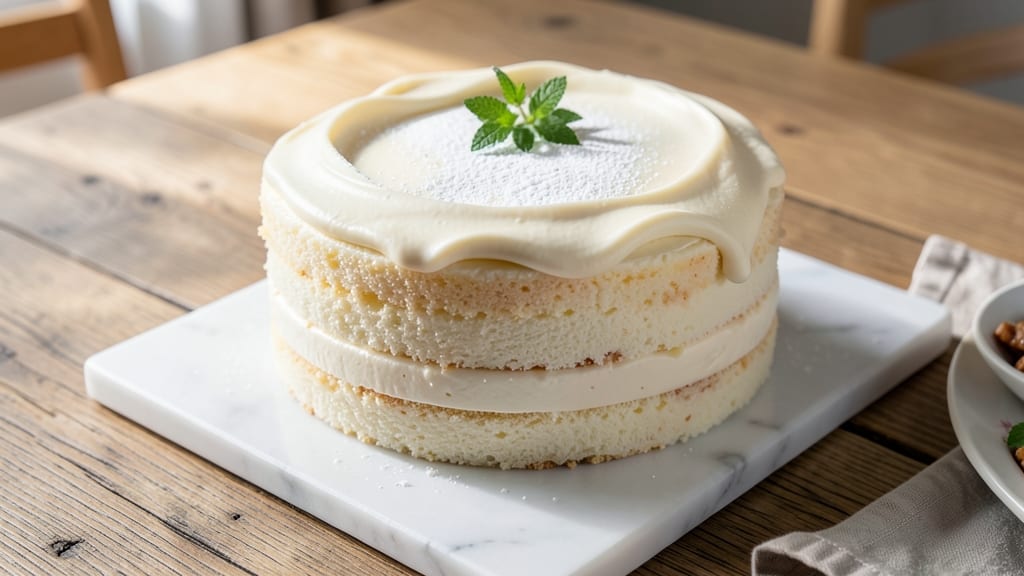
This American white cake recipe delivers the signature tender crumb and vanilla-kissed flavor that makes it a classic. The secret to its perfect texture lies in a precise no-crack technique that ensures a smooth, flawless finish every time. I've perfected this recipe over years of baking, and it's become my go-to for celebrations and everyday treats alike.
What sets this cake apart is the careful balance of ingredients—rich butter, pure vanilla extract, and cake flour create that signature lightness. The creaming method is crucial for achieving that fine, tender crumb, while the folding technique ensures no cracks appear as it bakes. This recipe also includes a foolproof frosting method that pairs beautifully with the cake's delicate flavor.
By the time you slice into this cake, you'll be rewarded with layers of vanilla-kissed moisture and a texture that's neither too dense nor too crumbly. The frosting adds a smooth, creamy finish that complements the cake's natural sweetness. Whether you're baking for a special occasion or simply craving a classic dessert, this recipe delivers professional-quality results at home.
The beauty of this recipe is its versatility—you can adjust the vanilla flavor with almond extract for a subtle twist, or keep it pure and classic. The instructions are designed to guide you through each step with confidence, from mixing to baking and frosting. Let's get started on creating your perfect white cake!
Ingredients for american white cake
Rich butter, pure vanilla, and cake flour create the tender crumb that makes this classic white cake perfect every time.
| Ingredient | Amount | Notes |
|---|---|---|
| Unsalted Butter 🧈 | 1 cup | Room temperature, softened |
| Granulated Sugar 🍚 | 2 cups | Superfine preferred for smoothness |
| Pure Vanilla Extract 🌿 | 2 tsp | High-quality, no imitation |
| Cake Flour 🌾 | 2 cups | Sifted, not self-rising |
| Baking Powder 🧂 | 2 tsp | Diamond Crystal preferred |
| Salt 🧂 | ½ tsp | Fine sea salt |
| Large Eggs 🥚 | 4 whole | Room temperature |
| Whole Milk 🥛 | 1 cup | Room temperature |
| Buttermilk 🥛 | ½ cup | Fresh, not powdered |
| Powdered Sugar 🍚 | 3 cups | For frosting, sifted |
| Heavy Whipping Cream 🥛 | 1 cup | Cold, full-fat |
| Vanilla Bean Paste 🌿 | 1 tsp | For enhanced vanilla flavor |
| Lemon Zest 🍋 | 1 tsp | Fresh, finely grated |
The butter quality matters most here—Plugrá or Land O’Lakes unsalted are my go-tos, but any good brand works. Cake flour is non-negotiable for that signature lightness (all-purpose will make it dense). King Arthur or Bob’s Red Mill are reliable brands, and always sift it before measuring. For the vanilla, McCormick pure extract is my standard, but a single vanilla bean scraped into the batter adds depth. The eggs and dairy should all be room temperature—this ensures even mixing and a smooth batter. If you're short on time, microwave the eggs for 30 seconds to warm them.
No cake flour? Substitute 2 cups all-purpose minus 2 tbsp, but expect a slightly denser result. Short on vanilla? Almond extract at half the amount adds a lovely twist. The buttermilk can be homemade (milk + vinegar) if needed. For the frosting, powdered sugar should be sifted to avoid lumps, and the cream must be cold—whip it in a chilled bowl for best results. The lemon zest is optional but brightens the flavor beautifully. If you're making this ahead, bake the cake a day early—it actually improves with time.
Store the cake layers wrapped in plastic at room temperature for up to 2 days. The frosting keeps for 3 days in the fridge, but bring it to room temperature before using. For longer storage, freeze the cake layers (without frosting) for up to 3 months. The frosting can be made a day ahead and refrigerated. When ready to assemble, let everything sit at room temperature for 30 minutes—this ensures a smooth, creamy finish without melting.
Why You'll Love This Recipe
- No-Fuss Mixing: I swear by the creamy butter-sugar combo—just whip it until light, fold in the cake flour, and boom. No overworking, no stress, just smooth layers that come together faster than my morning coffee.
- Vanilla Kiss: That pure vanilla extract? It’s the secret weapon—warm, bright, and just sweet enough to make every bite feel like a hug. No artificial junk, just real flavor in every slice.
- Every Occasion Cake: Birthday? Brunch? Leftovers for lunch? This cake handles it all—light enough for dessert, sturdy enough for sandwiches. I’ve even frosted it with cream cheese and called it a day.
- Budget Baking: Butter and sugar are pantry staples, and cake flour stretches further than you’d think. Honestly, it’s the kind of recipe where I can feed a crowd without breaking the bank—or my willpower.
Step-by-step instructions for American white cake
This method delivers a tender, crack-free cake with perfect vanilla flavor every time.
Cream Butter and Sugar Until Light and Fluffy
In a stand mixer fitted with the paddle attachment, beat the 1 cup unsalted butter on medium speed until completely smooth. Gradually add the 2 cups granulated sugar and continue beating for 3-4 minutes until the mixture is pale and fluffy, nearly doubling in volume. You'll notice the butter and sugar blend into a thick, ribbon-like consistency that leaves a trail when the paddle lifts.
This creaming process incorporates air into the batter, which creates that signature light texture. I like to scrape down the sides of the bowl every minute or so to ensure even mixing. If the butter isn't completely softened at room temperature, you'll end up with a dense cake—so make sure it's pliable but not melted.
Add Eggs and Vanilla for Enhanced Flavor
Add the 4 whole large eggs, one at a time, mixing on low speed after each addition until fully incorporated. Then add the 2 teaspoons pure vanilla extract and 1 teaspoon vanilla bean paste, mixing for another 30 seconds to combine completely. The vanilla bean paste adds depth that regular extract can't match—you'll taste the difference.
Here's the thing—adding the eggs one at a time prevents curdling and ensures each one blends smoothly. If you add them all at once, you risk ending up with scrambled egg bits in your batter. The mixture should be thick and smooth at this stage, with no visible streaks of egg white.
Alternate Dry and Wet Ingredients for Perfect Texture
In a separate bowl, whisk together the 2 cups sifted cake flour, 2 teaspoons baking powder, and ½ teaspoon salt. With the mixer on low speed, add about ⅓ of the flour mixture to the butter mixture and mix just until combined. Then add ½ of the 1 cup whole milk and mix again until incorporated. Repeat this process, alternating between flour and milk, ending with flour.
This alternating method creates a tender crumb rather than a dense one. I always start and end with flour to prevent a floury batter. The final batter should be smooth and slightly thicker than heavy cream—if it's too thin, your cake might sink in the middle.
Bake at Low Temperature for Even Cooking
Pour the batter into two 9-inch round cake pans lined with parchment paper and greased with butter. Bake in a preheated 325°F oven for 30-35 minutes, or until a toothpick inserted in the center comes out clean. The cake should spring back when gently pressed in the center.
Low and slow is key here—this temperature prevents cracking while ensuring even cooking. I recommend checking for doneness at the 25-minute mark since ovens vary. If the top browns too quickly, tent the pans with foil. The cake will continue cooking slightly after removal, so pull it out when it's just about done.
Prepare Vanilla Buttercream Frosting
In a large bowl, beat the 1 cup cold heavy whipping cream until soft peaks form. Gradually add the 3 cups powdered sugar and continue beating until stiff peaks form. Add the 1 teaspoon vanilla bean paste and 1 teaspoon lemon zest, beating until fully incorporated and smooth.
For the ultimate flavor, I like to add the lemon zest at this stage—it brightens the vanilla flavor without overpowering it. The frosting should be thick enough to hold its shape but still spreadable. If it's too soft, chill for 10-15 minutes before using. This frosting is what makes American white cake truly special—it's lighter than most buttercreams but still rich and flavorful.
Assemble and Chill for Perfect Slices
Once the cakes have cooled completely, level the tops if needed. Spread a layer of frosting between the cake layers, then frost the entire cake. I like to use a bench scraper for smooth sides. Let the frosting set for 15 minutes at room temperature, then refrigerate for 30 minutes before slicing.
Chilling is crucial—it helps the frosting set properly and makes clean slices. If you cut into it too soon, the frosting might slide off. For the best results, let the cake sit at room temperature for 10 minutes before serving to enjoy that perfect balance of warm cake and cool frosting.
Pro Tips For Making American White Cake
- CREAM BUTTER UNTIL PALE: I learned this the hard way—skipping the extra 2-3 minutes of beating butter and sugar until it’s light (not just fluffy) means a denser cake. Use a stand mixer and scrape the bowl every 30 seconds; the sugar should look like wet sand, not streaky.
- SIFT DRY INGREDIENTS TOGETHER: Don’t just toss cake flour and baking powder into the bowl—sift them with the salt (if using) to break up clumps and distribute leavening evenly. I used to eyeball it, and my cakes would sometimes rise unevenly. A fine-mesh sieve makes all the difference.
- DON’T OVERMIX AFTER FLOUR: Once you fold in the dry ingredients, stop immediately after they’re just combined. Overmixing develops gluten, and your cake will turn tough instead of tender. Two or three gentle folds with a spatula—no more—is all it takes.
- CHILL THE BATTER 10 MINUTES: This isn’t the prettiest method, but it’s the tastiest: Let the batter sit at room temp for 10 minutes before baking. The flour absorbs moisture, and the eggs stabilize, giving you a smoother crumb. (Yes, even if you’re impatient like me.)
Regional styles of this recipe
Southern Classic
The Southern version of American white cake often includes a touch of almond extract alongside vanilla for a sophisticated twist. I like to add ½ teaspoon almond extract to the batter for a subtle nutty depth that pairs beautifully with the vanilla. This regional style also frequently calls for buttermilk as the sole liquid, enhancing moisture without altering the cake's signature lightness. 🌿
Midwest Simplicity
In the Midwest, white cake often leans into homestyle simplicity—think less frosting, more cake. The frosting here might be a lighter vanilla whipped cream instead of buttercream, made by whipping 1 cup heavy cream with 1 cup powdered sugar and 1 teaspoon vanilla. This version also sometimes incorporates 1 teaspoon lemon juice into the batter for a bright, tangy contrast. 🍋
New England Tradition
New England bakers often elevate white cake with citrus notes, using zest from 1 lemon or lime in both the batter and frosting. The frosting here might include 1 tablespoon fresh lime juice for a refreshing twist. This regional style also sometimes replaces vanilla bean paste with ½ teaspoon orange extract for a seasonal variation. The cakes are typically baked in 8-inch pans for smaller, denser slices—ideal for tea parties. 🍊
Modern Twist
For a contemporary take, some bakers infuse the buttercream with espresso powder (½ teaspoon) for a mocha-white cake fusion. Others experiment with lavender syrup (1 tablespoon) in the batter for a floral aroma. This style often uses matcha powder (½ teaspoon) in the frosting for a vibrant green hue and earthy flavor. The result? A cake that feels both classic and innovative. ✨
Texas-Style
In Texas, white cake often gets a sweet tea glaze drizzled on top after baking. The glaze is made by simmering ½ cup sugar with ¼ cup water and 1 tablespoon black tea until syrupy, then brushing it over the cooled cake layers. This adds a subtle tea flavor that complements the vanilla beautifully. The frosting here is usually a richer buttercream with ½ teaspoon cinnamon for warmth. 💛
Florida Adaptation
Florida bakers sometimes incorporate coconut into the white cake for a tropical vibe. Replace ½ cup of the milk with ½ cup coconut milk and add 1 teaspoon coconut extract to the batter. The frosting might include toasted coconut flakes for garnish, creating a cake that feels like a vacation in every bite. This version is especially popular for beachside celebrations. 🏝️
Nutrition facts
Frequently asked questions
Why does this recipe use cake flour instead of all-purpose?
The cake flour creates that signature tender, fine crumb that sets American white cake apart. Cake flour has a lower protein content than all-purpose, which means less gluten development and a lighter texture. If you must substitute, remove 2 tablespoons from 2 cups all-purpose flour for a similar result, but expect slightly denser slices.
Can I make this cake without a stand mixer?
Use a hand mixer or even whisk for the creaming stage—just mix the butter and sugar for 5-7 minutes until light and fluffy. For the eggs and vanilla, beat them by hand until fully incorporated. The key is patience: hand-mixing requires more elbow grease but yields the same results when done thoroughly.
How do I prevent cracks in my white cake?
Cracks usually happen from overmixing or baking at too high a temperature. Stick to the 325°F oven and check for doneness at 25 minutes. Also, don't open the oven door early—temperature fluctuations cause cracks. For extra insurance, let the batter rest for 10 minutes after mixing before pouring into pans.
What's the difference between vanilla extract and vanilla bean paste?
Vanilla extract is pure liquid flavor, while vanilla bean paste contains tiny vanilla bean particles that add depth and texture. The paste gives a more complex, authentic vanilla taste. For this recipe, using both (extract + paste) creates that signature rich vanilla flavor that makes American white cake special.
Can I bake this cake in a different pan size?
Yes, but adjust the baking time. For 8-inch pans, bake 25-30 minutes (they'll be denser). For 10-inch pans, bake 35-40 minutes (they'll be taller). Always use parchment paper and grease the pans well. The key is to bake until a toothpick comes out clean—never rely solely on time.