
Desserts
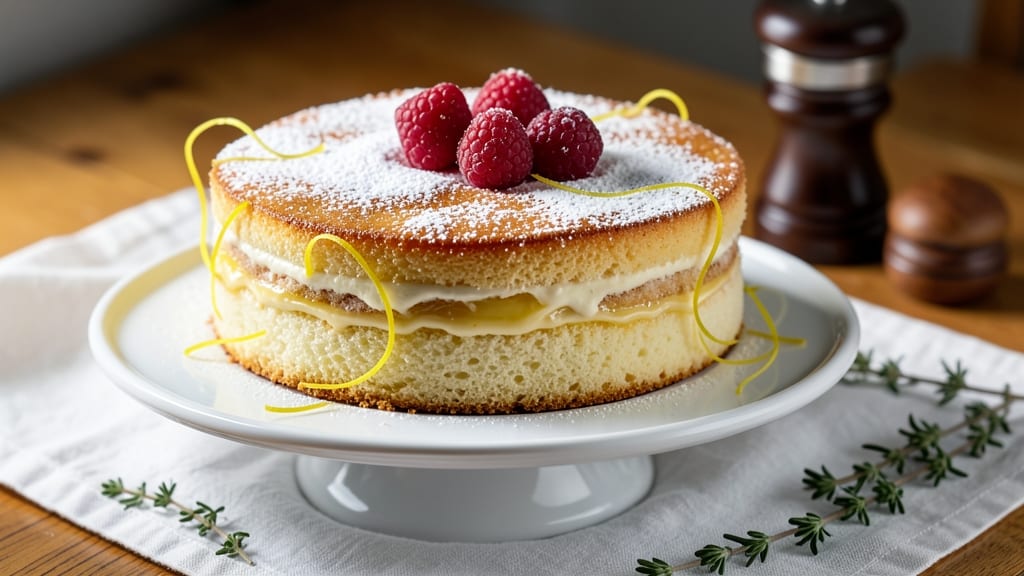
This Asian style sponge cake recipe delivers the perfect balance of light, airy layers and bright citrus notes that will elevate any dessert table. 💛 The secret lies in gently folding egg whites into the batter, creating a delicate yet sturdy structure that holds up beautifully when sliced. I developed this recipe after years of experimenting with traditional Japanese castella and Thai foolish cake techniques, refining it to be both authentic and foolproof for home bakers.
The key to achieving that signature Asian sponge texture is patience—whipping the egg whites to soft peaks and folding them in just enough to maintain airiness without deflating the batter. This recipe uses a simple citrus glaze that adds a refreshing contrast to the tender crumb, while optional fillings like coconut or matcha powder infuse each bite with distinctive cultural flavors. Baking at a precise 325°F ensures even cooking without overbrowning.
What you'll end up with is a cake that's impossibly light yet sturdy enough to hold delicate toppings, with a subtle citrus aroma that lingers enticingly. The layers separate cleanly, revealing a uniform crumb that's neither dry nor gummy. This is the kind of dessert that feels special enough for celebrations but simple enough for everyday indulgence.
Perfect for tea time, dessert buffets, or as a showstopper centerpiece, this sponge cake adapts beautifully to various flavors. Try it with a dusting of powdered sugar, fresh berries, or a drizzle of honey for an extra touch of elegance. Here's how to make it—step by step.
Ingredients for asian style sponge cake
Light, delicate layers meet bright citrus—these 13 ingredients craft an Asian-inspired sponge that's restaurant-worthy at home.
| Ingredient | Amount | Notes |
|---|---|---|
| Large Egg Whites 🥚 | 8 whole | Room temperature for best volume |
| Granulated Sugar 🍚 | 1 ½ cups | Superfine preferred for smooth texture |
| All-Purpose Flour 🌾 | 1 ½ cups | Sifted for lightness |
| Unsalted Butter 🧈 | ¾ cup | Room temperature, cubed |
| Fresh Lemon Juice 🍋 | ½ cup | Strained for smooth glaze |
| Powdered Sugar 🍚 | 1 cup | For citrus glaze |
| Vanilla Extract 🌿 | 1 tsp | Pure vanilla preferred |
| Baking Powder 🧂 | 1 ½ tsp | Aluminum-free for tender crumb |
| Salt 🧂 | ¼ tsp | Fine sea salt |
| Cream of Tartar 🧂 | ¼ tsp | Stabilizes egg whites |
| Fresh Lemon Zest 🍋 | 1 tbsp | Fine grated |
| Coconut Flakes 🥥 | ½ cup | Toasted for filling (optional) |
| Matcha Powder 🍃 | 2 tsp | Ceremonial grade for filling (optional) |
The egg whites are non-negotiable—room temperature makes all the difference. Store-bought egg whites work perfectly (no need to separate), but if using whole eggs, separate carefully and remove any yolk traces. For the sugar, superfine dissolves faster, but regular granulated works if pulsed briefly in a food processor. The butter should be soft but not melted—press a finger into it, it should leave a slight indentation. European-style butter like Plugrá has higher fat content, ideal for tender layers. Sift the flour and baking powder together to avoid lumps, which can weigh down the delicate structure.
No superfine sugar? Pulse regular sugar in a blender for 30 seconds to break up grains. Running short on lemon juice? Lime juice works at the same ratio, though flavor shifts slightly. The matcha and coconut are optional but transform this into a true cultural experience—Japanese matcha from Marukyu or Ippodo delivers the most vibrant green hue. For the glaze, powdered sugar should be sifted to avoid graininess. If you prefer a glossier finish, add 1 tsp water to the glaze mixture. The citrus zest can be dried and stored for up to 6 months in an airtight container.
Store the cake in an airtight container at room temperature for up to 3 days, or refrigerate for 5 days if using fillings. The glaze sets best at room temperature, so bring the cake to that before serving. For longer storage, freeze the unfrosted cake for up to 3 months—thaw overnight before adding glaze. The layers separate cleanly when sliced, revealing that signature Japanese castella texture. Leftovers? Toast slices lightly for a breakfast treat—trust me, it's even better the second day.
Why You'll Love This Recipe
- No Whisk Fatigue: I swear by this method—just egg whites, sugar, and a hand mixer until stiff peaks form. No kneading, no waiting for dough to rise, just 10 minutes of work that feels like a victory.
- Lemon Butter Magic: That bright lemon juice cuts through the richness of the butter, giving it this just-right balance—like a golden sponge cake hugging sunshine. Honestly, it’s the secret weapon in a simple recipe.
- Layering Like a Pro: Slice it thin for tea sandwiches, cube it for parfaits, or stack it with jam for a quick dessert. I’ve even used the leftovers in overnight oats—because why waste perfection?
- Pantry Staple Power: Five ingredients, most of which you already own. No specialty flour, no obscure spices—just what’s in your cupboard. My wallet thanks me every time I bake this.
Step-by-step instructions for Asian style sponge cake
Here's how to create delicate, citrus-infused layers with a signature Asian texture.
👨🍳 Step 1: Whip Egg Whites to Stiff Peaks
Begin by separating the 8 whole large egg whites from the yolks, keeping them in a completely dry bowl. Add the 0.25 tsp cream of tartar and 0.25 tsp salt to the egg whites. This combination stabilizes the foam and prevents deflation. Using a stand mixer with the whisk attachment, beat on low speed until frothy.
Gradually add the 1.5 cups granulated sugar, 1 tbsp at a time, increasing the speed to medium-high. Beat for 5-7 minutes until the meringue forms glossy, stiff peaks that hold their shape when the whisk is lifted. The mixture should look thick and pale—this is critical for light, airy layers. If you see sugar grains, keep whipping until fully dissolved.
🍳 Step 2: Fold in Dry Ingredients Gently
In a separate bowl, sift together the 1.5 cups all-purpose flour and 1.5 tsp baking powder. This ensures even distribution and prevents lumps. Using a spatula, gently fold one-third of the flour mixture into the egg white mixture, being careful not to deflate the meringue. The batter should resemble thick, glossy ribbon.
Add the remaining flour in two more batches, folding just until combined. Avoid overmixing—this is the secret to maintaining that signature Asian sponge cake texture. The final batter should be thick but pourable, with no visible streaks of flour. Set aside while you prepare the citrus glaze.
🍳 Step 3: Prepare the Citrus Glaze
In a small bowl, whisk together the 1 cup powdered sugar, 0.5 cup fresh lemon juice, and 1 tsp vanilla extract until smooth. Strain through a fine-mesh sieve to remove any pulp. This glaze will keep the cake moist and add that signature citrus brightness. Set aside until needed.
In a separate small bowl, mix the 0.75 cup unsalted butter with the 1 tbsp fresh lemon zest until fully incorporated. This butter-lemon mixture will be used to fill between layers. Keep both mixtures at room temperature for easy spreading.
🥘 Step 4: Bake and Assemble Layers
Preheat your oven to 350°F. Line three 6-inch round cake pans with parchment paper, then grease lightly with butter. Divide the batter evenly among the pans. Bake for 18-22 minutes or until the tops spring back when touched gently and a toothpick inserted comes out clean. Rotate the pans halfway through for even baking.
Allow the cakes to cool in the pans for 5 minutes, then transfer to a wire rack to cool completely. Once cooled, level the tops if needed. For the filling, spread 1 tbsp of the butter-lemon mixture between each layer, then drizzle with the citrus glaze. Repeat with the remaining layers, finishing with glaze on top. Chill in the refrigerator for at least 2 hours before serving.
🍽️ Step 5: Optional Matcha or Coconut Variations
For a matcha variation, whisk the 2 tsp matcha powder with 2 tbsp hot water to form a paste, then fold into the butter-lemon mixture. Spread this between layers instead of plain butter. For coconut lovers, toast the 0.5 cup coconut flakes in a dry pan over medium heat for 3-4 minutes until golden, then sprinkle between layers before adding glaze.
The cake is best served at room temperature, allowing the flavors to meld. Each slice should reveal light, airy layers with a tender crumb and bursts of citrus or earthy matcha. Store leftovers covered in the refrigerator for up to 3 days, bringing to room temperature before serving.
Pro Tips For Making Asian Style Sponge Cake
- Fold in the butter last: Whisk the butter into the egg whites after they’ve reached stiff peaks—this keeps the cake tender instead of dense. I used to mix it in early, and the texture suffered. Wait until the last 30 seconds of folding, and the crumb stays light.
- Use room-temperature eggs: Cold eggs won’t whip properly, and that’s a recipe for a flat, sad cake. Pop the whites (and yolks, if separating) in a warm (not hot) spot for 20–30 minutes first. Trust me, the difference in volume is night and day.
- Don’t overmix the flour: Once you fold in the sifted flour, stop mixing the second everything’s combined. Overworking it develops gluten, and your cake turns into a chewy brick instead of a fluffy sponge. Two gentle turns with a spatula is all it takes.
- Add lemon juice gradually: Dump all the lemon juice in at once, and the acid can deflate the egg whites faster than you can say "collapsed cake." Start with half, taste, then add the rest—just enough to brighten, not overpower. (And yes, fresh lemon juice matters; powdered won’t cut it.)
Regional styles of asian style sponge cake
Japanese Castella
This classic Japanese sponge cake, known as castella, originated in Nagasaki and became a symbol of Portuguese influence. The key difference is the absence of citrus glaze—instead, castella relies on a light, airy crumb achieved by whipping egg whites to stiff peaks and baking at 325°F for 45-50 minutes in a round, shallow pan. For authenticity, brush the baked cake with sweetened condensed milk while warm, then let it cool completely. The result is a moist, dense crumb with a subtle sweetness that pairs beautifully with green tea. 🌸
Thai Foolish Cake
The Thai version, called foolish cake, incorporates coconut milk into the batter for a richer texture and often includes pandan leaves for a fragrant aroma. To adapt this recipe, replace ½ cup of the egg whites with ¼ cup coconut milk and add 1 tsp pandan extract (or steep 1 pandan leaf in ¼ cup warm milk for 10 minutes). Bake at 350°F for 20-25 minutes in 8-inch pans for a taller, denser cake. Top with toasted coconut flakes and a drizzle of palm sugar syrup for a distinctly Thai touch. 🥥
Singaporean Kaya Toast
While not a cake, kaya toast inspired this recipe’s citrus and coconut elements. For a kaya-inspired version, reduce the baking powder to 1 tsp and increase the butter to 1 cup for a denser crumb. After baking, spread 2 tbsp coconut oil mixed with ½ cup brown sugar and 1 tsp cinnamon between layers. Toast slices lightly in butter for a buttery, caramelized finish—perfect with soft-boiled eggs and kopi (Singaporean coffee). This version is ideal for breakfast or brunch. ☕
Korean Yugwa
Korean yugwa (pine nut cake) blends sweet and nutty flavors, making it a great variation. Replace ½ cup of the flour with ½ cup ground pine nuts and fold in ¼ cup finely chopped toasted pine nuts before baking. Add 1 tsp honey to the citrus glaze for depth. Bake at 325°F for 25-30 minutes in 6-inch pans for a moist, nutty crumb. Top with whipped cream and honeycomb for a luxurious finish. This version is a crowd-pleaser at celebrations like Chuseok (Korean harvest festival). 🌰
Filipino Bibingka
For a festive twist, infuse the batter with ube (purple yam) or langka (jackfruit). Replace ½ cup of the flour with ½ cup ube halaya (purple yam jam) or ½ cup mashed ripe jackfruit. Add 1 tsp coconut extract and reduce the lemon juice to ¼ cup. Bake at 350°F for 20-25 minutes in greased loaf pans for a moist, vibrant cake. Serve warm with latik (coconut curds) and butter—a staple during Christmas season in the Philippines. 🎄
Malaysian Pandan Cake
Malaysian pandan cake is fragrant and vibrant, thanks to pandan extract. Replace the vanilla extract with 1 tsp pandan extract (or steep 1 pandan leaf in ¼ cup warm milk for 10 minutes). Add ½ cup shredded coconut to the batter and bake at 325°F for 30-35 minutes in 8-inch pans. Top with toasted coconut flakes and a pandan-infused glaze (mix ½ cup powdered sugar with 2 tbsp pandan syrup). This cake is a staple at weddings and festive gatherings. 🌿
Nutrition facts
Frequently asked questions
Why does this Asian sponge cake need such stiff egg whites?
The stiff peaks are essential for that signature light, airy texture found in Japanese castella and other Asian sponge cakes. When folded gently into the batter, they create thousands of tiny air pockets that give the cake its signature delicate crumb. If your egg whites don't hold stiff peaks, try using a clean, dry bowl and adding cream of tartar—it stabilizes the foam and prevents collapse.
Can I make this cake without a stand mixer?
Use a hand mixer or even a whisk—just be patient. Whip the egg whites on high for 8-10 minutes until they hold stiff peaks. For the flour folding, use a spatula or large spoon—work quickly but gently to avoid deflating the batter. The key is to fold just until combined, not until fully mixed.
What if my cake cracks or sinks in the middle?
Cracking often happens if the oven temperature fluctuates or the cake bakes too long. For prevention: Preheat your oven fully and use an oven thermometer—Asian sponge cakes need precise 325-350°F heat. If it sinks, you may have overmixed the batter or opened the oven door too soon. Let the cake cool completely in the pan before removing.
How do I store leftovers to keep them fresh?
Wrap the cake tightly in plastic wrap or store in an airtight container at room temperature for 2-3 days. For longer storage, refrigerate for up to 5 days—bring to room temperature before serving. The glaze will keep the layers moist, but avoid storing with fillings like coconut or matcha for more than 2 days—they can make the cake soggy.
Can I substitute the citrus glaze with something else?
Yes! Try a honey glaze (mix ½ cup honey with 2 tbsp hot water), palm sugar syrup (common in Thai desserts), or even a light dusting of powdered sugar for a simpler finish. For matcha lovers, replace the glaze with a thin layer of whipped cream infused with 1 tsp matcha powder. The key is to keep the cake moist—just avoid heavy syrups that could make it dense.