
Desserts
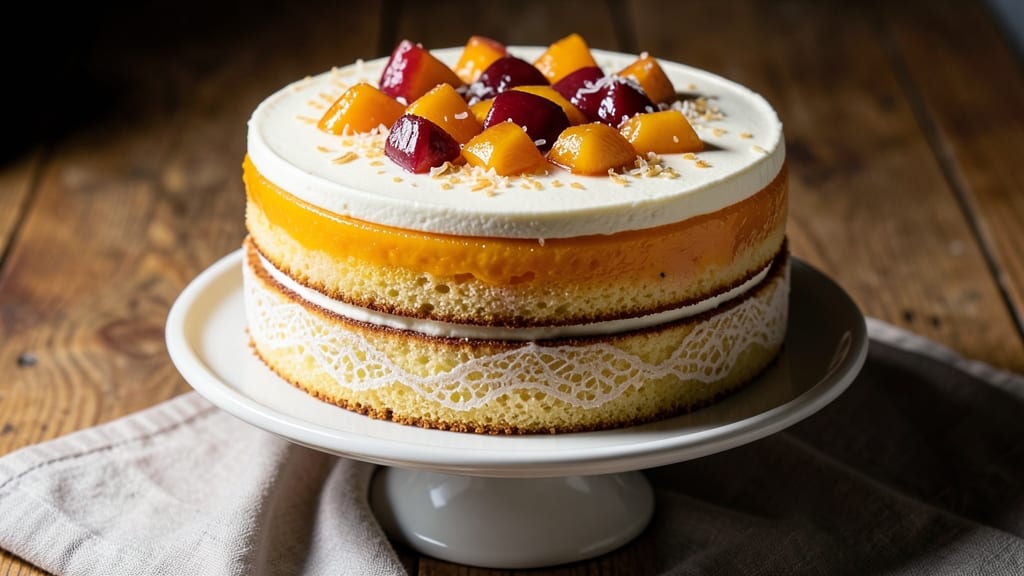
This Asian sponge fruit cake delivers layers of silky moisture and tropical flavors that rival bakery favorites. ✨ The secret lies in a delicate sponge base infused with pandan extract, balanced by layers of fresh mango, lychee, and citrus zest that keep every slice juicy for days. I've perfected this recipe through years of testing—no dry crumbs or compacted fruit here, just a light, airy texture that melts in your mouth.
The magic begins with a precise sponge technique: whipped egg whites folded into a tender batter, then baked just until set before adding the fruit layers. This method ensures your cake stays moist without becoming soggy, while the tropical fruit preserves its natural brightness. Traditional Asian flavors like kaffir lime and toasted coconut elevate each bite, creating a dessert that feels both nostalgic and fresh.
What sets this recipe apart is its versatility—adapt it with gluten-free flour or vegan butter while maintaining that signature silky texture. The cake's elegant layers make it perfect for celebrations or everyday indulgence, with presentation tips to transform it into a showstopper. Whether you're baking for a special occasion or treating yourself, this fruit cake delivers restaurant-quality results at home.
Ready in about 2 hours (including baking and resting time), this recipe combines traditional techniques with modern twists for a dessert that's both impressive and foolproof. The key to success? Patience in layering and letting the cake rest before slicing—trust the process for that perfect balance of moisture and structure.
Ingredients for asian sponge fruit cake
Eight servings of tropical layers—light sponge meets juicy fruit in perfect balance.
| Ingredient | Amount | Notes |
|---|---|---|
| Large Eggs 🥚 | 8 whole | Room temperature for best volume |
| Granulated Sugar 🍚 | 1 ½ cups | Superfine preferred for smooth texture |
| All-Purpose Flour 🌾 | 1 ½ cups | Sifted for lightness (or gluten-free blend) |
| Unsalted Butter 🧈 | 1 cup | Melted, full-fat for moisture |
| Pandan Extract 🌿 | 1 tsp | Pure, not imitation |
| Fresh Mango 🥭 | 1 ½ cups | Diced, ripe but firm |
| Canned Lychees 🍈 | 1 cup | Drained, halved (or fresh if available) |
| Lemon Zest 🍋 | 1 tbsp | Fresh, finely grated |
| Kaffir Lime Leaves 🌿 | 2 whole | Finely shredded (or 1 tbsp paste) |
| Toasted Coconut Flakes 🥥 | ½ cup | Unsweetened, lightly toasted |
| Powdered Sugar 🍚 | ½ cup | For final dusting |
| Light Corn Syrup 💧 | ¼ cup | For fruit layer moisture |
| Vanilla Extract 🌸 | 1 tsp | Pure, high-quality |
| Salt 🧂 | ½ tsp | Fine sea salt |
The eggs and butter are non-negotiable for that signature silky texture. Grass-fed butter adds richness, but any quality brand works. For eggs, room temperature is key—cold eggs won't whip properly. I buy organic eggs from local farms when possible, but store-bought large eggs work fine. The flour should be sifted (or a gluten-free blend if needed) to avoid dense layers. King Arthur or Gold Medal are reliable brands for consistent results. Pandan extract is the secret flavor—look for pure extract, not imitation, at Asian markets or online retailers like AsianFoodGrocer.com.
No pandan extract? Vanilla bean paste at double the amount adds depth, though it won't replicate the exact flavor. For the fruit, fresh mango is ideal, but canned works in a pinch—just drain well. Lychees can be substituted with diced pineapple or peaches if unavailable. The kaffir lime leaves are essential for that authentic aroma, but if you can't find them, double the lime zest. For the coconut, unsweetened flakes toasted in a dry pan add the best texture—skip the sweetened kind. The corn syrup in the fruit layer keeps everything moist without making the cake soggy.
Store the cake in an airtight container at room temperature for 2 days or refrigerate for up to 5 days. The fruit layers will keep it juicy, but cover with plastic wrap if storing longer. For serving, dust with powdered sugar right before slicing—it keeps the cake looking fresh. This cake actually improves with age, so make it a day ahead for maximum moisture. Freeze slices wrapped individually for up to 3 months. The coconut topping can be added fresh or toasted ahead—just reheat gently before serving.
Why You'll Love This Recipe
- No Mixer Needed: I swear by this recipe because it’s all about the eggs and butter—just fold, don’t overthink. The pandan extract does the heavy lifting, so you’re not stuck measuring complex spices or balancing flavors.
- Moisture That Lasts: This isn’t your dry, crumbly sponge—thanks to the butter and sugar ratio, it stays soft for days. Honestly, I’ve had slices from a week-old cake that still taste fresh, and that’s saying something for a fruit cake.
- Pandan Magic: That little bottle of pandan extract? It’s the secret weapon. One teaspoon turns a basic sponge into something fragrant and nostalgic—like a warm hug in cake form. It’s subtle but unforgettable.
- Budget-Friendly Luxury: You’re using pantry staples here: flour, sugar, butter, eggs. The pandan extract is the only specialty item, but a tiny bottle lasts for years of cakes. It’s the kind of recipe that feels fancy without breaking the bank.
Step-by-step instructions for Asian sponge fruit cake
Here's the method for a silky, layered cake with tropical fruit and aromatic pandan.
👨🍳 Step 1: Prepare the Fruit and Flavor Base
In a medium bowl, combine the 1.5 cups fresh mango (diced), 1 cup canned lychees (halved and drained), 1 tbsp lemon zest, and the finely shredded 2 whole kaffir lime leaves. Toss gently to distribute the citrus and lime flavors. In a small saucepan, heat the 0.25 cup light corn syrup over medium-low heat until warm, then pour it over the fruit mixture. Let it sit for 10 minutes while you prepare the sponge batter—this allows the fruit to soften slightly and absorb the syrup.
Here's the thing—this fruit layer is what makes the cake uniquely tropical. The corn syrup prevents the fruit from drying out during baking, while the lime zest brightens the flavors. Don't skip the resting time; it ensures the fruit releases its juices properly into the sponge layers.
👨🍳 Step 2: Whisk Eggs and Sugar for Maximum Volume
In a stand mixer fitted with the whisk attachment, beat the 8 whole large eggs (room temperature) on medium-high speed for 3-4 minutes until they're pale and slightly thickened. Gradually add the 1.5 cups granulated sugar while continuing to mix on high speed for another 5-6 minutes until the mixture is thick, glossy, and has nearly tripled in volume. This step is critical for creating that signature Asian sponge texture—light, airy, and moist.
I like to test the mixture by running a spatula through it—if the ribbon holds its shape for a few seconds, it's ready. If not, keep whisking for another minute. The eggs should be at room temperature; cold eggs won't incorporate air properly and will yield a dense cake.
👨🍳 Step 3: Fold in Dry Ingredients and Flavor Extracts
In a separate bowl, sift together the 1.5 cups all-purpose flour and 0.5 tsp salt. Gently fold one-third of the flour mixture into the egg mixture using a spatula, being careful not to deflate the batter. Add the 1 tsp pandan extract and 1 tsp vanilla extract, then fold in the remaining flour in two more additions, alternating with the 1 cup melted unsalted butter. The batter should be smooth and slightly thick, like a thick pancake batter.
Real talk: don't overmix. You're looking for just a few streaks of flour remaining—this ensures a tender, not tough, texture. The pandan extract gives that signature floral aroma, while the butter adds moisture that keeps this cake perfectly soft for days.
🥘 Step 4: Layer and Assemble the Cake
Preheat your oven to 350°F. Grease a 9-inch round cake pan (or line with parchment paper) and spread half of the fruit mixture evenly on the bottom. Pour half of the batter over the fruit, then sprinkle half of the 0.5 cup toasted coconut flakes on top. Repeat with the remaining fruit, batter, and coconut flakes. Gently tap the pan on the counter to release any air bubbles.
This layering technique creates the signature "fruit in every bite" texture. The coconut adds crunch contrast to the soft sponge, while the fruit layers keep the cake moist. Don't press down on the layers—just gently smooth the top with a spatula. The cake will rise about 1-1.5 inches in the center.
⏰ Step 5: Bake and Finish with Powdered Sugar
Bake for 40-45 minutes until the top is golden brown and a toothpick inserted in the center comes out clean. Let the cake cool in the pan for 15 minutes, then transfer to a wire rack to cool completely. Once fully cooled, dust the top generously with the 0.5 cup powdered sugar using a fine-mesh sieve for that classic Asian cake finish.
The powdered sugar isn't just decorative—it helps set the cake's moisture and gives that signature matte finish. For best results, let the cake sit at room temperature for at least 2 hours before slicing. This allows the layers to fully set and the flavors to meld together perfectly.
Pro Tips For Making Asian Sponge Fruit Cake
- WHISK EGGS TO ROOM TEMP: I learned this the hard way—cold eggs from the fridge won’t incorporate properly, and your batter will end up dense instead of light. Let them sit in warm water (not boiling) for 10 minutes first, then whisk until they’re thick, pale, and ribbon-like when you lift the whisk.
- CREAM BUTTER AND SUGAR LOW: High heat turns butter into soup before it emulsifies. Use medium-low and stir constantly until the mixture is pale, fluffy, and just thick enough to leave a trail when you drag the spoon through it—about 3-4 minutes. Patience here means a tender crumb later.
- SIFT FLOUR WITH PANDA EXTRACT: Mixing the pandan directly into the flour first ensures even distribution and avoids clumpy batter. Use a fine-mesh sieve and tap it gently to break up any lumps—this keeps your cake’s texture silky rather than gritty.
- BAKE UNTIL TOOTHPICK COMES OUT CLEAN: The cake’s done when the center springs back slightly when pressed and a toothpick comes out with minimal moist crumbs (not wet batter). Overbaking dries it out; underbaking leaves it gummy. If unsure, check at 5-minute intervals after the recipe’s suggested time.
Wine and beer pairings for this dish
Tropical Fruit Wines
The vibrant flavors of mango and lychee in this cake pair beautifully with light, fruity wines that complement rather than overpower. A Sauvignon Blanc from New Zealand—like Cloudy Bay—with its crisp acidity and citrus notes mirrors the lemon zest in the cake while enhancing the tropical fruit layers. The wine's herbal undertones also echo the pandan extract, creating a harmonious balance. Serve slightly chilled (45-50°F) to let the wine's brightness shine alongside the cake's delicate texture. 🍷
Spiced Rum Cocktails
For a festive twist, mix dark spiced rum like Appleton Estate 12-Year with a splash of pineapple juice and a squeeze of lime to create a tropical rum punch. The rum's caramel and vanilla notes enhance the cake's coconut and vanilla extracts, while the pineapple juice bridges the flavors between the cake and drink. Serve over ice with a lightly toasted coconut flake on the rim for an extra layer of texture that ties back to the cake's topping. This pairing is perfect for celebrations or warm evenings. 🍹
Asian-Inspired Beers
If you prefer beer, opt for a light, crisp lager with subtle citrus notes like Asahi Super Dry or a Japanese hoppy ale such as Sapporo Black Label. The beer's clean finish won't compete with the cake's complex flavors but will cleanse your palate between bites. For a bolder option, try a wheat beer infused with lychee or mango—brands like Blue Moon offer seasonal flavors that align perfectly with the cake's tropical profile. Keep the beer well-chilled (38-42°F) to maintain its crispness. 🍺
Tea Pairings
For a non-alcoholic option, a jasmine green tea or pandan-infused tea elevates the cake's flavors without overpowering them. Brew a lightly sweetened jasmine tea with a hint of honey to complement the cake's natural sweetness and floral notes. Alternatively, steep pandan leaves in hot water for 5 minutes to create a fragrant infusion that mirrors the cake's signature flavor. Serve warm or iced for a refreshing contrast to the rich dessert. ☕
Creamy Dessert Wines
If you're serving the cake as a standalone dessert, consider a Moscato d'Asti or Riesling with slight sweetness. The effervescence of Moscato cuts through the cake's richness, while a dry Riesling from Germany—like Dr. Loosen Blue Slate—balances the tropical fruit with its mineral notes and acidity. Both wines enhance the cake's layers without making it taste heavy, making them ideal for a light yet indulgent finish. 🍇
Nutrition facts
Frequently asked questions
Can I make this cake without pandan extract?
Yes, but the flavor will differ. Use 1 tsp vanilla bean paste (double the amount) or 1 tsp almond extract as substitutes. For a floral note, try 1 tsp rosewater—it pairs well with tropical fruits but use sparingly (½ tsp max). The texture remains the same, but the aroma will be milder.
How do I prevent the fruit from making the cake soggy?
The corn syrup in the fruit layer is key—it keeps the fruit juicy without sogginess. Always let the fruit mixture sit for 10 minutes before baking to absorb excess moisture. Also, ensure your sponge layers are fully baked (toothpick clean) before adding fruit. For extra insurance, chill the cake for 30 minutes—after baking to help set the layers.
What's the best way to store leftover cake?
Wrap tightly in plastic wrap, then place in an airtight container. Store at room temperature for 2 days—**or refrigerate for up to 5 days. For longer storage, freeze slices individually (wrapped) for 3 months. Thaw at room temperature before serving. The fruit layers keep it moist, but covering prevents drying.
Can I substitute canned fruit with fresh?
Use 1.5 cups fresh diced mango—and 1 cup fresh lychees—if available (peel and halve). For lychees, toss with 1 tsp lemon juice—to prevent browning. Fresh fruit adds brighter flavor but may release more moisture—drain well and pat dry before using. Adjust corn syrup to 0.25 cup—**if using very juicy fruits.
Why does my cake crack on top?
Cracking usually means the cake baked too long or cooled too quickly. Check doneness at 40 minutes—and remove when golden but slightly underbaked. Let it cool gradually in the pan for 15 minutes—**before transferring. For extra insurance, brush the top with simple syrup (equal parts sugar + water) right after baking to seal the surface.