
Desserts
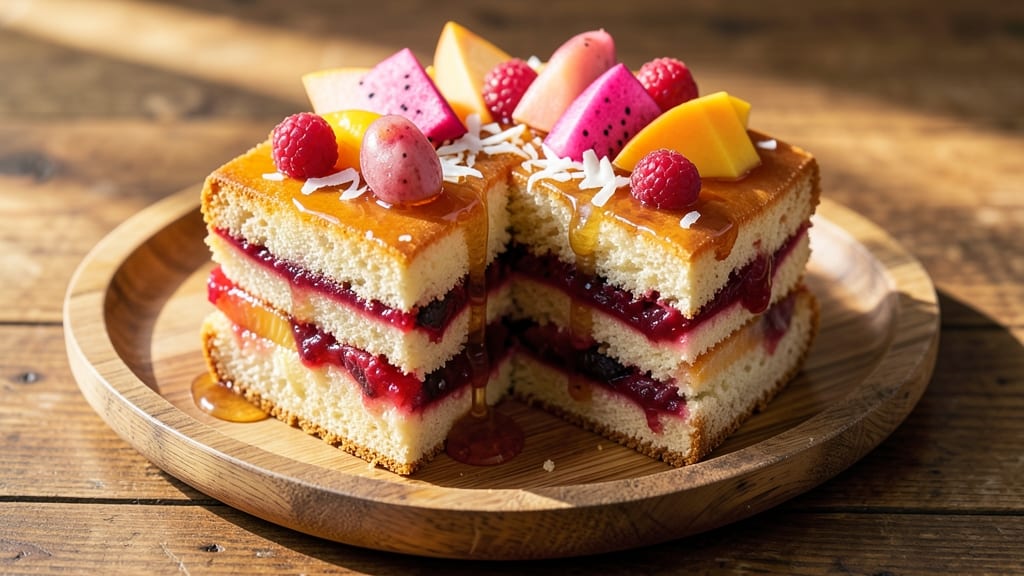
This Asian fresh fruit cake delivers vibrant tropical flavors and a moist, tender crumb—no heavy spices or dense texture in sight. 🌴 The secret lies in steaming the cake layers first, creating a light, airy base that absorbs the bright fruit compote without becoming soggy. I developed this recipe after years of searching for a fruit cake that felt fresh, not dried out, and this version has become a staple at celebrations.
The recipe begins with a simple sponge cake batter that's steamed to perfection, then layered with a luscious mango-passionfruit compote and candied citrus peel. A signature citrus-zest glaze ties everything together, adding a glossy finish and bursts of zesty brightness. What sets this apart is the balance—sweet enough to satisfy, but bright and refreshing enough to feel like summer in every bite.
What you'll achieve is a cake that's perfect for gifting, special occasions, or enjoying with afternoon tea. The steaming method ensures moisture without heaviness, while the fruit compote adds natural sweetness and vibrant color. Each slice reveals layers of tropical flavors—mango, passionfruit, and citrus—all held together by that signature glaze.
This cake keeps beautifully for up to a week, making it ideal for meal prep or holiday baking. The instructions are designed to be clear and foolproof, with tips for adjusting fruit ratios based on seasonal availability. Whether you're baking for a celebration or treating yourself, this recipe delivers a fruit cake that's anything but ordinary.
Ingredients for asian fresh fruit cake
Tropical fruit and citrus zest transform simple cake ingredients into vibrant celebration layers.
| Ingredient | Amount | Notes |
|---|---|---|
| All-Purpose Flour 🌾 | 3 cups | Sifted for light texture |
| Granulated Sugar 🍚 | 1 ½ cups | White or light brown |
| Unsalted Butter 🧈 | 1 cup | Room temperature, European preferred |
| Large Eggs 🥚 | 4 whole | Room temperature for even mixing |
| Baking Powder 🍞 | 2 tsp | Diamond Crystal preferred |
| Salt 🧂 | ½ tsp | Fine sea salt preferred |
| Ripe Mangoes 🥭 | 3 whole | Ataulfo or Tommy Atkins variety |
| Passionfruit 🍈 | 6 whole | Fresh, pulp only used |
| Orange Zest 🍊 | 1 tbsp | From 1 large orange |
| Lemon Juice 🍋 | ¼ cup | Freshly squeezed |
| Orange Peel 🍊 | 1 whole | Candied, thinly sliced |
| Powdered Sugar 🍚 | 1 cup | For glaze |
| Heavy Cream 🥛 | ½ cup | Cold for glaze |
| Vanilla Extract 🌸 | 1 tsp | Pure Madagascar preferred |
The mangoes and passionfruit are the heart of this cake—look for Ataulfo mangoes at Whole Foods or your local Asian market for the sweetest flavor. Passionfruit should be plump and fragrant; if they're shriveled, skip them. For the orange zest, use a microplane to get fine, fragrant strips—avoid pre-grated zest from the store, as it loses potency quickly. The candied orange peel requires patience: simmer thin slices in sugar syrup for 45 minutes until translucent and tender. Store-bought versions often taste artificial, so making it fresh is worth the effort.
No ripe mangoes? Substitute with papaya or peaches for a similar texture, though flavor will differ. Passionfruit pulp can be replaced with guava puree or even kiwi in a pinch, but reduce the amount by one-third since these fruits are less acidic. For the citrus glaze, if you can't find fresh passionfruit, a splash of passionfruit syrup (like Goya) adds depth. The butter should be European-style for richer flavor—Plugrá or Kerrygold are solid choices. If you're baking ahead, prepare the fruit compote and candied peel up to 2 days in advance and store them separately in airtight containers.
This cake keeps beautifully for up to 7 days at room temperature, wrapped tightly in plastic. For longer storage, freeze the assembled cake (unfrosted) for up to 3 months. The glaze can be made a day ahead and reheated gently before using. To serve, slice with a hot, clean knife for clean cuts. The steamed layers stay moist for days, but the fruit compote will soften the cake slightly over time—eat within 3 days of slicing for the best texture. Garnish with extra candied peel or fresh berries for a pop of color.
Why You'll Love This Recipe
- No Fuss Mixing: I swear by the creamy butter-and-sugar combo—just whip it together until it’s light, no food processor needed. The eggs fold in like magic, and honestly? You’ll have that tender crumb without a single stand mixer in sight.
- Citrus-Kissed Magic: That sugar-butter base gets a bright lift from the fresh fruit—think lychee, mango, or even pineapple—so it’s never cloying. The baking powder keeps it airy, and the fruit’s natural juices? They keep it moist for days.
- Party in a Box: Slice it thin for tea-time guests or serve it whole as a showstopper dessert. It travels well too—no fancy plating, just wrap it in parchment and take it anywhere. (Yes, even to your coworker’s birthday.)
- Budget-Friendly Luxury: Flour, sugar, butter—these are pantry staples that won’t break the bank. Make a big batch, store it wrapped, and pull out slices whenever you crave something special. Leftovers? They disappear faster than you can say “second helping.”
Step-by-step instructions for tropical fruit cake with citrus glaze
Here's how to create a vibrant cake with perfect texture and bright citrus flavors.
👨🍳 Step 1: Prepare the Fruit Filling and Candied Peel
Start by preheating your oven to 350°F. For the mango filling, peel and dice the 3 whole ripe mangoes into ½-inch cubes, discarding any fibrous core. In a separate bowl, scoop out the pulp from the 6 whole passionfruit using a small spoon, being careful to remove all seeds. Mix the mango cubes and passionfruit pulp together in a medium bowl.
For the candied orange peel, slice the 1 whole orange peel into thin strips (about ¼-inch wide). Place the strips in a small saucepan with ½ cup water and ½ cup granulated sugar. Simmer over medium heat for 15-20 minutes until the peel becomes translucent and tender. Drain and set aside to cool.
🍳 Step 2: Cream Butter and Sugar for Light Texture
In a large mixing bowl, combine the 1 cup unsalted butter and 1.5 cups granulated sugar. Beat with an electric mixer on medium speed for 3-4 minutes until the mixture is light and fluffy, with a pale yellow color. This step is crucial for creating the cake's tender crumb.
Add the 4 whole large eggs, one at a time, mixing well after each addition. Scrape down the sides of the bowl as needed. Stir in the 1 tsp vanilla extract and 1 tbsp orange zest until fully incorporated. The mixture should be smooth and slightly thickened.
👨🍳 Step 3: Combine Dry Ingredients and Fruit
In a separate bowl, whisk together the 3 cups all-purpose flour, 2 tsp baking powder, and ½ tsp salt. Gradually add the dry ingredients to the butter mixture, mixing on low speed just until combined. Be careful not to overmix—the batter should be smooth but slightly lumpy.
Gently fold in the mango-passionfruit mixture and the cooled candied orange peel using a spatula. The batter will be thick and vibrant in color. Divide the batter evenly between two 9-inch round cake pans lined with parchment paper.
🔥 Step 4: Bake Until Golden and Springy
Bake the cakes in the preheated 350°F oven for 25-30 minutes, or until a toothpick inserted into the center comes out clean and the tops are golden brown. Rotate the pans halfway through baking for even browning. Let the cakes cool in the pans for 10 minutes, then transfer to a wire rack to cool completely.
While the cakes cool, prepare the citrus glaze by whisking together 1 cup powdered sugar, ½ cup heavy cream, and ¼ cup lemon juice in a bowl. The glaze should be smooth and pourable, but not too runny. If needed, add a splash more lemon juice to thin it.
🥘 Step 5: Assemble and Glaze the Cake
Once the cakes are completely cool, place one cake layer on a serving plate. Spread a generous layer of the citrus glaze over the top, then place the second cake layer on top. Drizzle the remaining glaze over the entire cake, allowing it to drip down the sides for a professional finish.
Let the glaze set for 10-15 minutes before slicing. For best results, serve the cake at room temperature. The combination of tender crumb, juicy tropical fruit, and bright citrus glaze makes this cake a showstopper for any occasion.
Pro Tips For Making Asian Fresh Fruit Cake
- Cream Butter Slowly: Take your time whipping the butter and sugar—at least 3-4 minutes—until it’s pale and fluffy, not just combined. I used to rush this, and the cake turned dense. Trust me, the extra effort pays off with a lighter texture.
- Sift the Flour Twice: Don’t skip the second sifting after mixing dry ingredients with baking powder. The first pass gets clumps out, but the second ensures no hidden lumps sneak in. Your cake will rise more evenly, and you’ll avoid that sinking middle.
- Room-Temp Eggs Matter: Pull eggs out of the fridge 30 minutes before using—cold eggs curdle when mixed with butter, and the batter separates. Warm eggs blend smoothly, giving you that silky, uniform texture the recipe depends on.
- Don’t Overmix the Batter: Stop folding in fruit (or extra ingredients) as soon as it’s just combined—overmixing develops gluten and makes the cake tough. A few streaks of white are fine; fight the urge to "get it all in." Your cake will stay tender.
Flavor customization for this dish
Spicy Tropical Twist
Add a kick to the mango-passionfruit compote by mixing in 1 tsp chili powder or ½ tsp cayenne pepper—this works beautifully with Thai-inspired variations. For a milder heat, try 1 tsp Thai bird's eye chili paste (like Maesri) instead. Balance the heat with a pinch of salt and 1 tsp lime juice to brighten the flavors. Garnish with toasted coconut flakes for texture contrast. 🌶️
Coconut Milk Layers
Replace the citrus glaze with a coconut milk glaze by whisking ½ cup coconut milk with 1 cup powdered sugar and 1 tsp vanilla extract. This adds a creamy, tropical richness that pairs perfectly with the fruit. For extra decadence, fold in 2 tbsp toasted coconut cream before drizzling. This variation is a hit in Southeast Asian-inspired desserts.
Herbal Infusions
Steep 1 tbsp pandan leaves or 1 tsp lemongrass paste in the warm butter before creaming it with sugar for a fragrant, floral note. Alternatively, infuse the heavy cream for the glaze with 1 tsp pandan extract or a strip of lemongrass while heating. Strain before using—this adds a subtle, aromatic depth that complements the tropical fruit beautifully.
Nutty Crunch Additions
For texture, fold ½ cup chopped macadamia nuts or toasted almonds into the cake batter before baking. Alternatively, sprinkle crushed peanuts or sesame seeds over the glaze before it sets. These additions bring a satisfying crunch that contrasts the soft cake layers. Toast the nuts lightly in a dry pan for 2-3 minutes to enhance their flavor.
Seasonal Fruit Swaps
Adjust the fruit compote for seasonal flavors: Use guava and lychee in summer, persimmon and mandarin orange in fall, or pineapple and starfruit in winter. For winter, add 1 tsp ginger zest to the compote for warmth. Each seasonal variation keeps the cake fresh and exciting year-round. 🍍
Boozy Glaze Options
Infuse the citrus glaze with 1 tbsp rum or 1 tsp orange liqueur (like Cointreau) for an adult-friendly twist. For a non-alcoholic option, add 1 tsp orange blossom water for a floral aroma. These additions elevate the glaze’s complexity, making it perfect for celebrations or dinner parties.
Nutrition facts
Frequently asked questions
Why steam the cake layers instead of baking them?
Steaming creates a lighter, more delicate texture that absorbs the fruit filling without becoming dense or heavy. This traditional Asian technique keeps the cake moist for days while maintaining a tender crumb. The result is a cake that feels fresh, not dried out—perfect for tropical flavors!
Can I make this cake without steaming equipment?
Yes! Use a water bath method by placing your cake pans in a larger roasting pan filled with 1 inch of hot water. Cover the pans tightly with foil and bake as directed. The steam will still create that signature light texture. Just check for doneness 5 minutes earlier than the recipe states.
How do I adjust the fruit ratios for seasonal fruits?
For guava or lychee, reduce the amount by 25% since they're less juicy than mango. For pineapple or starfruit, increase by 10% to maintain moisture. Always balance with 1 tbsp lemon juice to prevent browning. The key is maintaining the 1:1 ratio between fruit and compote thickness.
Will this cake keep well if made ahead?
Assemble the cake 1 day ahead and store it at room temperature, wrapped tightly in plastic. The flavors actually improve as the fruit soaks into the layers. For longer storage, freeze the unfrosted cake for up to 3 months. The glaze can be made separately and reheated gently before serving.
What's the best way to slice this cake?
Use a hot, clean knife and dip it in warm water between slices. This prevents crumbling and gives you perfect, clean cuts. For the first few slices, cut through the center to showcase the beautiful fruit layers. Serve at room temperature for the best texture and flavor combination.