
Desserts
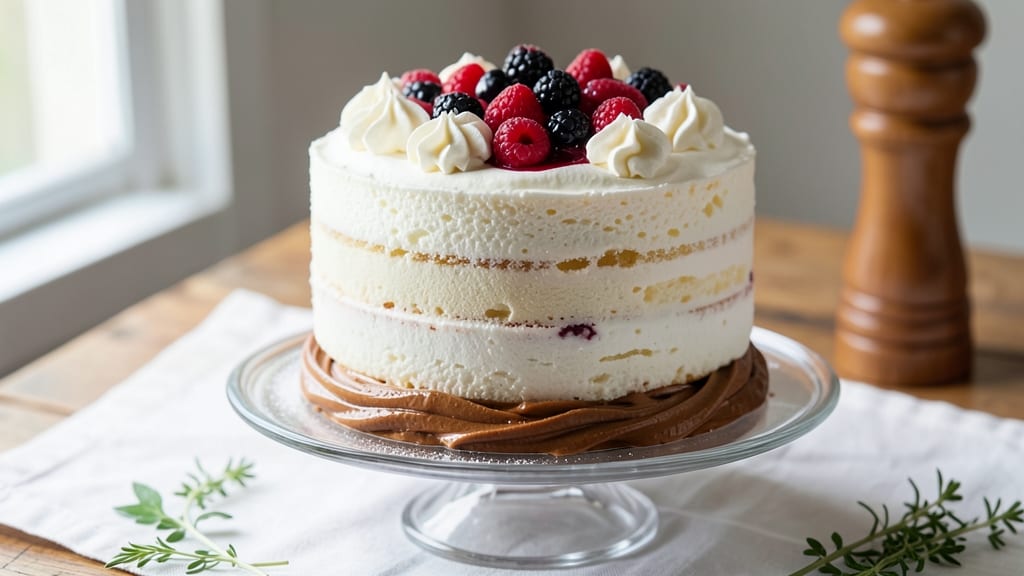
This aquafaba angel food cake delivers the same ethereal lightness as classic angel food cake—without a single egg. 💛 The secret lies in whipped chickpea brine, which creates a cloud-like texture that's both delicate and sturdy enough to hold its shape. I perfected this recipe after years of experimenting with plant-based baking, and it's now my go-to for elegant, egg-free desserts that impress even non-vegans.
The magic happens in the whipping process, where aquafaba transforms from humble chickpea water into a stable meringue-like foam. This recipe maintains the signature tall, airy structure of angel food cake while being completely vegan. The key is patience—whipping the aquafaba to stiff peaks and folding it gently into the batter to preserve all that precious air.
What you'll end up with is a cake that's light as a cloud yet sturdy enough to slice cleanly, with a tender crumb and subtle sweetness. The natural vanilla flavor shines through without overpowering, making this cake perfect for special occasions or as a showstopping dessert. It bakes up beautifully in a tube pan, creating that classic angel food shape.
Serve it with fresh berries, a drizzle of caramel, or dusted with powdered sugar for a restaurant-quality finish. The best part? This recipe proves that plant-based baking can be just as sophisticated as traditional desserts. Let's make this cake!
Ingredients for aquafaba angel food cake
Eight simple ingredients transform humble chickpea brine into ethereal cloud cake.
| Ingredient | Amount | Notes |
|---|---|---|
| Aquafaba (Chickpea Brine) 🥜 | 1 ½ cups | From 2 cans chickpeas, drained |
| Granulated Sugar 🍚 | 1 ½ cups | Divided for whipping and batter |
| All-Purpose Flour 🌾 | 2 cups | Sifted, plus extra for pan |
| Vanilla Extract 🌿 | 2 tsp | Pure, high-quality preferred |
| Cream of Tartar 🧂 | ½ tsp | Stabilizes whipped aquafaba |
| Salt 🧂 | ¼ tsp | Fine sea salt preferred |
| Unsweetened Almond Milk 🥛 | ½ cup | For batter moisture |
| Lemon Juice 🍋 | 1 tbsp | Freshly squeezed |
| Cream of Tartar 🧂 | ¼ tsp | For batter acidity |
| Powdered Sugar 🍚 | ½ cup | For dusting and folding |
| Fresh Blueberries 🫐 | 1 cup | Optional filling (optional) |
The aquafaba is the star—save the brine from two cans of chickpeas, which gives you about 1.5 cups. Freshly drained is best, but if you're using store-bought aquafaba, choose brands like Sir Kensington's or Follow Your Heart for reliable texture. For the flour, King Arthur or Bob's Red Mill brands are ideal—they're finely milled and sift beautifully, which is crucial for that signature angel food cake crumb. The cream of tartar might be hiding in your spice drawer, but if not, Penzeys or Amazon carry it in bulk. Pro tip: measure your flour by weight if you have a kitchen scale—240 grams is more accurate than scooping.
No aquafaba on hand? Silken tofu whipped with 1 tsp cream of tartar works in a pinch, though texture won't be identical. For the sugar, organic cane sugar dissolves more cleanly than raw sugar. The almond milk can be swapped for oat milk or coconut milk, but unsweetened versions only—any creaminess will affect the cake's lightness. If you're feeling fancy, fold in 1 tsp freeze-dried raspberry powder for subtle fruity notes. The blueberries? Toss them in a little sugar before folding—they'll sweeten as they bake. And yes, you can skip them entirely if you prefer a classic version.
Aquafaba loses volume when refrigerated, so use it fresh. Store any leftover brine in an airtight container for 3-4 days in the fridge. The dry ingredients keep indefinitely in a cool, dark place. Once baked, this cake is best served immediately—it's at its peak airiness right out of the oven. For make-ahead prep, bake the cake, cool completely, then wrap tightly in plastic wrap. It'll keep for 2 days at room temperature or 1 week refrigerated. To revive slices, warm for 10 seconds in the microwave—just enough to soften without deflating the texture.
Why You'll Love This Recipe
- No Eggs Needed: I’ll admit, I was skeptical about using chickpea brine instead of eggs—until I tried it. The aquafaba whips up light and airy, and the cream of tartar gives it that signature angel food cake lift without a single egg in sight.
- Sweet Vanilla Hug: That vanilla extract? It’s the star here. The cake has this delicate, cloud-like texture with a whisper of sweetness that’s not too cloying—just enough to make you reach for a second slice.
- Picnic Perfect: Between us, this cake is my go-to for potlucks or outdoor gatherings. It’s sturdy enough to handle travel, slices neatly, and no one will guess it’s vegan unless you tell them. (Yes, even on a Tuesday night.)
- Pantry Magic: Here’s what sold me—this uses ingredients you probably already have. No special equipment, no fancy swaps, just flour, sugar, and that leftover chickpea brine you’d normally toss. Budget-friendly and foolproof.
Step-by-step instructions for aquafaba angel food cake
Here's how to create a fluffy, egg-free cake with a perfect cloud-like texture.
🍳 Step 1: Whip the Aquafaba to Stiff Peaks
Measure the 1.5 cups aquafaba (chickpea brine) into a clean, grease-free mixing bowl. Add ½ teaspoon cream of tartar and ¼ teaspoon salt—this stabilizes the foam. Using a stand mixer fitted with the whisk attachment, beat on high speed for 8-10 minutes until the aquafaba forms stiff peaks that hold their shape when the whisk is lifted.
Here's the thing—you'll know it's ready when the peaks stand straight up and the mixture looks glossy. If it's not holding shape after 10 minutes, add ¼ teaspoon more cream of tartar and continue beating. The aquafaba must be perfectly whipped for the cake to rise properly. Don't rush this step; patience ensures a light, airy texture.
👨🍳 Step 2: Gradually Add Sugar While Whipping
With the mixer still running on high speed, gradually add the 1.5 cups granulated sugar in a slow, steady stream. This prevents graininess and ensures the sugar dissolves completely. Continue whipping for another 3-4 minutes until the mixture is thick, glossy, and pale—it should look like fluffy meringue.
I like to add the sugar in three equal batches, waiting 30 seconds between each addition. This controlled approach prevents the mixture from becoming too dense. You'll see the texture transform from liquid to thick foam as the sugar incorporates. The final mixture should be smooth and hold its shape when the whisk is tilted.
🥘 Step 3: Fold in Dry Ingredients and Almond Milk
In a separate bowl, whisk together the 2 cups all-purpose flour and 2 teaspoons vanilla extract. Gently fold one-third of this dry mixture into the aquafaba mixture using a spatula, being careful not to deflate the whipped peaks. Then, add the ½ cup unsweetened almond milk and 1 tablespoon lemon juice, folding gently until just combined.
Next, fold in the remaining flour mixture in two additions, again being gentle to maintain the airiness. The batter should be thick but pourable—like a soft cookie dough. If it looks too dry, add 1 tablespoon more almond milk. The goal is a smooth, uniform batter that holds its shape when spooned. Don't overmix; a few streaks of flour are okay at this stage.
🔥 Step 4: Bake in a Preheated Oven
Preheat your oven to 350°F and prepare a 9-inch tube pan by greasing it lightly with cooking spray and dusting with flour. Pour the batter into the pan, smoothing the top with a spatula. Bake for 35-40 minutes until the top is golden brown and the cake springs back when gently pressed in the center.
I always check for doneness by inserting a toothpick—it should come out clean or with a few moist crumbs. Avoid opening the oven door during baking, as the sudden temperature change can cause the cake to collapse. If the top browns too quickly, tent the pan loosely with foil after 20 minutes to prevent over-browning while ensuring the center cooks through.
⏰ Step 5: Cool and Add Blueberry Filling (Optional)
Remove the cake from the oven and let it cool in the pan for 5 minutes. Then invert it onto a wire rack to cool completely. If using the 1 cup fresh blueberries, simmer them in ¼ cup granulated sugar and 1 teaspoon lemon juice for 5 minutes until softened. Let the filling cool before slicing the cake horizontally and adding the blueberry mixture between layers.
For the final touch, dust the top with ½ cup powdered sugar sifted through a fine-mesh sieve. This adds a delicate sweetness and enhances the cake's elegant appearance. Serve slices at room temperature for the best texture—each bite should be light, airy, and perfectly balanced with the tart blueberries.
Pro Tips For Making Aquafaba Angel Food Cake
- Whisk Aquafaba Cold: I learned this the hard way—warm chickpea brine won’t whip properly. Grab that can straight from the fridge, pour the aquafaba into a clean, grease-free bowl, and start whisking immediately. Cold liquid holds onto air better, and you’ll get that cloud-like texture faster without fighting a stubborn, lukewarm mess.
- Sift Flour Twice: Angel food cake lives or dies by its lightness, and clumps in the flour are the silent saboteurs. Sift that all-purpose flour through a fine-mesh sieve once before mixing, then sift it again right before folding it into the whipped aquafaba. Yes, it’s extra work, but the difference in crumb is night and day—no dense, sad pockets here.
- Skip the Overmixing: Once you fold in the dry ingredients, stop stirring the second everything looks just combined. Overmixing develops gluten, and your cake will turn out chewy instead of airy. Think "marble swirls" in the batter, not a uniform color—your future self will thank you when it emerges from the oven like a cloud.
- Preheat Oven to 325°F: Angel food cake is finicky about heat. Too hot, and the outside sets before the inside bakes; too cool, and it stays gummy. Set your oven to 325°F (not 350°F or the "broil" setting you might see elsewhere) and let it fully preheat. No shortcuts—cold spots ruin the rise, and you’ll know because the center will still jiggle like Jell-O.
Common mistakes when making great aquafaba angel food cake
Overwhipped Aquafaba
This is the #1 mistake I see beginners make—they whip the aquafaba too long, turning it grainy or even liquidy. The key is stopping at stiff peaks (when the whisk leaves clean lines that hold their shape). Overwhipping breaks down the protein structure, and you'll end up with a dense cake instead of cloud-like texture. If your aquafaba starts looking like fluffy shaving cream but won't hold peaks, immediately stop and add ¼ tsp more cream of tartar—this stabilizer is your secret weapon. 💫
Undermeasured Ingredients
Precision matters with angel food cake, especially the flour. Scooping flour from the bag packs it too tightly, leading to a dry, crumbly texture. Weigh your flour (240 grams) for perfect results, or spoon it lightly into your measuring cups and level off. I've ruined cakes by eyeballing measurements—trust me, the scale makes all the difference. Even the sugar should be added gradually while whipping to prevent graininess.
Greased Pan
Using butter or oil to grease your tube pan sounds logical, but it creates a barrier that prevents the cake from rising properly. Instead, use nonstick cooking spray (like Misto) followed by a light dusting of flour. The cake needs to cling slightly to the pan to rise vertically. I learned this the hard way when my first attempt collapsed—now I always double-check for grease residue before pouring the batter.
Opening the Oven
Peeking at your cake during baking is tempting, but the temperature drop causes the delicate structure to collapse. If you're worried about doneness, use the toothpick test—insert it in the center and wait for the 35-40 minute mark. If the top browns too quickly, tent with foil after 20 minutes to prevent over-browning while keeping the center moist. Patience here ensures that perfect vertical rise we all love in angel food cake.
Skipping the Cooling Time
Inverting the cake too soon is a common mistake that leads to crumbling layers. Let it cool in the pan for 5 minutes first to set slightly, then invert carefully. I've seen cakes completely fall apart when rushed. The cooling process also helps the structure firm up—never serve it warm, as the texture will be gummy rather than airy. A wire rack is essential for even cooling on all sides.
Overmixing the Batter
Once you start folding in the dry ingredients, resist the urge to mix thoroughly. A few streaks of flour are normal and actually help maintain the airy texture. Overmixing deflates the whipped aquafaba, resulting in a dense cake. Use a spatula and work gently from the bottom up, cutting through the center to incorporate without losing air. Think "fold" not "stir"—this is where most home bakers go wrong. ✨
Nutrition facts
Frequently asked questions
Can I substitute aquafaba with something else for this cake?
While aquafaba is ideal, you can try silken tofu blended with 1 tsp cream of tartar as a backup. For best results, whip it for 10 minutes until thick and fold it into the batter just like the recipe. However, the texture won't be identical—aquafaba creates that signature cloud-like structure that's hard to replicate perfectly.
Why does my aquafaba angel food cake sink in the middle?
This usually happens when the aquafaba isn't whipped to stiff peaks or if you open the oven door too early. Also check that your tube pan is properly greased with nonstick spray and dusted with flour—grease creates a barrier that prevents proper rising. Bake for the full 35-40 minutes before testing doneness.
How do I make this cake gluten-free?
Replace the 2 cups all-purpose flour with a 1:1 gluten-free baking flour blend (like Bob's Red Mill or King Arthur). You may need to add ½ tsp xanthan gum to help bind the structure. Note that gluten-free versions often have a slightly denser crumb—this cake works best with traditional flour for that classic angel food texture.
Can I bake this cake in a regular round pan instead of a tube pan?
Yes, but the texture will differ slightly. For a 9-inch round pan, bake at 325°F for 25-30 minutes instead. The cake will be shorter and denser than the traditional tube pan version. If you want the classic tall shape, stick with the tube pan—it's designed to create that signature angel food cake structure.
How long does this cake keep, and can I freeze it?
This cake is best enjoyed fresh, but you can store it wrapped tightly at room temperature for 2 days or refrigerated for 1 week. For freezing, slice the cake, wrap each piece individually in plastic, and freeze for up to 3 months. Thaw at room temperature for 1-2 hours before serving—microwaving can make it gummy.