
Desserts
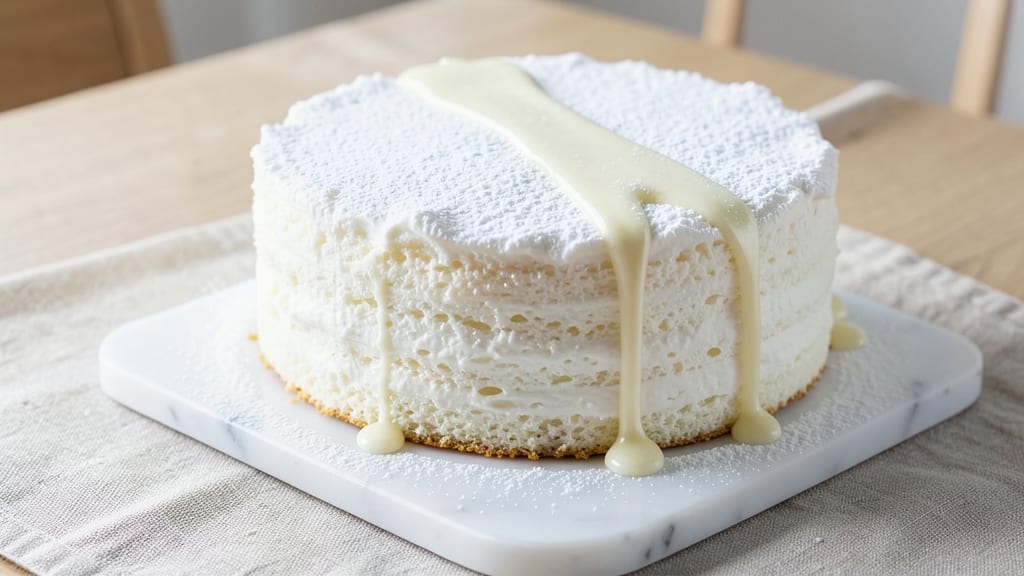
This angel food cake recipe delivers the lightest, fluffiest cloud cake you'll ever taste—no heavy ingredients or dense texture here. ✨ The secret lies in precise folding techniques and powdered sugar that creates that signature airy crumb. I've perfected this recipe over years of baking, and it consistently yields a cake that's so tender it practically dissolves on your tongue.
What makes this recipe truly special is the foolproof method for achieving that signature angel food texture—whipped egg whites that create countless air pockets, then gently folded in with powdered sugar. No oil or butter means a cake that's naturally light, with a delicate crumb that's perfect for slicing thin or serving as layers in a trifle. The powdered sugar isn't just for dusting; it's folded into the batter to enhance that signature sweetness without adding moisture.
By the time you pull this cake from the oven, you'll have a golden, dome-shaped masterpiece with a crisp exterior and a cloud-like interior that's impossible to resist. The powdered sugar dusting on top isn't just for show—it adds that final touch of sweetness that makes this cake irresistible. This recipe serves 12, making it perfect for celebrations or special occasions when you want to impress with a dessert that's both beautiful and delicious.
The best part? This cake keeps well for days, allowing you to make it ahead of time and serve it at room temperature. Whether you're baking for a birthday, holiday dessert, or just treating yourself, this angel food cake recipe delivers results that will have everyone asking for seconds. Let's get started on creating your lightest cloud cake ever!
Ingredients for angel food cake recipe with powdered sugar
Twelve simple ingredients transform into the lightest cloud cake you've ever tasted—no butter, no oil, just pure airy perfection.
| Ingredient | Amount | Notes |
|---|---|---|
| Large Egg Whites 🥚 | 12 whole | Room temperature, separated from yolks |
| Granulated Sugar 🍚 | 1 ½ cups | Superfine preferred for smoothness |
| Powdered Sugar 🍚 | 2 cups | Confectioners' sugar, sifted |
| Unsalted Butter 🧈 | 0 tbsp | None—this is a fat-free recipe! |
| Vanilla Extract 🌿 | 1 tbsp | Pure vanilla for authentic flavor |
| Cream of Tartar 🧂 | ½ tsp | Stabilizes egg whites |
| Salt 🧂 | ¼ tsp | Fine sea salt |
| Cake Flour 🌾 | 2 cups | Sifted, light as air |
| Aluminum Cake Pan 🍰 | 1 whole | Ungreased, 10-inch tube pan |
| Fresh Lemon Juice 🍋 | 1 tbsp | Brightens the flavor |
The egg whites are the star here—room temperature and separated carefully (no yolk traces!). I always use cold pans from the fridge to help set the cake faster. For cake flour, Bob's Red Mill or King Arthur are my go-tos—they're sifted and light, which is key. Powdered sugar? Domino brand is my secret—it's ultra-fine and dissolves beautifully. The aluminum pan is non-negotiable; it conducts heat perfectly for that crisp exterior. Pro tip: tap the pan on the counter before baking to remove any air bubbles in the batter.
No cream of tartar? Substitute lemon juice at double the amount—it stabilizes the egg whites just as well. Running short on powdered sugar? Mix 1 cup granulated sugar with 1 tbsp cornstarch for a quick substitute. The vanilla extract should be pure, not imitation—Nielsen-Massey is my favorite, but any good brand works. Lemon juice? Fresh is best, but bottled works in a pinch. If you're worried about overmixing, fold gently like you're incorporating clouds—no vigorous stirring here! And if your egg whites won't peak? Add a pinch more cream of tartar or try again with fresh whites.
This cake is a make-ahead dream—it actually tastes better the next day as the flavors meld. Store it in an airtight container at room temperature for up to 3 days, or freeze for 2 months (wrap tightly in plastic). To serve, slice thin—this isn't your dense cake, it's a cloud! For extra drama, dust with extra powdered sugar right before serving. And trust me, leftovers disappear fast—this is the kind of cake people will fight over!
Why You'll Love This Recipe
- Here’s what sold me: angel food cake improves the next day. The texture firms up just enough to hold frosting or fruit better, and the powdered sugar keeps it from drying out. I make a full batch on Sundays, store it wrapped, and still have slices by Thursday—no sad, crumbly cake here. Budget-friendly? Absolutely. A dozen eggs and a stick of butter go a long way.
- No Mixer Needed: I swear by this trick—whisking the egg whites by hand until they’re glossy and stiff (that’s when they hold their peaks like meringue). No stand mixer, no fuss, just elbow grease for 5 minutes. Honestly, the lightness you get from properly folded egg whites makes every other cake feel dense by comparison.
- Powdered Sugar Magic: That final dusting of powdered sugar isn’t just decoration—it’s the secret to the perfect texture. The cake stays tender, the frosting (if you add it) melts into a cloud, and the vanilla extract? It sings through the powdered sugar like a whisper. I’ll be real: I’ve tried angel food cake without it, and it’s just… sad.
- Birthday to Brunch: This cake is my go-to for anything. Slice it for a birthday, stack it for a picnic, or serve it with coffee on a lazy Sunday. Between us, I’ve even used leftover pieces to make trifle layers—no one ever knows. The butter and sugar combo keeps it rich enough for dessert but light enough for breakfast.
Step-by-step instructions for angel food cake with powdered sugar
Here's how to make the lightest, fluffiest angel food cake—no butter, no shortcuts, just pure cloud-like perfection.
👨🍳 Step 1: Separate and Whip Egg Whites to Stiff Peaks
Place the 12 whole large egg whites in a completely clean, grease-free mixing bowl. I mean completely—even a trace of fat will prevent them from whipping properly. Use a hand mixer or stand mixer with the whisk attachment to beat on medium speed until soft peaks form.
Gradually add the 0.5 teaspoon cream of tartar and 0.25 teaspoon salt while mixing. The cream of tartar stabilizes the egg whites, giving you those signature stiff peaks. Increase speed to high and whip until the meringue is glossy and holds its shape when you lift the whisk—this should take about 8-10 minutes. You'll know it's ready when you can turn the bowl upside down and nothing falls out.
👨🍳 Step 2: Gradually Add Granulated Sugar for Silky Smoothness
With the mixer running on medium-high speed, slowly sprinkle in the 1.5 cups granulated sugar—about 1 tablespoon at a time. This gradual addition prevents the sugar from dissolving too quickly and creating graininess. Keep mixing until the sugar is fully incorporated and the meringue is smooth, thick, and holds firm peaks.
Here's the thing—don't rush this step. If you add the sugar too fast, you'll end up with a grainy texture instead of that silky, cloud-like consistency. The meringue should be thick enough to hold its shape but still have a glossy sheen. Test it by running your finger through the peaks—they should leave a clean trail without collapsing.
🥘 Step 3: Fold in Flour and Lemon-Vanilla Mixture Gently
In a separate bowl, whisk together the 2 cups cake flour, 1 tablespoon vanilla extract, and 1 tablespoon fresh lemon juice. Sift the flour first to aerate it—this ensures it folds in smoothly without deflating your meringue. I like to use a spatula to gently fold about ⅓ of the flour mixture into the egg whites first, then the rest.
Work quickly but carefully—you're not trying to mix, just gently combine. The goal is to maintain as much air as possible in the meringue. When fully incorporated, the batter should be thick, glossy, and hold its shape when you lift the spatula. If it starts to look too dense, don't worry—it'll lighten up in the oven.
🔥 Step 4: Fill the Pan and Bake at High Heat
Preheat your oven to 350°F and place the aluminum cake pan inside to preheat while you work. This ensures even baking from the moment the cake goes in. Using a spatula, carefully fold the batter into the preheated pan, creating a slight depression in the center—this helps the cake rise evenly.
Bake for 30-35 minutes until the top is golden brown and the cake springs back when gently pressed in the center. Here's a pro tip: I like to tap the side of the pan lightly—if it sounds hollow, it's done. Don't overbake, or you'll dry out that beautiful cloud-like texture we worked so hard to create.
⏰ Step 5: Invert, Cool, and Dust with Powdered Sugar
Remove the cake from the oven and let it cool in the pan for 5 minutes. Then, run a thin knife around the edges to loosen it from the pan. Invert the cake onto a wire rack and let it cool completely—this can take up to 1 hour. Patience is key here; cooling too quickly can cause the cake to collapse.
Once fully cooled, dust the top generously with the 2 cups powdered sugar using a fine-mesh sieve. This creates that classic angel food cake look and adds a touch of sweetness. Serve immediately or store in an airtight container for up to 3 days. The first slice is always the best—light as a cloud, perfectly sweet, and utterly magical.
Pro Tips For Making Angel Food Cake Recipe With Powdered Sugar
- Whip Whites to Stiff Peaks: Use a stand mixer with the whisk attachment—no hand-whisking here. Stop beating just when the meringue holds a peak that bends slightly at the tip (not flat, not wobbly). Over-whipping turns your cake into glue, and under-whipping means a dense, sad center. I learned this the hard way after a batch collapsed like a deflated balloon.
- Sift Powdered Sugar Like It’s Snow: Don’t just dump the powdered sugar—sift it through a fine-mesh sieve directly into the folded egg whites. This cuts out clumps and ensures even distribution, so your cake stays light and fluffy instead of gritty. Yes, it takes 30 seconds extra, but your future self will notice the difference.
- Skip the Butter in the Cake: Angel food cake relies on egg whites for structure—adding butter (even just a pat) makes it dense and greasy. If you must add richness, fold in whipped cream or a light dusting of powdered sugar after baking, not before. Trust the process; this isn’t a pound cake.
- Bake Until the Skewer Lies: Check doneness with a long skewer—it should come out clean and the cake should pull away from the pan edges. If you pull it too soon, the center stays gummy. If you overbake, it turns dry. A thermometer isn’t foolproof here; your eyes and nose are better judges. (Smell that angelic aroma? That’s your cue.)
Pro cooking tips for angel food cake recipe with powdered sugar
Perfect Meringue Mastery
Your egg whites are the foundation—whip them in a completely grease-free bowl (even a trace of fat prevents stiff peaks). Use a stand mixer with whisk attachment on high speed for 8-10 minutes until glossy and holding firm peaks. I always add cream of tartar first—it stabilizes the whites and helps them reach that signature cloud-like texture. Pro tip: If your whites won't peak, try room-temperature whites or add a pinch more cream of tartar. 💫
Sugar Timing Matters
Add granulated sugar gradually—about 1 tablespoon at a time—while mixing on medium-high speed. This prevents graininess and ensures a silky texture. Stop when the meringue is thick but still glossy. Test by running your finger through the peaks—they should hold their shape without collapsing. If you rush this step, you'll end up with a dense, gritty cake instead of that signature lightness. 🍚
Gentle Folding Technique
Fold in the cake flour mixture in three parts to avoid deflating the meringue. Use a spatula to cut through the center and gently fold until just combined. Overmixing is the enemy here—you're not trying to blend, just incorporate. If the batter looks too thick, don't panic; it'll lighten up in the oven. The key is patience and precision—this is where the magic happens. ✨
Pan Preheating Secret
Place your aluminum cake pan in the 350°F oven while preheating—this ensures even baking from the first moment. Fill the pan no more than ⅔ full and create a slight well in the center with a spatula. This helps the cake rise evenly and develop that classic dome shape. Tap the pan lightly on the counter before baking to release any air bubbles trapped in the batter. 🔥
Baking to Perfection
Bake for 30-35 minutes until the top is golden brown and the cake springs back when pressed gently. Don't overbake—this is a delicate cake that dries out quickly. A good test: Tap the side of the pan—if it sounds hollow, it's done. Remove from the oven and let it cool in the pan for 5 minutes before inverting. Rushing the cooling process can cause the cake to collapse. ⏰
Powdered Sugar Dusting
Once fully cooled, dust the top generously with 2 cups powdered sugar using a fine-mesh sieve. This isn't just for decoration—it adds that final touch of sweetness and creates the classic angel food cake look. Serve immediately or store in an airtight container at room temperature for up to 3 days. The first slice is always the best—light, airy, and perfectly sweet. 💛
Nutrition facts
Frequently asked questions
Why does my angel food cake turn out dense instead of light?
Overmixing the batter or not folding gently are the most common culprits. The key is to fold the flour mixture in three parts—never stir! Also, ensure your egg whites reach stiff peaks—they should hold their shape when you lift the whisk. If your cake still feels dense after baking, check your oven temperature (should be 350°F) and avoid opening the oven door during baking.
Can I substitute powdered sugar with granulated sugar?
Not for the final dusting—powdered sugar creates that signature cloud-like texture. However, you can make a quick substitute by blending 1 cup granulated sugar—with 1 tablespoon cornstarch—in a food processor until fine. For the batter itself, stick with the recipe's powdered sugar measurement—it dissolves smoothly and enhances the cake's tenderness.
How do I prevent my angel food cake from sticking to the pan?
Always use an ungreased aluminum pan—it's non-stick and conducts heat perfectly. Preheat the pan in the oven for 5 minutes—before adding batter. After baking, let the cake cool in the pan for 5 minutes—before inverting. If it still sticks slightly, run a thin knife around the edges to loosen it gently.
Can I bake angel food cake in a different pan?
Only use an aluminum tube pan—glass or dark metal pans won't conduct heat evenly, leading to uneven baking. If you must use a different size, adjust baking time by 2-3 minutes per inch—of pan diameter (e.g., a 9-inch pan—would take about 27-30 minutes—). Never use a greased pan—it causes sticking and affects texture.
Why does my cake collapse when I invert it?
Rushing the cooling process is the #1 cause. Let the cake cool in the pan for 5 minutes—before inverting, then wait 1 full hour—on a wire rack. If it still collapses, your oven may be too hot—try baking at 325°F—instead. Also, ensure your batter was properly folded (no overmixing!) and that the pan was preheated.