
Desserts
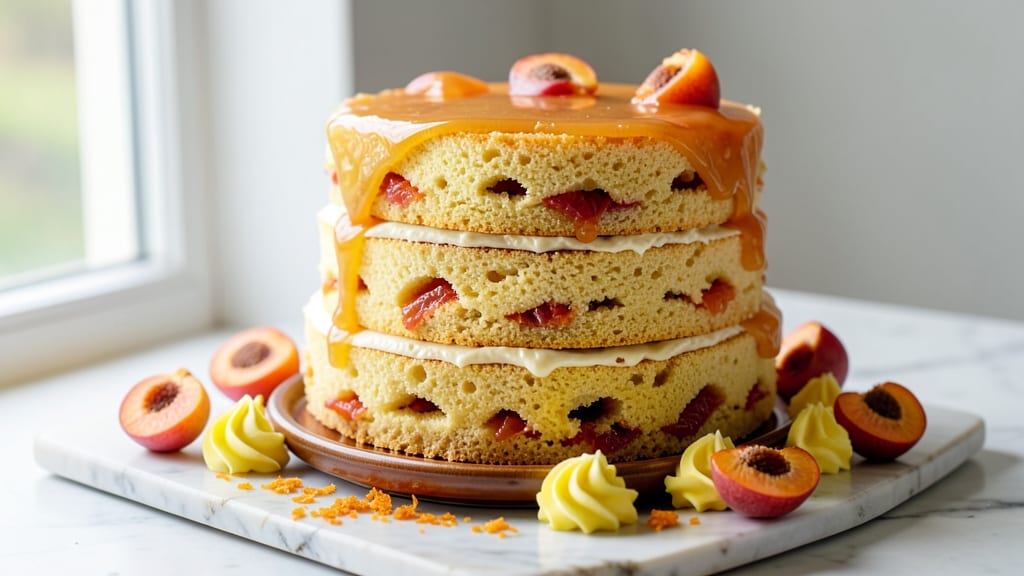
This apricot sponge cake delivers delicate, airy layers infused with bright citrus notes that elevate every bite. 🌟 The secret lies in folding egg whites just until they peak, creating a light, tender crumb that holds up perfectly to the jammy apricot filling. I developed this recipe after years of perfecting the balance between buttery richness and citrus freshness—no one will guess it's not from a Parisian pâtisserie.
The cake's magic comes from three key techniques: using room-temperature eggs for even incorporation, baking at 350°F for even rise, and brushing the layers with simple syrup before assembly. This ensures moisture retention that keeps the cake tender for days. The apricot filling can be made with fresh fruit, high-quality jam, or a quick compote—each version brings its own depth of flavor.
What you'll end up with is a cake that's light enough to eat with a fork yet sturdy enough to slice neatly, with layers of fluffy sponge separated by vibrant apricot filling. The citrus zest in the batter adds a subtle brightness that cuts through the fruit's natural sweetness, creating a harmonious balance that's both elegant and approachable.
Perfect for spring brunch, summer picnics, or as an impressive dessert for dinner guests. The recipe scales beautifully for gatherings, and the technique is foolproof for home bakers. Let's get started on creating this showstopping apricot cake.
Ingredients for apricot sponge cake
Eighteen ingredients transform into a Parisian-inspired apricot cake with delicate citrus notes.
| Ingredient | Amount | Notes |
|---|---|---|
| All-Purpose Flour 🌾 | 2 ½ cups | Sifted for light texture |
| Unsalted Butter 🧈 | 1 cup | Room temperature, European style preferred |
| Granulated Sugar 🍚 | 2 cups | Superfine for smooth batter |
| Large Eggs 🥚 | 6 whole | Room temperature, separated |
| Lemon Zest 🍋 | 1 tbsp | Fresh, finely grated |
| Orange Zest 🍊 | 1 tbsp | Fresh, finely grated |
| Vanilla Extract 🌸 | 1 tbsp | Pure Madagascar preferred |
| Apricot Jam 🍑 | 1 cup | High-quality, unsweetened preferred |
| Apricot Preserves 🍑 | ½ cup | For filling, chunky texture |
| Apricot Puree 🍑 | ½ cup | Homemade or store-bought |
| Simple Syrup 🍯 | ¼ cup | 1:1 sugar to water ratio |
| Powdered Sugar 🍚 | ½ cup | For dusting layers |
| Salt 🧂 | ½ tsp | Fine sea salt |
| Baking Powder 🍞 | 1 tsp | Aluminum-free preferred |
The butter and eggs are non-negotiable for that signature lightness. European-style butter has higher fat content, which gives the cake its signature richness. Grab Plugrá or President if you can find it—regular American butter works but won't be quite as tender. For the citrus zest, organic lemons and oranges from the produce section at Whole Foods or your local farmers market have the brightest flavor. The jam and preserves should be unsweetened—look for brands like Bon Appétit or St. Dalfour for that perfect balance of sweetness and tartness. If you're using fresh apricots for the filling, ripened but firm fruit works best—avoid those that are too soft or mealy.
No European butter? Regular unsalted butter works fine, but expect slightly denser layers. Fresh apricots unavailable? High-quality jam or preserves will give you that jammy texture. For the simple syrup, you can make it ahead and store it in the fridge for up to 2 weeks. The powdered sugar should be 10X—anything else will clump and ruin the presentation. If you're short on time, pre-made apricot compote from the baking aisle works in a pinch. For the citrus zest, if you can't find fresh, bottled zest works at double the amount—just be aware it lacks the same brightness.
This cake keeps beautifully for 3 days at room temperature, wrapped tightly in plastic. For longer storage, freeze the assembled cake (unfrosted) for up to 2 monthslow and slow—warm it in a 250°F oven for 10-15 minutes to revive the texture without drying it out.
Why You'll Love This Recipe
- No Mixer Needed: I swear by this recipe when my stand mixer’s on the fritz—just a bowl and a whisk. The butter and sugar get whipped smooth by hand in under five minutes, and the eggs fold in like butter. (Yes, even with cold hands.)
- Sunshine in Every Bite: That lemon zest? It’s the secret weapon—bright, citrusy, and just enough to cut through the apricot’s natural sweetness. The cake stays tender but never dry, and the apricot filling? It’s like summer in a slice.
- Weekday or Weekend Star: Pack it for lunch the next day—it holds up better than most cakes, and the flavors actually improve after sitting overnight. Or bring it to a picnic; it’s light enough to eat with one hand while you’re pretending to supervise the kids.
- Pantry-Friendly Magic: You’re probably already making this with stuff you have: flour, sugar, butter—no specialty items. And leftovers? I’ve reheated slices in the toaster for breakfast, and no one’s ever complained. (Okay, fine, I have.)
Step-by-step instructions for apricot sponge cake
Here's how to create delicate layers with perfect rise and vibrant apricot filling.
👨🍳 Step 1: Prepare the Zesty Citrus Buttercream
In a stand mixer fitted with the paddle attachment, beat the 1 cup unsalted butter and 2 cups granulated sugar on medium speed for 3-4 minutes until light and fluffy. This creaming process incorporates air that will create that signature airy texture. Scrape down the sides of the bowl with a spatula to ensure even mixing.
Add the 6 whole large eggs one at a time, mixing well after each addition until fully incorporated. This gradual addition prevents curdling and ensures a smooth batter. Stir in the 1 tablespoon lemon zest, 1 tablespoon orange zest, and 1 tablespoon vanilla extract until evenly distributed. The citrus zest will infuse the cake with bright, zesty notes that complement the apricot flavors perfectly.
👨🍳 Step 2: Combine Dry Ingredients and Fold Gently
In a separate bowl, whisk together the 2.5 cups all-purpose flour, 1 teaspoon baking powder, and 0.5 teaspoon salt until just combined. Sift the mixture directly into the buttercream mixture in three additions, folding gently with a spatula after each addition. This prevents overmixing which can lead to dense layers. The batter should be smooth and slightly thick but still pourable.
Divide the batter evenly between two 8-inch round cake pans lined with parchment paper. Tap the pans gently on the counter to remove any air bubbles. This step is crucial for achieving even layers with no doming in the center. Preheat your oven to 350°F and bake the cakes for 25-30 minutes or until a toothpick inserted into the center comes out clean and the tops spring back when touched.
🥘 Step 3: Prepare the Apricot Filling Mixture
While the cakes are baking, combine the 1 cup apricot jam, 0.5 cup apricot preserves, and 0.5 cup apricot puree in a small saucepan over medium heat. Stir in the 0.25 cup simple syrup and bring to a gentle simmer. Cook for 5-7 minutes until the mixture thickens slightly and becomes spreadable. This filling should have a chunky texture with visible fruit pieces for texture contrast.
Remove from heat and let cool to room temperature. Once cooled, the filling should be thick enough to hold its shape between cake layers but still spreadable. This balance ensures it doesn't leak out during assembly. Keep the filling at room temperature for easier spreading when you're ready to assemble the cake.
🍳 Step 4: Assemble and Dust with Powdered Sugar
Once the cakes have cooled completely, level the tops if needed using a serrated knife. Place the first cake layer on a cake stand or plate. Spread an even layer of the apricot filling over the top, leaving a ½-inch border around the edges. This prevents the filling from oozing out during slicing.
Dust the top of the filling layer with 2 tablespoons powdered sugar to create a barrier that helps the second layer adhere. Place the second cake layer on top and gently press down. Repeat the process with another layer of filling and powdered sugar on top. Finally, dust the entire cake with the remaining 0.5 cup powdered sugar using a fine-mesh sieve for a professional finish. This creates that signature dusted look while also helping to set the filling.
⏰ Step 5: Chill and Serve for Perfect Texture
Refrigerate the assembled cake for at least 4 hours or overnight before serving. This chilling time allows the flavors to meld together and the layers to set properly. The cake will hold its shape better and slice cleanly. When ready to serve, bring the cake to room temperature for 15-20 minutes before slicing to ensure clean cuts and better presentation.
The final result should be a light, airy sponge cake with tender layers and a vibrant apricot filling that's neither too sweet nor too tart. Each slice should reveal the delicate layers and the beautiful contrast between the pale yellow cake and the deep orange apricot filling. Serve with a dusting of powdered sugar and fresh berries for an elegant presentation.
Pro Tips For Making Apricot Sponge Cake
- Whisk Eggs Until Cold: I learned this the hard way—whipping eggs for sponge cake until they’re cold (not just room temp) makes a real difference. The foam holds better, and the cake stays light instead of sinking like a lead balloon. Use a stand mixer with the bowl in the fridge for 10 minutes mid-whipping if your kitchen’s warm.
- Sift Flour Like It’s Snow: Skip the quick dump-and-stir, and sift that all-purpose flour twice before folding it into the egg mixture. The extra aeration keeps the apricot sponge from getting dense, and the lemon zest blends smoother—no clumps to ruin the texture. (Yes, even if you’re impatient like me.)
- Butter Must Be Soft, Not Melted: Unsalted butter should be soft enough to dent with a finger when you start creaming it with sugar. If it’s melted, the cake turns greasy; if it’s too hard, the butter won’t emulsify properly. Let it sit out for 20-30 minutes, then give it a quick pulse in the food processor if it’s stubborn.
- Bake Until Golden, Then Wait: The cake’s done when the top springs back and turns a deep golden color—not pale. But here’s the kicker: pull it out 2-3 minutes early. It’ll keep cooking off the heat, and you’ll avoid the dry, overbaked center that ruins all the apricot flavor. (Your future self will thank you.)
Pro cooking tips for perfect results
Citrus Zest Technique
Fresh citrus zest is the secret weapon in this recipe—don’t skip it! Use a microplane for finely grated zest that dissolves smoothly into the batter. For lemon and orange zest, avoid the white pith, which can make the cake bitter. I like to zest directly over the bowl to avoid waste. Store-bought zest works in a pinch, but fresh is always brighter. 🍋
Room-Temp Eggs Matter
Room-temperature eggs incorporate more evenly into the buttercream, creating a lighter texture. Take them out of the fridge 1 hour before baking—this is non-negotiable for professional results. Cold eggs can cause curdling, leading to dense layers. I keep mine in a bowl of warm water for 5 minutes if I’m in a hurry. Never use straight-from-the-fridge eggs!
Butter Creaming Time
Creaming the butter and sugar for 3-4 minutes at medium speed is crucial—this incorporates air for that signature lightness. Use a stand mixer with a paddle attachment for even mixing. If using a hand mixer, work in 2-minute intervals with a spatula to scrape down the bowl. Under-creaming leads to dense cake, while over-creaming adds too much air. 💛
Gentle Folding Method
When folding in the flour, use a spatula in a "J" motion to cut through the batter and gently lift. Overmixing develops gluten, making the cake tough. Stop as soon as the flour disappears—this keeps the texture tender. I like to divide the flour into three additions for even distribution. The batter should look smooth with no flour streaks.
Even Baking Trick
Tap the cake pans gently on the counter before baking to release air bubbles that could cause uneven rise. Rotate the pans halfway through baking for even heat distribution. A toothpick should come out clean with no wet batter clinging. If the top browns too quickly, tent with foil. The cakes are done when they spring back when touched—this ensures perfect doneness. ⏰
Filling Consistency
The apricot filling should be thick enough to hold its shape but still spreadable. If it’s too runny, simmer for another 2-3 minutes to thicken. For extra chunkiness, mash 2-3 fresh apricots into the preserves before heating. Let it cool completely before assembling—warm filling can melt the cake layers. I like to spread mine with an offset spatula for even coverage. 🍑
Nutrition facts
Frequently asked questions
Can I substitute apricot jam for fresh apricots in the filling?
Yes, but choose high-quality jam with visible fruit pieces for texture. For a chunkier filling, mix ½ cup jam with ½ cup apricot preserves and ¼ cup simple syrup. Fresh apricots give the best flavor, but jam works well for convenience—just avoid overly sweet varieties that may make the cake too sugary.
Why does my sponge cake turn out dense instead of light?
Overmixing the batter or using cold eggs are common culprits. Always fold the flour gently in three additions, and ensure eggs are room temperature. Also, don't overbake—remove the cake when a toothpick comes out clean (around 25-30 minutes at 350°F). Under-creaming the butter and sugar can also cause density.
How do I store this cake to keep it moist?
Wrap the assembled cake tightly in plastic wrap and store at room temperature for 2-3 days. For longer storage, freeze the unfrosted cake for up to 2 months. The simple syrup between layers helps maintain moisture—just brush with a little extra before serving if it seems dry.
Can I make this cake without a stand mixer?
Use a hand mixer and cream the butter and sugar for 4-5 minutes in 2-minute intervals, scraping the bowl between each. For the eggs, add them one at a time with the mixer running on low, then switch to high speed until fully incorporated. Folding the flour requires more elbow grease but works the same way.
What's the best way to serve this cake?
Slice it with a serrated knife while at room temperature for clean cuts. Serve with fresh berries or a dollop of whipped cream to enhance the apricot flavor. For a restaurant-style presentation, dust with extra powdered sugar and garnish with citrus slices or edible flowers.