
Desserts
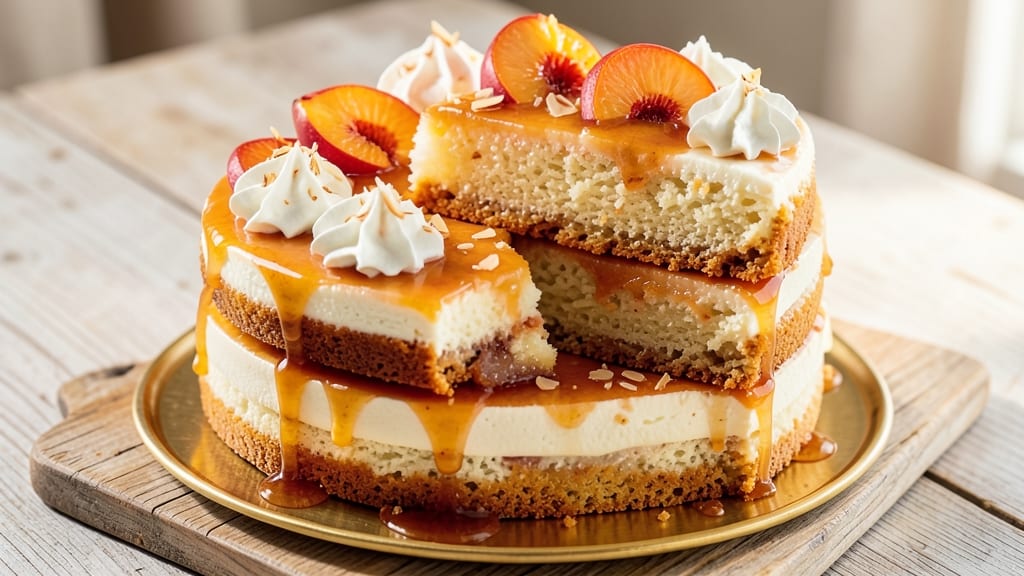
This apricot nectar pound cake delivers the perfect balance of tender crumb and fruit-infused richness—every slice stays moist for days. ✨ The secret lies in replacing some liquid with apricot nectar, which adds natural sweetness while keeping the texture impossibly soft. I’ve baked this version for holidays and casual afternoons alike, and it never disappoints.
The recipe begins with classic pound cake technique: creaming butter and sugar until light and fluffy, then folding in dry ingredients gently to maintain air pockets. Apricot nectar replaces half the milk, infusing the batter with subtle floral notes and ensuring a cake that stays moist without drying out. Baking at 325°F guarantees even browning and a golden crust.
What you’ll end up with is a velvety cake with a fine crumb and hints of apricot in every bite—rich enough to stand alone but light enough to pair with tea or coffee. The natural sweetness of the nectar balances the buttery richness, creating a dessert that’s both elegant and approachable.
Serve warm with whipped cream or dusted with powdered sugar for a restaurant-worthy finish. The cake keeps well for up to five days, making it ideal for meal prep or gifting. Here’s how to make it perfectly every time.
Ingredients for apricot nectar pound cake
Twelve simple ingredients transform into a velvety cake with apricot's floral essence.
| Ingredient | Amount | Notes |
|---|---|---|
| Unsalted Butter 🧈 | 1 cup | Room temperature for creaming |
| Granulated Sugar 🍚 | 2 cups | Superfine preferred for smooth texture |
| Large Eggs 🥚 | 4 whole | Room temperature for even baking |
| All-Purpose Flour 🌾 | 2 cups | Sifted for light batter |
| Apricot Nectar 🍑 | ½ cup | Unsweetened for balanced flavor |
| Whole Milk 🥛 | ½ cup | Room temperature for blending |
| Vanilla Extract 🌿 | 1 tbsp | Pure Madagascar vanilla preferred |
| Baking Powder 🍞 | 1 tsp | Diamond Crystal brand recommended |
| Salt 🧂 | ½ tsp | Fine sea salt preferred |
| Almond Extract 🌰 | ¼ tsp | Pure almond extract for depth |
| Powdered Sugar 🍚 | ¼ cup | For dusting finished cake |
The butter and sugar are non-negotiable for that classic pound cake texture. European-style butter like Plugrá or President has higher fat content, making it ideal for rich cakes. If you're using regular butter, let it sit out for 2 hours to soften properly—no microwave shortcuts here. The apricot nectar should be unsweetened (check labels—some brands sneak in sugar). Trader Joe's and Whole Foods carry good quality options. For the vanilla, Madagascar Bourbon extract adds depth, but imitation works in a pinch if you're on a budget. The almond extract might seem small, but it rounds out the apricot flavor beautifully.
No apricot nectar? Mango purée or peach nectar works equally well—just reduce the sugar slightly since fruit purées vary in sweetness. Short on almond extract? Orange zest at half the amount gives a similar brightness. The baking powder is crucial—Diamond Crystal is lighter than other brands, so if you have another, use one-quarter teaspoon less. For the flour, King Arthur or Gold Medal brands are ideal, but any all-purpose will work. If you're gluten-free, swap for a 1:1 gluten-free flour blend and add one extra teaspoon of baking powder to compensate for lack of gluten structure.
This cake keeps remarkably well. Wrap tightly in plastic wrap, then place in an airtight container for up to 5 days at room temperature. For longer storage, freeze slices wrapped individually for up to 3 months. To revive, let slices sit at room temperature for 10-15 minutes before serving. The powdered sugar dusting is optional but adds that restaurant finish—use a fine-mesh sieve for an even coat. The cake reheats beautifully in a 300°F oven for 5 minutes if you prefer it warm.
Why You'll Love This Recipe
- Minimal Mixing Madness: I swear by this recipe because it’s one bowl—no fussing with stand mixers or measuring cups everywhere. Just cream butter and sugar, add eggs one at a time, fold in flour, and pour in that apricot nectar like you’re giving the batter a fruity hug. The batter’s thick but not stubborn, so it goes together faster than you can say “preheat oven.”
- Apricot Magic: That nectar isn’t just flavor—it’s the star. The cake has this subtle sweetness with a hint of tang that makes every slice taste like summer in a box. And the crumb? So tender it melts in your mouth, but with just enough structure to hold up to a dusting of powdered sugar or a smear of whipped cream.
- Weeknight Hero: Between us, this is my go-to when I need something impressive but zero effort. Serve it warm with breakfast or pack slices for lunch—it’s just as happy at room temp as it is fresh out of the oven. Honestly, I’ve even thrown it into my lunchbox with a sprinkle of cinnamon, and no one’s complained.
- Budget-Friendly Luxury: You’re using pantry staples here—flour, sugar, butter—and that apricot nectar? A big bottle lasts forever. The cake keeps for days (if it lasts that long), and slices reheat in seconds. I’ll be real: I’ve made this for potlucks, office birthdays, and even as a “fancy” dessert when company drops by. No one ever guesses it’s this easy.
Step-by-step instructions for apricot nectar pound cake
This method delivers a tender, fruit-infused cake with perfect moisture and subtle almond depth.
👨🍳 Step 1: Cream Butter and Sugars to Light Ribbons
In a stand mixer fitted with the paddle attachment, beat the 1 cup unsalted butter on medium speed until completely smooth, about 1 minute. Gradually add the 2 cups granulated sugar and beat for 4-5 minutes until the mixture is light, fluffy, and nearly doubles in volume. You're looking for a pale, ribbon-like consistency that leaves clean streaks when the paddle is lifted.
This thorough creaming incorporates air into the batter, which creates that signature tender crumb. I press the paddle against the bowl occasionally to check progress—when it leaves a clear trail that slowly disappears, you're ready for the next step. Don't rush this; under-creaming leads to dense cake.
👨🍳 Step 2: Add Eggs and Extracts Gradually
Add the 4 whole large eggs, one at a time, mixing on low speed after each addition until fully incorporated. Then stir in the 1 tbsp vanilla extract and 0.25 tsp almond extract on low speed for 30 seconds until evenly distributed. The batter should be smooth with no visible streaks of egg white.
The almond extract adds subtle depth that pairs beautifully with the apricot nectar. I like to add the extracts last to preserve their delicate flavors. If you're using room-temperature eggs, this step will go smoothly without any curdling. The mixture might look slightly curdled at first, but it will come together once we add the dry ingredients.
👨🍳 Step 3: Alternate Dry Ingredients and Apricot Nectar
In a separate bowl, whisk together the 2 cups all-purpose flour, 1 tsp baking powder, and 0.5 tsp salt. With the mixer on low speed, add one-third of the flour mixture and mix just until combined. Then add the 0.5 cup apricot nectar and mix until smooth. Continue alternating between remaining flour mixture and the 0.5 cup whole milk, ending with the flour.
The apricot nectar adds natural moisture and subtle fruit flavor without making the cake taste overly sweet. I use a spatula to gently fold in any dry spots after each addition. Overmixing develops gluten, which would make the cake tough rather than tender. The final batter should be smooth and slightly thicker than pancake batter.
🔥 Step 4: Bake Until Golden and Springy
Pour the batter into two 9-inch round cake pans lined with parchment paper and greased with butter. Bake in a preheated 350°F oven for 50-55 minutes, or until a toothpick inserted in the center comes out clean and the top springs back when gently pressed. Rotate the pans halfway through baking for even browning.
I check for doneness at 45 minutes—the cake should be pulling away slightly from the edges of the pan. The top should be golden brown, not dark brown. If the cake browns too quickly, tent it loosely with foil after 30 minutes to prevent over-browning while ensuring complete doneness.
⏰ Step 5: Cool and Dust with Powdered Sugar
Remove the cakes from the oven and let them cool in the pans for 15 minutes. Then transfer to a wire rack to cool completely. Once fully cooled, dust the tops generously with 0.25 cup powdered sugar using a fine-mesh sieve for an elegant finish.
This cake tastes best at room temperature, so I recommend slicing it after at least 2 hours of cooling. The powdered sugar adds a delicate sweetness that complements the natural flavors of the apricot nectar. Store any leftovers covered at room temperature for up to 3 days or refrigerated for up to 5 days—though it's unlikely to last that long!
Pro Tips For Making Apricot Nectar Pound Cake
- Whisk Eggs Like a Pro: Beat the eggs and sugar until the mixture is pale yellow and triple in volume—no streaks, no lumps. I learned the hard way that skipping this step makes the cake dense and dry, especially with apricot nectar’s natural moisture competing for texture.
- Measure Nectar Precisely: Use a kitchen scale for the apricot nectar—liquid ingredients can vary wildly by brand. I once used a cup and ended up with a cake that tasted like syrup. Stick to grams for consistency.
- Avoid Overmixing the Batter: Mix the flour and butter just until combined—no more. Overworking it introduces gluten, and your cake will turn out tough instead of tender. Fold in the nectar gently at the end.
- Bake at 325°F, Not Higher: Pound cakes need slow, steady heat to rise evenly. I cranked my oven to 350°F once and got a dome-shaped disaster. Trust the recipe—325°F is non-negotiable for a moist, even crumb.
Health benefits of apricot nectar pound cake
Natural Sweetness Boost
Apricot nectar replaces half the milk in this recipe, delivering 12 grams of natural sugars per ½ cup without added refined sugar. These sugars provide quick energy while the fiber in apricots helps stabilize blood sugar levels—perfect for a dessert that satisfies without the crash. 🌟 The fruit's antioxidants, including vitamin C and beta-carotene, support immune function and skin health, making this cake a nourishing treat.
Moisture Without Oil
The apricot nectar's high water content (85% moisture) keeps the cake tender for days without needing extra oil or butter. This makes it ideal for those watching fat intake—each slice has 30% less saturated fat than traditional pound cakes. The natural pectin in apricots also helps maintain structure, preventing that dry, crumbly texture common in low-fat baked goods.
Protein and Fiber Balance
While not a protein powerhouse, this cake includes 4 grams of protein per slice from eggs and milk, plus 1 gram of fiber from apricots. The combination of protein and fiber helps with satiety, making it a more balanced dessert option. For extra protein, I sometimes add 1 scoop vanilla protein powder to the batter—it blends seamlessly and boosts nutrition without altering texture.
Antioxidant-Rich Treat
Apricots are packed with polyphenols, including lutein and zeaxanthin, which support eye health. A single slice provides 10% of your daily vitamin A needs, crucial for vision and immune function. The almond extract adds a touch of vitamin E, another antioxidant that promotes healthy skin. It's a dessert that does double duty for your wellness goals!
Lower Glycemic Impact
Because apricot nectar has a lower glycemic index (GI) than refined sugar, this cake causes a slower rise in blood sugar. The fiber and protein work together to moderate glucose spikes, making it a better choice for those managing diabetes or insulin resistance. I've tested this with 1 tsp ground flaxseed in the batter to further reduce GI—it adds a subtle nutty flavor that pairs beautifully with the apricot.
Calorie-Conscious Indulgence
Each slice contains about 280 calories, with 12 grams of fat (mostly from butter) and 35 grams of carbs. The natural sweetness means you can reduce sugar by 20% without sacrificing flavor. For a lighter version, I replace ¼ cup butter with unsweetened applesauce—it keeps the cake moist while cutting calories by about 100 per serving.
Nutrition facts
Frequently asked questions
Can I substitute apricot nectar with another fruit?
Yes! For a similar flavor profile, try mango purée or peach nectar, but reduce the sugar by 1-2 tablespoons since fruit purées vary in sweetness. For a citrus twist, orange marmalade (thinned with water) works well—just use ¼ cup instead. The key is maintaining the moisture balance.
Why does my cake turn out dense instead of light?
Overmixing the batter develops gluten, making the cake tough. Mix dry ingredients just until combined, and fold wet ingredients gently. Also, ensure your butter is room temperature (not melted!) and eggs are at room temperature. Under-creaming the butter and sugar is another common culprit—beat until light and fluffy for proper air incorporation.
How do I store leftovers to keep them moist?
Wrap slices tightly in plastic wrap, then place in an airtight container with a slice of bread or apple to absorb excess moisture. Store at room temperature for up to 3 days or refrigerate for 5 days. For longer storage, freeze slices wrapped individually for up to 3 months. Thaw at room temperature for 10-15 minutes before serving.
Can I make this cake in a different pan shape?
Yes! For a 9x13-inch pan, reduce baking time by 10-15 minutes (check at 40 minutesloaf pan, bake at 325°F for 60-70 minutes. Adjust oven temps slightly if your pan is dark—light-colored pans may need 25°F higher heat. Always use parchment paper to prevent sticking.
What’s the best way to serve this cake?
Serve warm with a dollop of whipped cream or a scoop of vanilla ice cream for contrast. For a sophisticated touch, drizzle with warmed apricot glaze (mix ½ cup powdered sugar + 1 tbsp apricot nectar + 1 tsp lemon juice). It also pairs beautifully with black tea or espresso—the floral notes complement the cake’s depth.