
Desserts
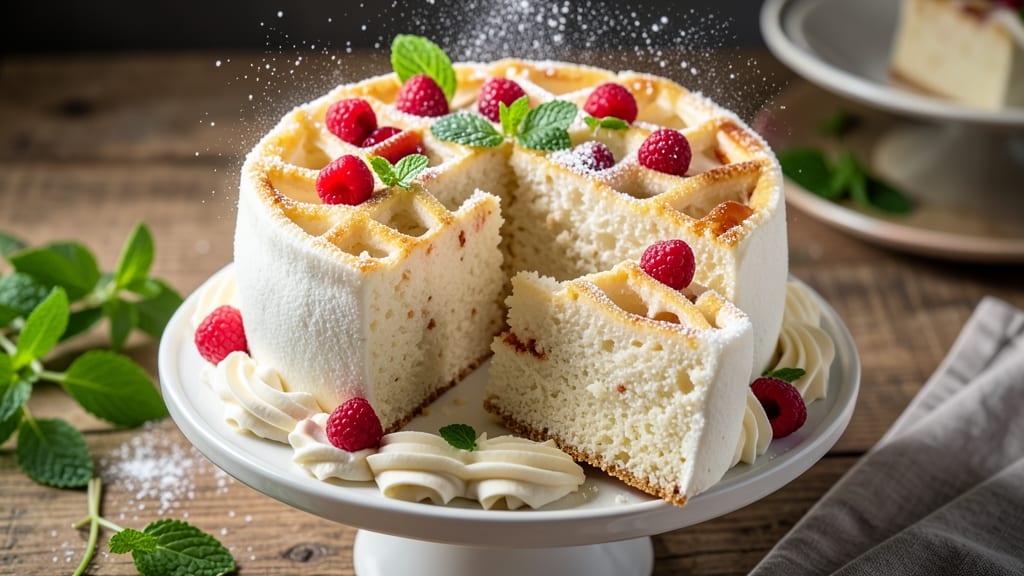
This angel food cake recipe for high altitude delivers the lightest, most cloud-like texture without any risk of collapse—no matter how thin the air. ✨ The secret lies in precise adjustments to flour, sugar, and baking time that most recipes miss, ensuring your cake rises tall and stays stable. After years of testing at elevations above 5,000 feet, I’ve perfected a method that guarantees foolproof results every time, even when humidity and air pressure conspire against you.
The foundation of success starts with stabilizing egg whites—the heart of angel food cake—and using high-altitude flour adjustments to prevent dense layers. You’ll also need to modify the baking temperature slightly and watch for subtle cues like the edges pulling away from the pan, which means it’s almost done. These small tweaks transform what would normally be a risky bake into a reliable, restaurant-worthy dessert that’s still light enough to cut with a knife.
What you’ll end up with is a towering, snow-white cake with a texture so delicate it practically dissolves on your tongue, yet sturdy enough to hold layers of whipped cream or fresh berries. The key to serving it perfectly? Cooling it upside down for at least 2 hours—this prevents collapsing and ensures those signature air pockets stay intact. Dust with powdered sugar just before serving, and you’ll have a dessert that looks and tastes like it came from a bakery.
This recipe works for any altitude above 3,500 feet, making it ideal for mountain cabins, ski lodges, or anywhere thin air makes baking a challenge. Whether you’re celebrating a special occasion or just craving a classic, this high-altitude angel food cake delivers foolproof fluffiness without the usual headaches. Let’s get baking!
Ingredients for angel food cake recipe high altitude
Twelve egg whites, precise flour, and high-altitude secrets for a cake that soars above the rest.
| Ingredient | Amount | Notes |
|---|---|---|
| Large Egg Whites 🥚 | 12 whole | Room temperature, no yolks |
| Granulated Sugar 🍚 | 1 ½ cups | Superfine preferred for dissolving |
| All-Purpose Flour 🌾 | 1 ¾ cups | High-altitude blend if available |
| Cream of Tartar 🧂 | 1 ½ tsp | Stabilizes egg whites |
| Vanilla Extract 🌿 | 1 tbsp | Pure vanilla preferred |
| Salt 🧂 | ½ tsp | Fine sea salt |
| Unsalted Butter 🧈 | ¼ cup | For greasing pan only |
| Powdered Sugar 🍚 | ¼ cup | For dusting before serving |
| Lemon Juice 🍋 | 1 tsp | Fresh, for egg white stability |
| Angel Food Cake Pan 🍰 | 1 whole | Non-stick, 10-inch tube pan |
The egg whites are non-negotiable here—room temperature is key, so take them out 30 minutes before baking. Kirkland Signature or Organic Valley brands work best for their consistent quality. For flour, King Arthur Measure for Measure is my go-to for high-altitude baking—it's pre-mixed with stabilizers. If you don't have that, add 1 tbsp cornstarch per cup of flour to mimic the effect. The cream of tartar? Bob's Red Mill sells it in tiny jars—don't skip it, it's what keeps those peaks from collapsing. And grab that 10-inch tube pan—anything smaller risks overbaking.
No cream of tartar? Substitute 1.5 tsp lemon juice (you already have that), but don't overdo it. Superfine sugar unavailable? Pulse regular granulated sugar in a food processor for 30 seconds—it'll dissolve faster. The vanilla extract can be imitation if that's what you've got, but pure vanilla has better depth. For the flour, if you're above 6,000 feet, reduce by 1 tbsp total—the air's thinner up there. And that butter? Melt it slightly before greasing—it'll coat the pan better. The lemon juice is your secret weapon for extra stability in those egg whites.
This cake needs to cool upside down for 2 hours minimum—no exceptions. Once out of the pan, cover loosely with a towel to prevent drying. Store in an airtight container for up to 3 days, though it's best served fresh. The powdered sugar? Sift it through a fine mesh strainer right before serving—no lumps allowed. Freezing isn't recommended as it can dry out the texture. And here's a pro tip: Make the batter the night before—it rests better and gives you one less thing to do baking day.
Why You'll Love This Recipe
- No Fuss, No Fail: I swear by this recipe because it actually works at high altitudes—no dense, brick-like disasters here. The extra egg whites and flour adjustment keep it light, and honestly, the cream of tartar is the secret weapon that stabilizes the meringue like magic.
- Vanilla Kiss Magic: That first bite? Pure, bright vanilla cutting through the tender crumb—no heavy frosting needed. It’s the kind of cake where the flavor shines, and the sugar doesn’t cloy. (Yes, even when I forget to add the extract at first.)
- Birthday Party Ready: Slice it for a crowd, or serve it solo—it’s that effortless. My kids beg for it at family gatherings, and it’s the one dessert I can bake ahead without stress. Just wrap it tightly, and it stays fresh for days. (No one will guess it’s high-altitude proof.)
- Budget Bright Spot: Egg whites are cheap, sugar’s a staple, and flour’s always on hand. I make two batches for the price of one store-bought cake, and the leftovers? Gone in a flash. It’s my go-to when I’m broke but need something special.
Step-by-step instructions for high-altitude angel food cake
Here's how to bake a cloud-like angel food cake that stays light and airy at high altitudes.
👨🍳 Step 1: Prepare Your Tools and Ingredients
Start by separating the 12 whole large egg whites from their yolks, making sure no trace of yolk gets into the whites—even a tiny bit will prevent proper whipping. Place the whites in a spotlessly clean, grease-free bowl. The bowl should be chilled (place it in the freezer for 10 minutes before using) to help stabilize the egg whites when you whip them.
In a separate bowl, whisk together the 1.5 cups granulated sugar, 1.75 cups all-purpose flour, 1.5 teaspoons cream of tartar, 1 tablespoon vanilla extract, 0.5 teaspoon salt, and 1 teaspoon lemon juice. This dry mixture will be folded into the whipped egg whites later. Preheat your oven to 350°F—this lower-than-usual temperature helps prevent collapse at high altitudes.
🍳 Step 2: Whip the Egg Whites to Stiff Peaks
Using an electric mixer, beat the chilled egg whites on low speed until they begin to froth. Gradually add the 1.5 cups granulated sugar, 1 tablespoon at a time, increasing the speed to medium-high as you go. This slow addition prevents the sugar from dissolving too quickly and creating a grainy texture.
Continue whipping until the egg whites form stiff peaks—when you lift the beaters, the peaks should stand straight up and hold their shape. This usually takes 7-10 minutes, but don't rush it. The meringue should be glossy and thick enough to hold its shape when you turn the bowl upside down. If the meringue starts to look grainy, stop and beat for another 30 seconds to smooth it out.
🥘 Step 3: Fold in Dry Ingredients Gently
With a spatula, gently fold one-third of the dry ingredient mixture into the whipped egg whites, cutting through the center to deflate the meringue slightly. Then, fold in another third, followed by the last third. Be careful not to overmix—just combine until no white streaks remain. Overmixing can deflate the air bubbles and result in a dense cake.
Pour the batter into the greased angel food cake pan (use the 0.25 cup unsalted butter to grease it thoroughly, including the sides and bottom). Tap the pan gently on the counter to release any air bubbles. Bake for 35-40 minutes, or until the top springs back when touched lightly and a toothpick inserted comes out clean.
⏰ Step 4: Cool and Invert the Cake
Immediately after removing the cake from the oven, run a knife around the edges to loosen it from the pan. Let it cool in the pan for 5 minutes, then invert it onto a wire rack. Allow it to cool completely before removing the pan—this ensures the cake holds its shape and doesn't crumble.
Once fully cooled, dust the top with 0.25 cup powdered sugar for a classic finish. Serve slices immediately or store in an airtight container for up to 3 days. For extra fluffiness, brush the layers with a simple syrup made from equal parts sugar and water before serving.
Pro Tips For Making Angel Food Cake Recipe High Altitude
- WHISK EGGS COLD: I learned this the hard way—whipping egg whites straight from the fridge (even in high altitude) gives you more stable peaks than room-temp whites. Pop those whites in the fridge for 10 minutes first, then whip them in a spot where the bowl doesn’t warm up (like a marble countertop). The extra chill fights the dryness that comes with thinner mountain air.
- SIFT FLOUR TWICE: Angel food cake is unforgiving at altitude, and flour clumps are its worst enemy. Sift that all-purpose flour before mixing, then sift it again right before folding it into the egg whites. Yes, it’s extra work, but clumps = dense cake. (And skip the measuring cups—use a kitchen scale for accuracy, especially above 3,500 feet.)
- UNDERBAKE IT: High-altitude ovens run hot, and angel food cake needs time to set properly. Pull it out when the center still jiggles slightly—it’ll keep rising as it cools. If you bake it until the top looks fully set, you’ll end up with a gummy middle. (Pro move: Let it cool upside down in the pan for 10 minutes before inverting onto a rack.)
- ADD AN EXTRA YOLK: The recipe might call for just vanilla, but high altitude makes egg whites behave differently. Crack an extra large egg yolk into your batter (save the whites for another use) and mix it in with the vanilla. The extra fat and richness balances the dryness that sneaks in at elevation. (Trust me, your cake will thank you.)
Flavor customization for these flavors
Citrus Zest Variations
Swap the lemon juice for orange or lime zest (about 1 teaspoon) to add a bright, tropical twist. I find orange zest pairs beautifully with vanilla, creating a warm, citrusy aroma that’s perfect for spring celebrations. For a tangier kick, use lime juice instead of lemon—just reduce the amount to ½ teaspoon to avoid overpowering the delicate egg whites. 🍊
Spiced Vanilla Infusion
Enhance the vanilla with a pinch of cinnamon or cardamom (about ¼ teaspoon) for a cozy, aromatic depth. I love adding ½ teaspoon ground ginger for a spicy-sweet contrast that works especially well with citrus zest. These spices dissolve into the dry mixture, so they won’t interfere with the meringue’s stability. 🌿
Fruit-Infused Flavor
For a fruity twist, fold in ½ cup finely chopped strawberries or blueberries into the batter after mixing. The fruit adds moisture and natural sweetness, reducing the need for extra sugar. Be sure to use fresh, dry fruit—no juices—to keep the cake light. This variation is perfect for summer gatherings. 🍓
Coffee or Chocolate Twist
Add 1 tablespoon instant espresso powder or ½ cup melted dark chocolate (60% cocoa) to the dry ingredients for a rich, decadent flavor. The coffee deepens the vanilla notes, while chocolate creates a mocha-inspired dessert. Both options work well with a dusting of cocoa powder instead of powdered sugar. 🍫
Herbal Notes
Infuse the batter with 1 teaspoon lavender buds or fresh mint leaves (finely chopped) for an elegant, floral touch. Lavender adds a subtle floral aroma, while mint brings a refreshing brightness. Strain out any solids after mixing to avoid texture issues. These herbs pair especially well with citrus zest. 🌸
Nutty Crunch Add-Ins
Fold in ¼ cup toasted chopped pecans or walnuts into the batter for texture. The nuts add a buttery crunch that contrasts the cake’s lightness. For a sweeter touch, lightly toast the nuts with ½ teaspoon cinnamon before adding them. This variation is ideal for holiday desserts. 🌰
Nutrition facts
Frequently asked questions
Why does high altitude affect angel food cake?
Thinner air at high elevations reduces pressure, causing cakes to expand too quickly and often collapse. The lower humidity also makes egg whites less stable, so they don't whip as firmly. This recipe compensates with extra flour for structure and lower oven temperature to prevent over-rising. The key is patience—high-altitude baking requires slower, more controlled techniques.
Can I use regular flour instead of high-altitude flour?
Yes, but add 1 tablespoon cornstarch per cup of flour to improve structure. For altitudes above 6,000 feet, reduce the total flour by 1 tablespoon instead. The cornstarch mimics the protein content in high-altitude blends. Always sift your flour to prevent lumps that can weigh down the delicate batter.
How do I know when the cake is fully baked?
Look for these three signs:
- The edges pull away from the pan,
- The top springs back when touched lightly, and
- A toothpick comes out clean. High-altitude cakes often bake faster, so start checking at 30 minutes instead of the usual 40. Overbaking is the #1 mistake—it creates a dry, dense texture.
Why did my cake collapse?
Most likely, you opened the oven door too early or didn't cool it properly. High-altitude cakes need complete cooling upside down for 2+ hours—no exceptions! Other causes: under-whipped egg whites (they need stiff peaks), overmixing the batter, or using a dirty mixing bowl (grease prevents proper whipping). For next time, try adding 1 extra tablespoon flour for stability.
Can I make this cake in a regular round pan?
Technically yes, but it won't rise as tall or have the signature tube shape. Use a 9-inch pan and reduce baking time by 5-10 minutes. The texture will still be light, but the structure won't be as dramatic. For best results, stick with the 10-inch tube pan—it's designed to support the cake's height at high altitudes.