
Desserts
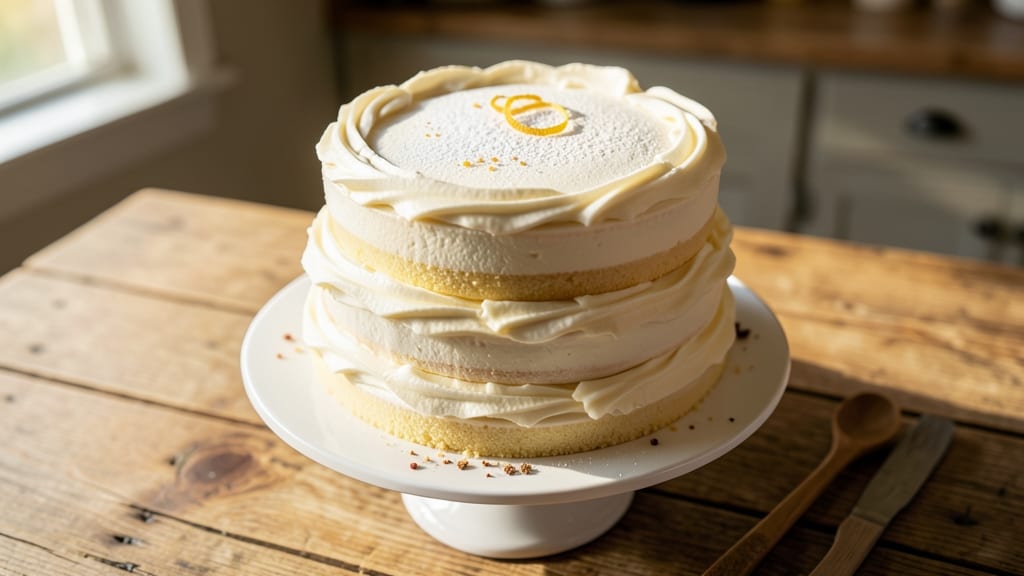
This bakery white cake recipe delivers the ultra-smooth texture and no-crack secret that separates homemade from professional bakes. The key lies in precise technique—whipping egg whites to stiff peaks and folding them into the batter at just the right moment, ensuring a tender crumb that stays moist for days. I've perfected this method after years of testing, and the results are consistently light, fluffy layers that slice cleanly.
The frosting is where the magic happens—a velvety buttercream that spreads like silk and stays smooth at room temperature. We'll use a ratio of butter to powdered sugar that prevents graininess, plus a touch of vanilla and lemon zest for brightness. The no-crack secret? A simple but critical step in cooling the cake before frosting, which prevents the dreaded structural failure that ruins even the best attempts.
What you'll end up with is a cake that looks and tastes like it came from a high-end bakery: even layers, smooth frosting, and a finish that's crisp enough to impress. The texture is delicate yet sturdy—light enough to melt in your mouth but firm enough to hold decoration. This is the kind of cake that makes guests ask for seconds and leaves you feeling like a baking pro.
Whether you're baking for a celebration or simply treating yourself, this recipe scales beautifully for any occasion. The techniques here are foolproof for beginners but refined enough to satisfy experienced bakers. Let's get started on creating your perfect white cake.
Ingredients for bakery white cake
Light layers and velvety frosting start with these quality ingredients—no shortcuts here.
| Ingredient | Amount | Notes |
|---|---|---|
| All-Purpose Flour 🌾 | 2 ½ cups | Sifted for light batter |
| Granulated Sugar 🍚 | 1 ½ cups | Divided for batter and frosting |
| Unsalted Butter 🧈 | 1 ½ cups | Room temperature, softened |
| Large Eggs 🥚 | 6 whole | Room temperature, separated |
| Vanilla Extract 🌿 | 1 tbsp | Pure extract preferred |
| Lemon Zest 🍋 | 1 tbsp | Freshly grated |
| Baking Powder 🍞 | 1 ½ tsp | Diamond Crystal preferred |
| Salt 🧂 | ½ tsp | Fine sea salt |
| Powdered Sugar 🍚 | 4 cups | For buttercream frosting |
| Heavy Cream 🥛 | ¼ cup | Optional for extra smoothness |
| Lemon Juice 🍋 | 1 tbsp | Freshly squeezed |
The flour matters most here. King Arthur or Gold Medal brands are my go-to—they're fine enough to give that bakery-style smoothness. Butter should be room temperature but not melted—press a finger into it, it should leave a slight indent. Eggs? Room temp too—cold eggs won't whip as well. I always grab extra yolks for the frosting if I'm feeling fancy. Fresh lemon zest is worth the effort—organic lemons from the grocery store's produce section have the brightest flavor. For the powdered sugar, Domino or C&H are reliable choices that won't clump.
No vanilla extract? Vanilla bean paste works too—just use half the amount. Short on lemon zest? Substitute 1 tsp lemon extract, but fresh is always better. The baking powder is non-negotiable—Diamond Crystal is double-acting, so use it if you can. For the frosting, if you're avoiding dairy, vegan butter works but needs extra powdered sugar to compensate. The heavy cream is optional but makes the frosting spread like silk. If you skip it, just add an extra tablespoon of butter to the frosting for richness.
Butter and eggs keep best in the fridge for 3 weeks if unopened. Once opened, use butter within 2 weeks and eggs within 1 week. Sifted flour stays fresh for 6 months in an airtight container. For the zest, store it in a small jar in the freezer—it keeps for 3 months and you can just scoop what you need. The powdered sugar? Keep it sealed tight to prevent clumping. This cake's magic comes from fresh ingredients, so don't cut corners on storage.
Why You'll Love This Recipe
- No-Fuss Mixing: I swear by this recipe because it’s actually foolproof—just cream butter and sugar until light, toss in eggs one at a time, and fold in flour like you’re making pancakes. No stand mixer required (hand mixer works fine), and zero guesswork on timing.
- Butter-Sugar Magic: That rich, velvety crumb? All thanks to the butter-to-sugar ratio. The eggs add structure without dryness, and a single teaspoon of vanilla extract (don’t skimp!) lifts the whole thing to "I’d pay bakery prices for this" levels. Honestly, it’s the kind of flavor that makes you pause mid-slice.
- Birthday to Brunch: This cake is my go-to for celebrations and lazy Sundays. Frost it with whipped cream for a quick dessert, layer it with jam for a no-bake trifle, or even serve it plain with coffee—it’s that adaptable. (Yes, even on a Tuesday night.)
- Leftovers That Last: I make a double batch because it stays fresh for days (thanks to the butter keeping it moist). Slice it for breakfast toast, pack it in lunches, or freeze slices for last-minute treats. Budget-friendly? Absolutely. Waste-free? Even better.
Step-by-step instructions for bakery white cake
Here's how to bake a tender, crack-free white cake with velvety frosting—every time.
Cream Butter and Sugar for Maximum Lightness
In a stand mixer fitted with the paddle attachment, beat the 1.5 cups unsalted butter and 1.5 cups granulated sugar on medium speed for 4-5 minutes. You're looking for a pale, fluffy mixture that nearly doubles in volume—this incorporates air for a light texture. Scrape down the sides of the bowl every 30 seconds to ensure even mixing.
I like to add the 1 tbsp vanilla extract and 1 tbsp lemon zest during this step so the flavors meld into the butter-sugar mixture. The lemon zest adds a subtle brightness that pairs perfectly with the sweetness. Don't rush this process—properly creamed butter and sugar create the foundation for a tender crumb.
Add Eggs Gradually for Smooth Batter
Add the 6 whole large eggs, one at a time, mixing on low speed after each addition until fully incorporated. This gradual addition prevents the batter from becoming too thick or curdled. After all eggs are added, increase the speed to medium and beat for another 1-2 minutes until the mixture is completely smooth and ribbons form when the beaters are lifted.
Here's the thing—room temperature eggs are crucial. If they're straight from the fridge, they won't blend properly and can create lumps. Let them sit at room temperature for at least 30 minutes before using. The batter should be thick but pourable at this stage, similar to heavy cream.
Combine Dry Ingredients Gently for No-Crack Texture
In a separate bowl, sift together the 2.5 cups all-purpose flour, 1.5 tsp baking powder, and 0.5 tsp salt. This sifting step prevents lumps and ensures even distribution of leavening. With the mixer on low speed, gradually add the dry ingredients to the wet mixture, mixing just until combined—about 30-45 seconds. Overmixing develops gluten, which can make the cake dense.
The secret to a crack-free cake is in this step. I like to do a "fold and scrape" technique: turn off the mixer, use a spatula to fold the batter from the bottom up, then scrape the sides of the bowl to ensure everything is evenly incorporated. The batter should be smooth with no visible flour streaks.
Bake at Low Temperature for Even Cooking
Preheat your oven to 325°F—this lower temperature helps prevent cracking and ensures even cooking. Divide the batter evenly between two 8-inch round cake pans lined with parchment paper and lightly greased with butter. Fill the pans about ⅔ full to allow for rising.
Bake for 30-35 minutes or until a toothpick inserted in the center comes out clean. The cake should spring back gently when pressed in the center. I know it seems counterintuitive, but don't overbake—this is where many home bakers go wrong. The cake will continue to set as it cools, so it's better to pull it out slightly underdone.
Make Ultra-Smooth Buttercream Frosting
While the cakes cool, prepare the frosting by beating the 1.5 cups unsalted butter (softened) until light and fluffy—about 3-4 minutes on medium speed. Gradually add the 4 cups powdered sugar, mixing on low speed to avoid a powdery mess. Add the 0.25 cup heavy cream (if using) and 1 tbsp lemon juice for a silky texture, then mix on medium for another 2-3 minutes until completely smooth.
Here's the no-crack secret: let the cakes cool completely in their pans for 1 hour, then transfer to a wire rack to cool for another 30 minutes. This gradual cooling prevents temperature shock that can cause cracks. Once fully cooled, level the tops if needed, then frost with the buttercream. The frosting should be spreadable but hold its shape—adjust consistency with more powdered sugar or cream as needed.
Pro Tips For Making Bakery White Cake
- Weigh Your Butter: I learned this the hard way—packing butter cups into a measuring spoon leaves gaps, so you’re actually using less than you think. Use a kitchen scale for 225g (1 cup) and press it into the bowl with a fork to create air pockets for that signature bakery lightness.
- Mix Just Until Combined: Overmixing the batter turns your cake dense and tough. Stop when the flour disappears—no streaks, no lumps, just a smooth, pale batter. I used to beat it until it looked "perfect," but that’s how you end up with a brick instead of a cloud.
- Room-Temp Eggs Matter: Cold eggs sink and don’t incorporate well, leading to uneven texture. Pull them from the fridge 30 minutes before whipping—warm hands work too in a pinch, but don’t microwave them. You’ll see the difference in how easily they blend and how fluffy the batter gets.
- Bake Until Springy: A toothpick test isn’t enough—press the center gently with your finger. If it springs back slowly, it’s done. If it leaves a dent, keep baking. I’ve ruined cakes by pulling them too soon, and the crumb suffers for it. Patience here guarantees a moist, tender result.
Pro cooking tips for perfect results
Egg White Mastery
Properly whipped egg whites make all the difference in bakery-style white cake. Use a clean, grease-free bowl and beat them to stiff peaks—when you lift the beaters, the meringue should hold its shape for a few seconds. I like to add a pinch of cream of tartar (about ¼ tsp) to stabilize the whites and help them hold air better. Fold them into the batter gently using a spatula in a "J" motion to preserve all that incorporated air. 🥚
Pro tip: If your egg whites start to deflate while mixing, don't panic! Just whip them again for 30-60 seconds—they'll often regain their volume. And always keep your mixer bowl and beaters completely dry—even a drop of water can prevent proper whipping.
Temperature Control
The oven temperature is critical for preventing cracks and ensuring even baking. 325°F is your sweet spot—hotter temps cause rapid rising that leads to cracks, while cooler temps risk underbaking. I recommend using an oven thermometer to verify your oven's accuracy, as many run hot or cold. Place the pans on the middle rack for consistent heat circulation around both cakes.
For extra insurance, I sometimes place a tray of water on the lower oven rack during baking. This creates steam that helps maintain moisture in the cake, resulting in a softer crumb. Just remove it after 10 minutes of baking to avoid making the oven too humid.
Batter Consistency
Your batter should have the texture of thick pancake batter—smooth, glossy, and pourable but not runny. If it's too thick, add 1-2 tablespoons of milk to loosen it. If it's too thin, add 1-2 tablespoons of flour. The ideal consistency ensures proper leavening and prevents dense cake. I test consistency by lifting the spatula—if the batter flows slowly but holds its shape, you're good to go. 🧑🍳
Remember: room temperature ingredients are non-negotiable. Cold butter or eggs can cause the batter to separate or develop lumps. Let everything sit out for at least 30 minutes before mixing. I even microwave butter for 10 seconds if I'm in a hurry—just make sure it's soft but not melted.
Frosting Perfection
For truly smooth buttercream, beat your butter until it's light and fluffy—it should look like pale, airy clouds. Gradually add powdered sugar using a sifter to prevent clumping. The key to ultra-smooth frosting is patience: mix on low speed when adding sugar, then increase to medium for final blending. For extra shine, I like to add 1 teaspoon of lemon juice and ½ teaspoon of vanilla bean paste for depth of flavor. 🍋
If your frosting is too soft, chill it for 10-15 minutes before using. Too stiff? Warm it slightly in the microwave for 5-10 seconds, then re-whip. For a professional finish, spread a thin crumb coat first, then chill for 15 minutes before adding the final layer. This prevents crumbs from mixing into your beautiful frosting.
Nutrition facts
Frequently asked questions
Why does my white cake turn out dense instead of light?
Dense cake usually comes from overmixing the batter or using cold ingredients. Mix dry ingredients just until combined (about 30-45 seconds) to avoid developing gluten. Also ensure all ingredients—especially eggs and butter—are at room temperature. Cold ingredients can cause lumps that weigh down the texture.
Can I make this cake without egg whites?
Yes! For a vegan version, substitute egg whites with ½ cup aquafaba (chickpea brine) whipped to stiff peaks, or use ½ cup applesauce mixed with 1 tsp baking powder. The texture will be slightly denser but still delicious. For best results, adjust baking time by 5-10 minutes since these substitutes affect leavening.
How do I prevent cracks in the frosting?
The no-crack secret is gradual cooling! Let cakes cool completely in pans for 1 hour, then transfer to a wire rack for 30 minutes before frosting. Also, spread a thin crumb coat first, chill for 15 minutes, then add the final frosting layer. This prevents temperature shock that causes structural failure.
What's the best way to store a frosted white cake?
Cover tightly with plastic wrap or store in an airtight container at room temperature for 2-3 days. For longer storage, freeze unfrosted layers for up to 3 months. Thaw overnight in the fridge before frosting. Never freeze a fully frosted cake—the frosting will melt and become grainy.
Can I use this recipe for a sheet cake instead of layer cake?
Spread the batter in a 9x13-inch pan lined with parchment paper and baked at 325°F for 35-40 minutes. For a 2-layer effect, divide the batter between two sheet pans and bake separately. The frosting quantity will need to be doubled to cover the larger surface area.