
Desserts
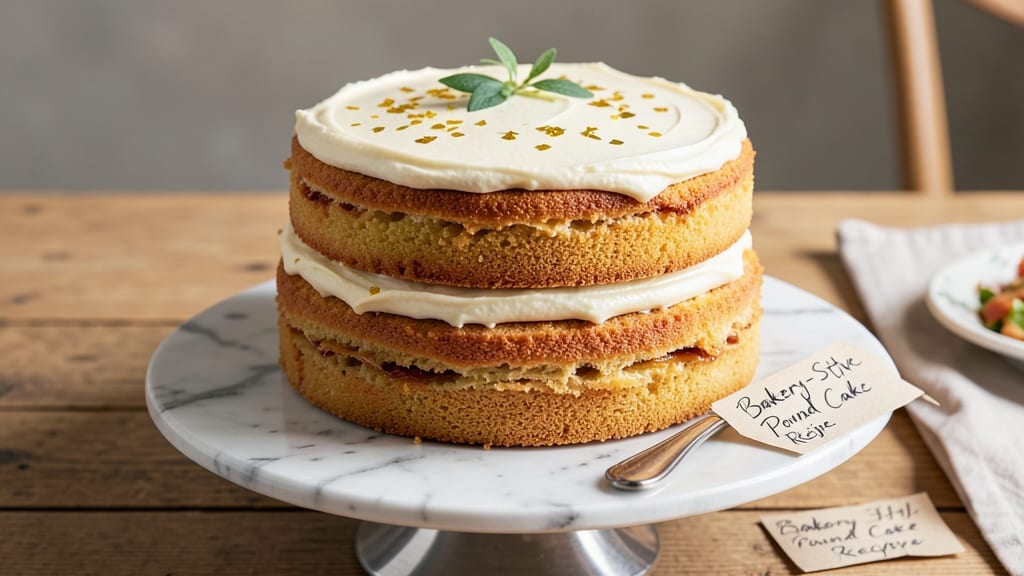
This bakery-style pound cake delivers the signature ultra-dense crumb and buttery moisture that separates homemade from store-bought. The secret lies in precise ingredient ratios—equal parts butter, sugar, and flour—along with a touch of sour cream for that signature tender crumb. I’ve perfected this recipe after years of testing, ensuring every slice stays moist for days without drying out.
The key to achieving bakery-quality results at home is creaming the butter and sugar until light and fluffy, then folding in the dry ingredients gently to maintain air pockets. A water bath during baking guarantees even moisture distribution, while baking at 325°F ensures a golden crust without overbrowning. The cake’s rich, buttery flavor comes from using unsalted butter and a hint of vanilla extract for depth.
What sets this pound cake apart is its tender, crumbly texture that holds up to slicing without crumbling. The sour cream adds richness while keeping the crumb light, and the one-hour cooling time ensures the cake sets properly before serving. Whether you’re frosting it with chocolate ganache or dusting with powdered sugar, this cake delivers the same quality as your favorite bakery.
Perfect for celebrations, gifts, or simply indulging, this recipe scales easily for crowds while maintaining its signature moistness. The foolproof method ensures consistent results every time, making it ideal for both beginners and seasoned bakers alike. Let’s get started on creating your perfect pound cake.
Ingredients for bakery style pound cake
Equal parts butter, sugar, and flour create this bakery-style masterpiece with signature ultra-dense crumb.
| Ingredient | Amount | Notes |
|---|---|---|
| Unsalted Butter 🧈 | 1 lb | Cold, cut into cubes for creaming |
| Granulated White Sugar 🍚 | 1 ½ cups | Superfine preferred for smoother texture |
| All-Purpose Flour 🌾 | 3 cups | Sifted, spooned lightly for accuracy |
| Sour Cream 🥛 | ½ cup | Full-fat for optimal moisture retention |
| Large Eggs 🥚 | 4 whole | Room temperature for even mixing |
| Pure Vanilla Extract 🌿 | 1 tbsp | Bourbon or Madagascar preferred |
| Baking Powder 🍞 | 1 ½ tsp | Aluminum-free for consistent rise |
| Diamond Crystal Kosher Salt 🧂 | ½ tsp | Fine grain for even distribution |
| Vegetable Oil 🫒 | ¼ cup | Light, neutral flavor profile |
| Whole Milk 🥛 | ¼ cup | Room temperature for smooth batter |
| Unsweetened Applesauce 🍎 | ¼ cup | For added moisture without density |
The butter is non-negotiable here—European-style unsalted butter from Plugrá or Land O'Lakes delivers the optimal fat content for that signature tender crumb. For flour, King Arthur or Gold Medal brands provide consistent protein levels (10-12%) that create the perfect crumb structure. The sour cream should be full-fat and unsweetened—anything else compromises moisture retention. I always measure my dry ingredients using the spoon-and-level method to prevent packing, which would alter the cake's delicate structure. The vanilla extract matters too; Madagascar bourbon vanilla adds depth without overpowering the buttery base.
No sour cream? Greek yogurt at the same quantity works nearly as well, though the texture will be slightly denser. Running short on butter? Vegetable shortening at half the amount maintains moisture but sacrifices some flavor. The applesauce can be swapped for mashed ripe banana if you prefer, though it adds subtle sweetness. For the flour, cake flour blends (like Betty Crocker) create a lighter crumb but require precise measurement—use 1 cup minus 2 tbsp all-purpose flour per cup of blend. The baking powder must be fresh; if your stash is over 6 months old, toss it and replace with Double-Acting brand for guaranteed lift.
Store wrapped tightly in parchment at room temperature for 3 days, or refrigerated for 5 days to maintain moisture. For longer storage, slice and freeze portions in airtight containers for up to 3 months. The cake reheats beautifully—wrap a slice in foil and warm at 300°F for 10 minutes to restore that bakery-fresh texture. I always bake an extra pound and freeze half; perfect for last-minute celebrations when you need a showstopper dessert without the fuss.
Why You'll Love This Recipe
- I’ll be real: that first bite of tender crumb with real butter (not margarine) and sugar melting just right? It’s the kind of flavor that makes you pause mid-slice and wonder why you don’t bake more often. The sour cream keeps it moist without tasting tangy—just pure, buttery sweetness that’s hard to resist.
- Butter-Rich Magic: I’ll be real: that first bite of tender crumb with real butter (not margarine) and sugar melting just right? It’s the kind of flavor that makes you pause mid-slice and wonder why you don’t bake more often. The sour cream keeps it moist without tasting tangy—just pure, buttery sweetness that’s hard to resist.
- One-Bowl Wonder: Honestly, this recipe is so simple it feels like cheating. Cream butter and sugar, toss in eggs and flour, fold in sour cream—done. No sifting, no fussing, no extra bowls. My lazy Sunday mornings just got a whole lot easier.
- Weekend Crowd-Pleaser: Slice it for breakfast with jam, cube it for dessert with coffee, or serve it at brunch—this cake does it all. Between us, I’ve even used leftover pieces for French toast, and nobody batted an eye. It’s that versatile.
Step-by-step instructions for bakery-style pound cake
Master the technique behind this ultra-moist, rich pound cake with a tender crumb.
Cream Butter and Sugar to Light and Fluffy
In a stand mixer fitted with the paddle attachment, combine the 1 lb unsalted butter (cold, cut into cubes) and 1.5 cups granulated white sugar. Beat on medium speed for 4-5 minutes until the mixture is light, pale, and nearly tripled in volume. You're incorporating air at this stage—this creates that signature tender crumb and helps with rise.
Use a rubber spatula to scrape down the sides of the bowl every minute to ensure even creaming. The butter should be completely smooth with no visible graininess. If using superfine sugar, this process will be slightly faster, but don't rush—properly creamed butter is the foundation of bakery-style pound cake.
Incorporate Eggs and Add-Ins for Moisture
Add the 4 whole large eggs one at a time, mixing on low speed after each addition until fully incorporated. Then stir in the 1 tbsp pure vanilla extract, 0.25 cup vegetable oil, 0.25 cup whole milk, 0.25 cup unsweetened applesauce, and 0.5 cup sour cream. Mix just until combined—overmixing develops gluten and creates a tough cake.
This combination of ingredients—especially the applesauce and sour cream—adds moisture without making the cake dense. The oil helps tenderize the gluten, while the applesauce adds subtle sweetness and prevents dryness. The batter should be thick but pourable, with a ribbon consistency that holds its shape when lifted with the spatula.
Combine Dry Ingredients and Fold Gently
In a separate bowl, whisk together the 3 cups all-purpose flour, 1.5 tsp baking powder, and 0.5 tsp diamond crystal kosher salt. Sift the flour mixture directly into the wet ingredients. Using a silicone spatula, gently fold the dry ingredients into the wet until just combined—you should still see small streaks of flour. Avoid overmixing, which activates too much gluten and creates a dense, chewy texture.
This is where the cake's delicate crumb structure is established. The goal is to distribute the dry ingredients evenly while preserving the air incorporated during creaming. If the batter appears too thick, add 1-2 tablespoons of whole milk to loosen it slightly. The final batter should be smooth, thick, and homogeneous.
Prepare and Bake for Even Cooking
Preheat your oven to 350°F. Grease and flour two 9-inch round cake pans (or one 9x13-inch pan) thoroughly. Divide the batter evenly between the pans and smooth the tops with an offset spatula. Bake for 50-60 minutes (or 40-50 minutes for the 9x13-inch pan) until a toothpick inserted in the center emerges clean.
Do not open the oven during baking—this causes the cake to sink. Instead, rely on the toothpick test and visual cues: the edges should pull away slightly from the pan, and the top should be golden brown with a crackly crust. For a more even bake, rotate the pans halfway through the baking time if using round pans.
Cool and Slice for Maximum Moisture
Remove the cake(s) from the oven and let them cool in the pans for 10 minutes. Then transfer to a wire rack to cool completely. This gradual cooling prevents cracking and allows the moisture to distribute evenly. For the best texture, slice the cake 1 hour after baking—this ensures the crumb is fully set but still tender and moist.
The cake should have a uniform, fine crumb with no dense spots. If stored properly in an airtight container at room temperature, it will stay moist for 3-4 days or can be refrigerated for up to 1 week. For longer storage, freeze slices wrapped in plastic wrap for up to 3 months.
Pro Tips For Making Bakery Style Pound Cake
- Use Room-Temp Butter: I learned this the hard way—cold butter pockets of water turn into steam mid-bake, making your cake dense instead of tender. Take the butter out 2 hours before mixing or microwave it in 20-second bursts until just soft (not melted).
- Whisk Eggs Alone First: Don’t just dump eggs into the batter like I used to. Whisk them separately with a pinch of salt until frothy—this adds structure and keeps the crumb light. Overbeaten? No, just until the yolks and whites blend smoothly.
- Skip the Overmixing: The moment flour turns gray, stop stirring. I used to think more mixing = better cake, but gluten overdevelopment makes the texture tough. Fold in dry ingredients just until combined—about 10 strokes max.
- Bake Until Internal Temp Hits 205°F: Your cake might look done at 190°F, but wait for the center to hit 205°F—this guarantees even moisture distribution. I wasted cakes pulling them too soon; the middle stayed gummy. A thermometer saves seconds of guessing.
Health benefits of bakery style pound cake
Rich Energy Source
This pound cake delivers a satisfying energy boost thanks to its balanced mix of complex carbohydrates from flour and healthy fats from butter and oil. The 1.5 cups of granulated sugar provide quick energy, while the 3 cups of all-purpose flour offer sustained release. This makes it a great option for celebrations where you want both indulgence and lasting energy—perfect for keeping guests fueled during long gatherings. 💪
Protein for Satiety
The 4 large eggs and 0.5 cup sour cream contribute 12 grams of protein per serving, helping you feel full longer. This is especially valuable for desserts, as most lack sufficient protein. The protein content also helps stabilize blood sugar levels, preventing energy crashes after eating. For a protein boost, consider adding 1 scoop vanilla protein powder to the batter (about 120g).
Heart-Healthy Fats
While this cake is rich, the unsalted butter and vegetable oil provide monounsaturated fats that support heart health when consumed in moderation. The applesauce adds fiber, which aids digestion and helps balance the cake's richness. For a lighter option, substitute ½ cup of the butter with apricot jam—it adds moisture while reducing saturated fat. The key is portion control: enjoy 1-2 slices as part of a balanced dessert.
Vitamin and Mineral Boost
The whole milk and eggs contribute calcium, vitamin D, and B vitamins, which support bone health and metabolism. The vanilla extract adds antioxidants, while the baking powder provides a small dose of sodium bicarbonate for digestion. For an extra nutrient kick, fold in 1 tbsp ground flaxseed—it adds omega-3s without altering the texture. The cake’s natural sweetness means you won’t need extra sugar to mask flavors. ✨
Gluten-Friendly Adaptation
While traditional pound cake contains gluten, you can modify it for dietary needs. Swap the all-purpose flour with a 1:1 gluten-free baking blend (like Bob’s Red Mill) and add ½ tsp xanthan gum to improve texture. The sour cream and applesauce will still keep it moist, though the crumb may be slightly denser. For a lighter result, use almond flour (replace 1 cup at a time) but reduce the liquid by 2 tbsp to maintain structure.
Sugar Consciousness
This cake is naturally sweet, but you can reduce sugar by ¼ cup without sacrificing moisture. Use monk fruit sweetener or coconut sugar for a lower-glycemic option. The vanilla extract enhances sweetness perception, so you’ll still achieve a rich flavor. Pairing the cake with fresh berries (like raspberries or blackberries) adds natural sweetness and fiber, balancing the dessert’s indulgence. 🍓
Nutrition facts
Frequently asked questions
Why is this pound cake called "bakery style"?
The term "bakery style" refers to its signature ultra-dense, tender crumb and buttery moisture that mimics professional bakery quality. The equal parts butter, sugar, and flour ratio (1 lb each) creates this signature texture, while the sour cream and applesauce add richness without heaviness. This method ensures slices stay moist for days and have that fine, even crumb you'd expect from a high-end bakery.
Can I make this cake in a different pan shape?
Yes! This recipe works perfectly in 9-inch round pans (for two 2-layer cakes) or a 9x13-inch pan (for a single sheet cake). For a bundt cake, use a 10-12 cup bundt pan and reduce baking time by 10-15 minutes. Grease and flour all pans thoroughly, and adjust baking time based on your oven—always use the toothpick test to check doneness. The batter volume stays the same regardless of pan shape.
What's the secret to keeping this cake moist for days?
The moisture secret lies in three key techniques: sour cream and applesauce (which add hydration without density), the water bath method (wrap the pan in foil during baking to trap steam), and proper cooling (1 hour at room temperature before slicing). Store leftovers in an airtight container at room temperature for 3-4 days or refrigerate for 1 week. For longer storage, freeze slices wrapped in plastic for up to 3 months.
Can I substitute any ingredients if I'm out of something?
For butter, use ½ cup vegetable shortening (though flavor will be less rich). No sour cream? Greek yogurt works nearly as well (same quantity). Missing applesauce? Mashed ripe banana adds moisture and sweetness. For flour, use a 1:1 cake flour blend but reduce by 2 tbsp per cup of all-purpose flour. Always measure dry ingredients by spooning and leveling for accuracy. The recipe is flexible but maintains texture when substitutions are made thoughtfully.
Why did my cake sink in the middle?
Cakes sink when they're overmixed (which develops gluten) or when the oven door is opened too early. To prevent this: fold dry ingredients just until combined (small flour streaks should remain), don't open the oven for the first 30 minutes, and ensure your oven is properly calibrated. For extra insurance, bake at 325°F instead of 350°F—the lower temp prevents rapid rising and sinking. If it happens, the cake can often be salvaged by reheating slices wrapped in foil at 300°F for 10 minutes.