
Desserts
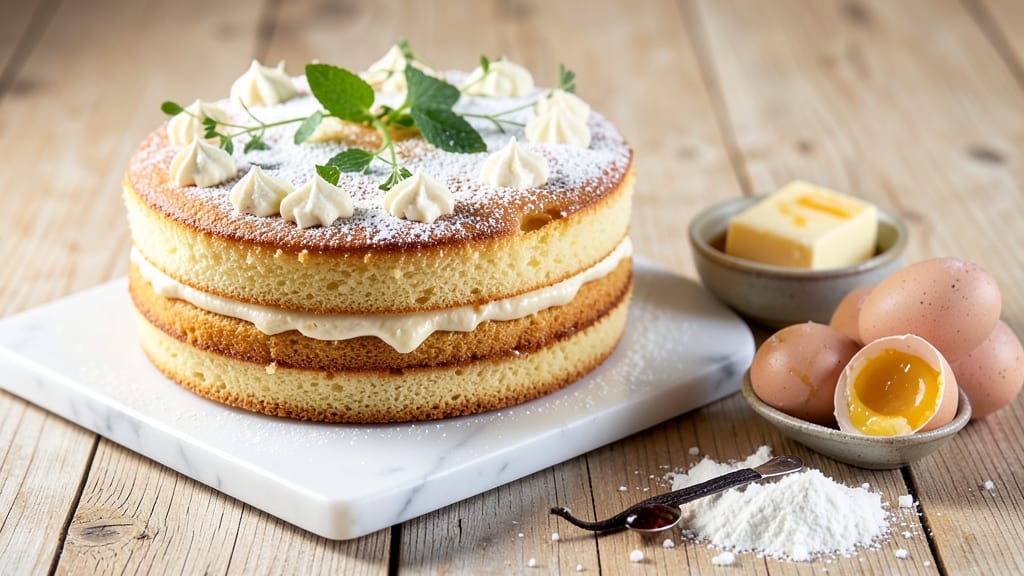
This bakery-style cake recipe from scratch delivers layers so tender and flavorful they’ll fool even the most skeptical cake lovers. The secret lies in creaming butter and sugar properly—no shortcuts—and letting the batter rest for perfect rise. I’ve baked this for birthdays, holidays, and just-because moments, and it never disappoints.
What sets this recipe apart is the balance of ingredients: cake flour for lightness, buttermilk for moisture, and vanilla that infuses deeply. The layers stay moist for days, and the frosting—whether buttercream or cream cheese—sticks beautifully. No box mix here; this is real baking with real results.
You’ll end up with a cake that’s golden on top, perfectly domed, and so rich it tastes like a bakery’s secret. The texture is the star: soft, tender crumbs that melt in your mouth without being too sweet. This is the kind of cake that makes people ask, “Did you bake this yourself?”
Ready to impress? This recipe scales easily for any occasion, and I’ll share my foolproof techniques for layering and frosting. Let’s get started—your taste buds will thank you.
Ingredients for bakery cake recipe from scratch
High-quality butter, precise measurements, and room-temperature eggs create bakery-style layers.
| Ingredient | Amount | Notes |
|---|---|---|
| Unsalted Butter 🧈 | 1 ½ cups | Room temperature, high-quality preferred |
| Granulated Sugar 🍚 | 2 ½ cups | Superfine for smoother texture |
| Pure Vanilla Extract 🌿 | 2 tbsp | Bourbon or Madagascar preferred |
| Large Eggs 🥚 | 6 whole | Room temperature, separated |
| All-Purpose Flour 🌾 | 3 ½ cups | Sifted, spooned and leveled |
| Baking Powder 🧂 | 2 tbsp | Diamond Crystal preferred |
| Salt 🧂 | ½ tsp | Fine sea salt |
| Whole Milk 🥛 | 1 ½ cups | Room temperature |
| Vegetable Oil 🫒 | ½ cup | Light, for tenderness |
| Cornstarch 🌽 | 2 tbsp | For fine crumb texture |
| Lemon Zest 🍋 | 1 tbsp | Fresh, finely grated |
The butter makes or breaks this cake. European-style butter like Plugrá or Land O’Lakes Cultured has more fat content, giving you that signature tender crumb. Grab it from the dairy section—not the baking aisle—where it’s kept cold. If your butter isn’t room temperature, microwave it in 10-second bursts until just soft. The sugar? Superfine dissolves faster for smoother batter, but regular granulated works if you pulse it in a food processor. Vanilla extract should be real bourbon or Madagascar vanilla—the imitation stuff smells like chemicals and won’t develop that deep, warm flavor as it bakes.
No vanilla extract? Seeds from a vanilla bean work beautifully—scrape them into the batter—but it’s pricey. Short on butter? Replace half with vegetable oil, but texture will be slightly less tender. The eggs must be room temperature—cold eggs create air pockets in the batter. If you’re prepping ahead, take them out 30 minutes before baking. The milk can be any kind, but whole milk adds richness. For a gluten-free version, swap the flour for a 1:1 baking blend, but expect a denser texture. The lemon zest brightens the flavor without overpowering—skip it if you prefer pure vanilla notes.
This batter keeps for 2 days in the fridge, covered with plastic wrap. For best results, bake immediately after mixing. The cake layers freeze beautifully for 3 months—wrap each layer tightly in plastic wrap, then foil. Thaw overnight in the fridge before assembling. Store finished cake at room temperature, covered, for up to 5 days. The frosting can be made ahead and refrigerated for 1 week, but bring it to room temperature before using. If your cake develops a dry crust, brush it with simple syrup before serving.
Why You'll Love This Recipe
- No Mixer Needed: I cream the butter and sugar by hand—no fancy tools, just elbow grease and a bowl. The eggs blend right in, and the vanilla? That’s the secret handshake that makes it taste like a bakery’s dream.
- Butter-Sugar Magic: That rich, creamy butter-sugar combo? It’s the backbone of this cake—light yet tender, with just enough sweetness to make every bite feel special. Honestly, I’ve tried shortcuts, but nothing beats the real deal.
- Layering Made Simple: This recipe keeps well for days, so I bake one batch and slice it for breakfast, dessert, or even a quick snack. (Yes, even on a Tuesday night.) The flour-to-butter ratio means it stays moist without turning gummy.
- Budget Bakery Vibes: Five ingredients, one bowl, zero fuss—this is my go-to when I want that bakery taste without the price tag. Leftovers? They disappear faster than I can say “second slice.”
Step-by-step instructions for bakery-style cake layers
Let's make a cake so light and tender it'll fool even the most skeptical baker.
Cream Butter, Sugar, and Eggs to Fluffy Perfection
In a stand mixer fitted with the paddle attachment, beat the 1.5 cups Unsalted Butter and 2.5 cups Granulated Sugar on medium speed for 3-5 minutes until light and fluffy. You'll know it's ready when the mixture nearly doubles in volume and looks pale and airy. This step is critical—it incorporates air that will create that signature bakery-style lightness.
Add the 6 whole Large Eggs, one at a time, mixing just until each is fully incorporated. After the last egg, add the 2 tbsp Pure Vanilla Extract and 1 tbsp Lemon Zest, mixing for another 30 seconds. This ensures the eggs are fully emulsified and the flavors are evenly distributed. The mixture should be thick but smooth, like a pale yellow ribbon when you lift the paddle.
Alternate Dry and Wet Ingredients for Even Moisture
In a separate bowl, whisk together the 3.5 cups All-Purpose Flour, 2 tbsp Baking Powder, 0.5 tsp Salt, and 2 tbsp Cornstarch. Sift the flour mixture directly over the wet ingredients to avoid lumps. With the mixer on low speed, add one-third of the flour mixture and mix just until combined.
Next, pour in half of the 1.5 cups Whole Milk and mix until smooth. Repeat this process, alternating between the remaining flour mixture and the remaining milk, ending with the last of the flour. Finally, add the 0.5 cup Vegetable Oil and mix on low speed until just combined. The batter should be smooth and thick, like heavy pudding. Overmixing now will develop gluten and make your cake tough—stop as soon as it's just mixed.
Divide and Bake for Even Layers
Preheat your oven to 350°F and grease two 9-inch round cake pans with butter or baking spray, then line the bottoms with parchment paper. Divide the batter evenly between the two pans, smoothing the tops with a spatula. Tap each pan firmly on the counter 3-4 times to remove any air bubbles and ensure even baking.
Bake for 25-30 minutes, or until a toothpick inserted into the center comes out clean. The cakes are done when the tops spring back when gently touched and the edges pull away slightly from the pan. Rotate the pans halfway through baking for even browning. Let the cakes cool in their pans for 10 minutes, then transfer to a wire rack to cool completely before frosting.
Layer with Confidence for Bakery-Worthy Results
Once completely cool, place one layer on a cake stand or plate. Spread a thin layer of your favorite frosting (about ¼ cup) to help the second layer stick. Place the second layer on top and gently press down. For extra stability, you can add a layer of buttercream or filling between the layers if desired.
Frost the entire cake with your chosen frosting, using a spatula to create smooth sides. Chill in the refrigerator for 30 minutes before slicing to help the frosting set. This cake is so tender and moist that it'll hold up beautifully to multiple layers and rich frostings, just like a professional bakery creation.
Pro Tips For Making Bakery Cake Recipe From Scratch
- CREAM BUTTER SLOWLY: Mix the butter and sugar at medium speed until the bowl is visually pale and the mixture feels gritty—about 3-5 minutes. I used to rush this, and the cake turned dense; patience here makes all the difference for that light, airy texture.
- CHILL THE DOUGH: After mixing, let the batter sit covered at room temp for 15-20 minutes. This relaxes the gluten and helps the flour absorb moisture, so your cake doesn’t sink or crack in the oven.
- WEIGH YOUR FLOUR: Spoon flour into the measuring cup, then level it off with a knife—don’t scoop directly from the bag. Packing or scooping changes volume, and that’s how you end up with a dry, crumbly cake instead of a tender one.
- ROOM-TEMP EGGS: Use eggs that’ve been at room temp for at least 30 minutes before mixing. Cold eggs can cause the batter to curdle, and no one wants a lumpy cake—especially when you’re going for that bakery-style smoothness.
Regional styles of these flavors
Southern Buttermilk Classic
In the South, buttermilk is the secret weapon for ultra-moist layers. Replace the 1.5 cups whole milk with 1.5 cups buttermilk and add 1 tsp baking soda to the dry ingredients. This creates a chemical reaction that lightens the crumb while adding tangy depth. Top with a peanut butter glaze—mix ½ cup powdered sugar, 2 tbsp peanut butter, and 1 tbsp milk—for a Southern favorite. 🥛
New York Cheesecake Twist
New York bakeries love adding a cream cheese swirl to their layers. After baking, let one layer cool completely, then spread ½ cup cream cheese frosting (mix 4 oz cream cheese, 2 tbsp butter, and 1 cup powdered sugar) between layers. Top with a caramel drizzle—simmer 1 cup sugar and ½ cup heavy cream until golden brown. This adds richness that rivals classic cheesecake. 🧀
Midwest Spiced Coffee Cake
For a cozy twist, fold 1 tsp cinnamon and ½ tsp nutmeg into the batter, then swirl in ½ cup chopped walnuts before baking. Top with a cream cheese glaze—mix 4 oz cream cheese, ½ cup powdered sugar, and 1 tbsp coffee—and sprinkle with crushed graham crackers. This variation is perfect for brunch or dessert. ☕
French Vanilla Bean Elegance
French bakeries elevate vanilla with seeds from 1 vanilla bean scraped into the batter. Replace the 2 tbsp vanilla extract with 1 tbsp vanilla extract plus the seeds for a richer flavor. Dust the finished cake with powdered sugar—sift ¼ cup over the top for a delicate, bakery-style finish. Serve with champagne—its bubbles complement the cake’s lightness. 🥖
Texas Sheet Cake Style
Bake the batter in a 9x13-inch pan instead of rounds for a Texas-style sheet cake. Brush the warm cake with ½ cup simple syrup (equal parts sugar and water, heated until dissolved) while still in the pan. Top with vanilla bean buttercream—mix 1 cup butter, 4 cups powdered sugar, and 2 tbsp vanilla extract—and sprinkle with crushed pecans. This version is perfect for large gatherings. 🌶️
Nutrition facts
Frequently asked questions
Can I make this cake without a stand mixer?
Use a hand mixer or even a sturdy whisk. For creaming butter and sugar, work in 2-minute bursts with a hand mixer, scraping the bowl between each burst. The key is patience—keep mixing until the mixture is light and fluffy (about 8-10 minutes total). For the batter, mix gently by hand to avoid overdeveloping the gluten. Just be prepared for a bit more elbow grease!
Why did my cake turn out dense instead of light?
Dense cake usually means overmixing the batter or under-creaming the butter and sugar. Make sure your butter and eggs are room temperature, and cream them for 3-5 minutes until pale and fluffy. Also, don't overmix after adding the flour—just until combined. Another common issue is opening the oven too soon; let the cakes bake until a toothpick comes out clean.
How do I adjust this recipe for a smaller or larger cake?
For a 6-inch cake, reduce batter by 1/3 and bake for 20-25 minutes. For a 10-inch cake, increase batter by 1/2 and bake for 30-35 minutes. Always use the same pan depth—shallower pans bake faster. If scaling up, divide the batter among multiple pans to ensure even baking. For a 9x13-inch sheet cake, use the full batter and bake for 35-40 minutes.
Can I substitute cake flour if I don't have any?
Yes! Make your own by mixing 1 cup all-purpose flour with 2 tablespoons cornstarch. Sift the mixture before using to mimic the fine texture of store-bought cake flour. This substitution helps create a lighter crumb. For best results, don't skip the cornstarch—it's what gives cake flour its signature tenderness.
How do I store leftover cake layers?
Wrap each layer tightly in plastic wrap, then place them in an airtight container. They'll stay fresh at room temperature for 3-4 days or in the fridge for 1 week. For longer storage, freeze layers for up to 3 months. Thaw overnight in the fridge before assembling. The frosting can be made ahead and stored separately for 1 week in the fridge.