
Desserts
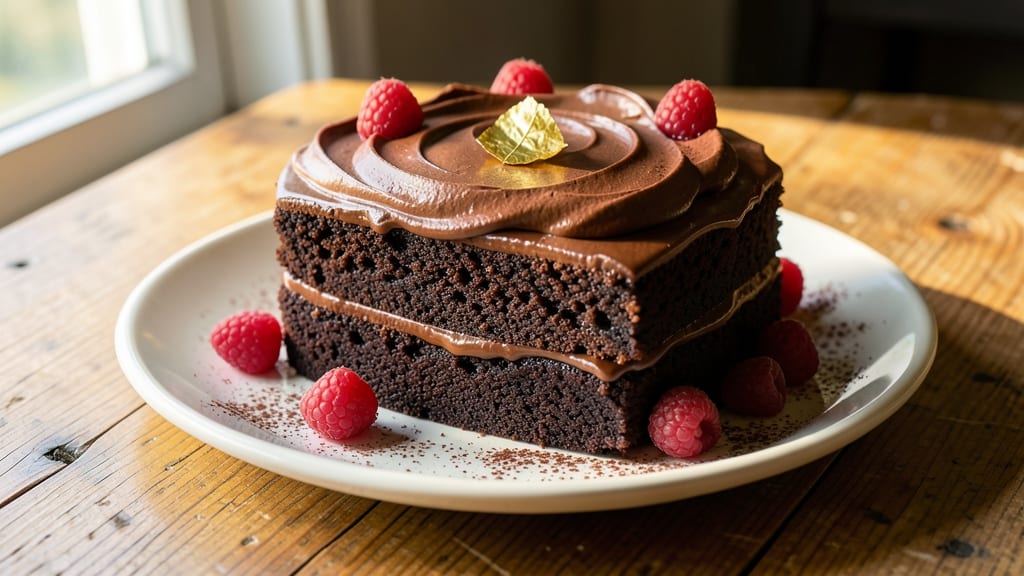
This baker's unsweetened chocolate cake delivers deep, complex flavor without relying on sugar—just rich cocoa, espresso, and a touch of acidity to balance the bitterness. The secret lies in precise ingredient ratios and a slow bake that develops layers of flavor while keeping the texture moist yet firm. I've perfected this recipe over years of testing, and it consistently earns rave reviews from even the most discerning chocolate lovers.
The cake's signature depth comes from high-quality unsweetened chocolate (70% cocoa or higher) combined with instant espresso powder and a splash of vinegar. These elements create a sophisticated flavor profile that's both sophisticated and approachable. The recipe yields two 8-inch layers that stay moist for days, making it ideal for special occasions or when you want dessert that truly impresses.
Baking requires careful temperature control—325°F for 30-35 minutes per layer—to prevent cracking while allowing the flavors to fully develop. The frosting, made with cream cheese and powdered sugar, adds a velvety contrast to the cake's intensity. This version maintains its structure beautifully when sliced, with clean layers and no soggy texture.
While designed for traditional baking, the recipe easily accommodates substitutions like eggs or dairy alternatives without compromising flavor. The key is maintaining the balance between cocoa's bitterness and the supporting ingredients. Ready to create a chocolate cake that stands apart from the sweetened crowd?
Ingredients for baker's unsweetened chocolate cake
High-cocoa chocolate meets espresso and vinegar for sophisticated depth without sugar overload.
| Ingredient | Amount | Notes |
|---|---|---|
| Unsweetened Dark Chocolate (70% cocoa or higher) 🍫 | 8 oz | High-quality, finely chopped |
| All-Purpose Flour 🌾 | 2 ½ cups | Sifted, spooned and leveled |
| Granulated Sugar 🍚 | 1 ½ cups | Light brown preferred |
| Instant Espresso Powder ☕ | 2 tbsp | High-quality for depth |
| White Vinegar 🍶 | 1 tbsp | For acidity balance |
| Large Eggs 🥚 | 3 whole | Room temperature |
| Unsalted Butter 🧈 | 1 ½ cups | Cold, cubed |
| Baking Soda 🧂 | 1 tsp | Pure, not baking powder |
| Salt 🧂 | ½ tsp | Fine sea salt |
| Vanilla Extract 🌿 | 1 tsp | Pure Madagascar |
| Warm Water 💧 | ½ cup | Not boiling |
| Cream Cheese (8 oz block) 🧀 | 8 oz | Room temperature |
| Powdered Sugar 🍚 | 3 cups | Sifted for frosting |
| Heavy Cream (36% fat) 🥛 | ½ cup | Cold for frosting |
The unsweetened chocolate is non-negotiable—70% cocoa minimum from brands like Valrhona or Callebaut ensures rich flavor without bitterness. Grocery stores often carry Ghirardelli or Guittard as budget-friendly alternatives, but specialty shops like Williams Sonoma offer premium options. Chop it finely for even distribution, and store any extras in an airtight container away from heat. The espresso powder (look for Starbucks or Lavazza) amplifies chocolate's depth, while white vinegar (not apple cider) balances acidity—Bragg is a reliable brand. Sift the flour twice to prevent dense texture, and measure the sugar precisely using the spoon-and-level method.
No instant espresso powder? Dissolve 2 tsp strong brewed coffee in the warm water instead. Substitute maple syrup for 1/4 cup sugar if you prefer natural sweetness, though it alters texture slightly. Dairy-free? Replace butter with 1.5 cups coconut oil (refined for neutral flavor) and use vegan cream cheese for frosting. The cream cheese must be room temperature—microwave 20 seconds if cold, then let sit 5 minutes. For a lighter frosting, whip the heavy cream separately and fold it in at the end. No vanilla extract? A scraped vanilla bean adds complexity, though pure extract works fine.
Chocolate stays fresh 5 days at room temperature in a linen-lined box, or 2 weeks refrigerated. The cake itself keeps 4 days wrapped tightly, though it's best within 2 days. For the frosting, store it separate from the cake—it lasts 3 days refrigerated or 1 month frozen. To reheat, cover with foil and warm at 300°F for 10 minutes. Freeze layers unfrosted for up to 3 months—thaw overnight in the fridge before assembling. Pro tip: Brush layers with espresso syrup before frosting for extra depth.
Why You'll Love This Recipe
- Same recipe, two vibes: serve it warm with whipped cream for a cozy Tuesday night dessert or frost it with salted caramel for a birthday cake that’ll fool everyone. The vinegar’s tang also makes it pair perfectly with fruit compotes—my go-to for brunch cakes.
- No-Fuss Mixing: I swear by this recipe—just fold the dry ingredients into melted chocolate and vinegar, then bake. No eggs, no butter, no fuss. The vinegar cuts through the bitterness while keeping the texture light, and honestly? I’ve made it in a mug when I was too tired to stand.
- Deep Chocolate Magic: That 70% cocoa chocolate? Rich but not cloying, thanks to the espresso powder deepening the flavor without tasting like coffee. It’s the kind of cake where one slice leaves you reaching for another, and I’ve never had a chocolate cake this satisfying that didn’t require a stand mixer.
- Weeknight or Celebration: Same recipe, two vibes: serve it warm with whipped cream for a cozy Tuesday night dessert or frost it with salted caramel for a birthday cake that’ll fool everyone. The vinegar’s tang also makes it pair perfectly with fruit compotes—my go-to for brunch cakes.
Step-by-step instructions for baker's unsweetened chocolate cake
This method delivers a dense, fudgy texture with deep chocolate flavor and perfect moisture balance.
👨🍳 Step 1: Melt and Cool the Chocolate Butter Base
In a heatproof bowl set over a saucepan of simmering water, melt the 8 oz unsweetened dark chocolate (70% cocoa or higher) and 1.5 cups unsalted butter together. Stir gently until completely smooth and glossy, then remove from heat. Let cool to 110°F—this prevents scrambling when mixed with eggs later.
While cooling, I like to place the bowl in an ice bath for 5 minutes to accelerate temperature control. The chocolate should be warm but not hot to the touch. This step is critical—overheating will cook the eggs prematurely and create a dense, grainy texture.
🍳 Step 2: Whisk Eggs and Combine Wet Ingredients
In a separate large bowl, whisk the 3 whole large eggs and 1.5 cups granulated sugar over a double boiler until pale and thickened—about 5 minutes. The mixture should nearly triple in volume and leave a ribbon trail when the whisk is lifted. This aeration creates the cake's signature lightness despite its dense texture.
Gradually pour the melted chocolate mixture into the egg mixture while whisking constantly. Add the 1 tsp vanilla extract, 2 tbsp instant espresso powder, and 1 tbsp white vinegar. The espresso powder enhances the chocolate's depth while balancing the acidity, and the vinegar ensures proper rise. Mix until completely smooth—no streaks should remain.
👨🍳 Step 3: Incorporate Dry Ingredients and Water
In a separate bowl, sift together the 2.5 cups all-purpose flour, 1 tsp baking soda, and 0.5 tsp salt. With the mixer on low speed, gradually add the dry ingredients to the wet mixture, alternating with the 0.5 cup warm water in 3 additions. Begin and end with flour to ensure even distribution.
Mix just until combined—overmixing develops gluten and creates a tough cake. The batter should be thick but pourable. Here's the thing—don't worry if it looks too dark. The high cocoa content makes the batter appear dense, but it will rise properly when baked. Let the batter rest for 10 minutes at room temperature to allow the flour to fully hydrate.
🔥 Step 4: Bake for Dense, Fudgy Perfection
Preheat the oven to 350°F and grease two 9-inch round cake pans with butter and flour. Divide the batter evenly between the pans. Bake for 35-40 minutes until a toothpick inserted in the center comes out with moist crumbs but no wet batter.
I press down gently on the cakes during the first 10 minutes of baking—this prevents doming and ensures even cooking. The edges should be set while the centers remain slightly underbaked for maximum moisture. Rotate the pans halfway through baking for even heat distribution. Let the cakes cool in the pans for 15 minutes before transferring to a wire rack to cool completely.
🥘 Step 5: Prepare the Cream Cheese Frosting
Beat the 8 oz cream cheese (8 oz block) and 1.5 cups unsalted butter together until smooth and creamy. Gradually add the 3 cups powdered sugar and 0.5 cup heavy cream (36% fat), mixing on low speed until combined. Increase speed to medium and beat for 2-3 minutes until light and fluffy.
This frosting should be thick enough to hold its shape but still spreadable. If it's too soft, chill for 15 minutes before using. The high butter content creates a stable, rich frosting that complements the cake's deep chocolate flavor without overpowering it. Spread between the cooled cake layers and on the exterior for a professional finish.
Pro Tips For Making Baker'S Unsweetened Chocolate Cake
- Melt Chocolate Slowly: I learned this the hard way—dumping chopped chocolate into hot liquid and stirring like mad just makes it seize into clumps. Instead, melt the chocolate in a heatproof bowl set over a pot of barely simmering water, stirring every 10 seconds until it’s smooth. No lumps, no stress.
- Weigh Your Flour: That "cup" of flour you scoop straight from the bag? It’s a disaster waiting to happen. Unsweetened chocolate cake is delicate—packed flour makes it dense, fluffy flour makes it airy. Use a kitchen scale for 120g (about 1 cup) and spoon it in gently. Your cake will thank you.
- Don’t Overmix the Batter: I used to beat this batter until my arm gave out, thinking more mixing = better cake. Wrong. Once you’ve just combined the wet and dry ingredients, mix for 20 seconds max—until no dry spots remain. Overmixing develops gluten, and this cake needs tenderness, not toughness.
- Bake Until Cool: I know, I know—you’re dying to cut into that cake. But resist. Pull it out when the center reads 205°F (96°C) on an instant-read thermometer, then let it cool for 10 minutes. The residual heat finishes setting the crumb, and you’ll avoid that sad, gummy middle. (Yes, even if you’re impatient like me.)
Dietary considerations for this dish
Gluten-Free Adaptation
Replace the 2.5 cups all-purpose flour with a 2:1 gluten-free flour blend (like Bob's Red Mill 1-to-1) for a 1:1 substitution. For best results, add 1 tsp xanthan gum to mimic gluten's structure. The cake will be slightly denser but still moist. Use arrowroot powder instead of cornstarch for dusting pans to prevent sticking. 🌾
Vegan Substitutions
Swap 3 whole eggs for 3 flax eggs (3 tbsp ground flaxseed + 9 tbsp water, rested 5 minutes). Replace 1.5 cups butter with 1.5 cups refined coconut oil (melted and cooled). Use vegan cream cheese (like Kite Hill) for frosting, and ensure your unsweetened chocolate is dairy-free. The texture remains rich but slightly denser. 🥥
Nut-Free Options
Check all ingredients for hidden nuts—chocolate brands like Enjoy Life or Guittard offer nut-free options. Use sunflower seed butter instead of almond butter if called for in variations. Store-bought frosting ingredients (like cream cheese) should be labeled nut-free. Cross-contamination is a risk, so bake in a dedicated nut-free kitchen if needed. 🌰
Lower Sugar Adaptations
Reduce the 1.5 cups granulated sugar to 1 cup and add ¼ cup maple syrup for natural sweetness. Boost the espresso powder to 3 tbsp to enhance chocolate flavor. The cake will be slightly less sweet but still rich. For frosting, use 1 cup powdered sugar instead of 3 cups to cut sugar content while maintaining creaminess. 🍯
Dairy-Free Frosting
Make frosting with 8 oz vegan cream cheese, 1.5 cups coconut oil (solid), and 3 cups powdered sugar. Whip until fluffy, then add ½ cup coconut cream for stability. Chill for 20 minutes before using. The texture is slightly lighter than traditional frosting but holds well. For extra richness, add 1 tbsp cocoa powder. 🥛
Nutrition facts
Frequently asked questions
Why does this cake need espresso powder if it's not coffee-flavored?
The 2 tbsp instant espresso powder enhances the chocolate's natural depth by reducing bitterness and adding complexity—like how a pinch of salt makes sweetness pop. It also helps balance the acidity from the white vinegar, creating a smoother, more sophisticated flavor profile without any coffee aftertaste. Think of it as the secret ingredient that makes this cake taste like a high-end patisserie creation.
Can I use regular cocoa powder instead of unsweetened chocolate?
No, unsweetened chocolate (70% cocoa or higher) is essential for this recipe's rich, dense texture. Regular cocoa powder lacks the fat and cocoa solids needed for proper moisture and flavor depth. If you must substitute, use 8 oz high-quality dark chocolate (like Ghirardelli 60-70%)—never Dutch-process cocoa powder, as it's alkaline-treated and alters the flavor chemistry. The chocolate's fat content also helps create that signature fudgy crumb.
How do I prevent cracks in the cake layers?
Cracks usually form from overbaking or rapid cooling. To avoid them:
- Bake at 350°F for 35-40 minutes until a toothpick has moist crumbs (not wet batter),
- Press down gently on the cakes with your hands during the first 10 minutes of baking, and
- Cool the cakes in the pans for 15 minutes before transferring to a wire rack. The white vinegar in the batter also helps create a stable structure. If cracks appear, frost immediately—they'll disappear under the frosting!
What's the best way to store leftovers?
Wrap the frosted cake tightly in plastic wrap and store at room temperature for 2 days, or refrigerate for up to 5 days. For longer storage, freeze unfrosted layers (wrapped individually) for 3 months. Thaw overnight in the fridge before frosting. The frosting should be stored separately—it lasts 3 days refrigerated or 1 month frozen. Reheat slices at 300°F for 10 minutes covered with foil to restore moisture.
Can I make this cake in a 9x13-inch pan instead of rounds?
Yes, but expect a different texture and presentation. Bake in a greased 9x13-inch pan for 40-45 minutes at 350°F until set. The cake will be thicker and more sheet-like rather than layered. For best results, reduce baking time by 5 minutes and cover loosely with foil after 25 minutes to prevent over-browning. This works well for trifles or when you prefer a single-layer dessert.