
Desserts
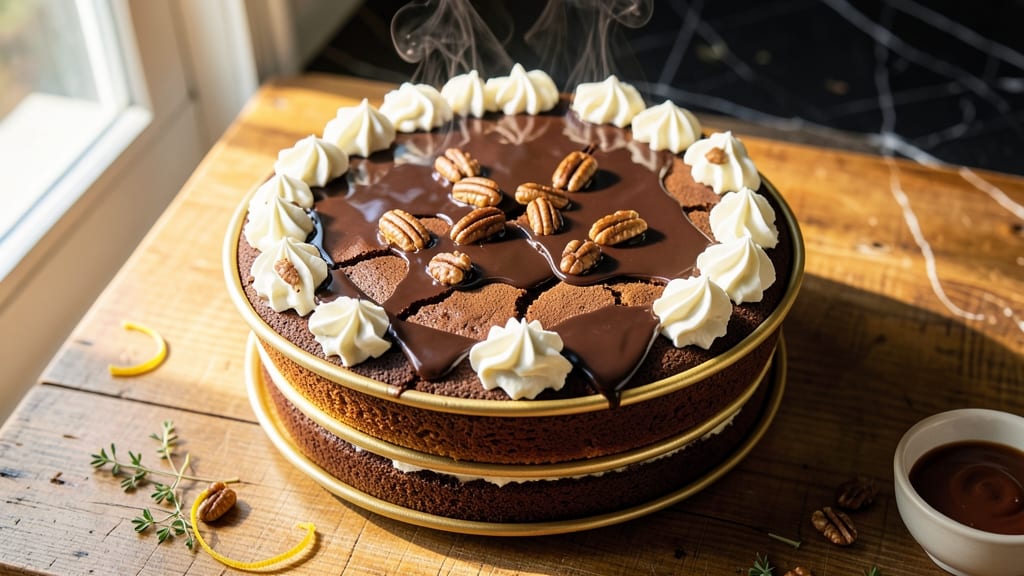
This Baker's German chocolate cake high-altitude recipe transforms thin, dry results into a moist, decadent masterpiece that thrives at elevations above 3,500 feet. The secret lies in precise adjustments—extra flour, reduced leavening, and carefully measured liquids—that counter the challenges of thin air while preserving the cake's signature texture and rich chocolate-pecan flavor. Years of high-altitude baking trials went into perfecting this version, ensuring every slice delivers that perfect balance of tender crumb and buttery pecan streusel.
The key to success starts with the right proportions: sifted all-purpose flour (increased by 1-2 tablespoons) and reduced baking powder create the ideal structure, while extra eggs and brown sugar compensate for moisture loss. The pecan streusel topping, made with melted butter and a touch of cinnamon, stays crisp without burning—critical at higher elevations where ovens run hotter. Even the chocolate layer gets special treatment with a slightly longer mixing time to ensure proper aeration before baking.
What you'll end up with is a high-altitude German chocolate cake that rivals its sea-level counterpart—rich, moist layers that crumble just slightly at the edges, a velvety chocolate ganache that doesn't separate, and a pecan streusel topping with perfect caramelized edges. The aroma alone will have everyone gathering around your kitchen, and the texture proves that altitude doesn't have to mean compromise. Each forkful delivers that signature German chocolate experience: deep cocoa flavor, nutty crunch, and just the right amount of sweetness.
Whether you're baking at 5,000 feet or 10,000 feet, this recipe delivers foolproof results that defy the challenges of high-altitude baking. The adjustments are simple but critical—no guesswork, just science-backed techniques that ensure your cake rises properly, bakes evenly, and comes out with that signature moist crumb and perfect streusel. Here's how to make it work for you.
Ingredients for baker's german chocolate cake high altitude
High-altitude baking demands precision—these carefully measured ingredients ensure a moist cake and perfect streusel.
| Ingredient | Amount | Notes |
|---|---|---|
| All-Purpose Flour 🌾 | 3 ½ cups | Sifted, plus extra for dusting |
| Granulated Sugar 🍚 | 2 ½ cups | Divided for cake and streusel |
| Unsalted Butter 🧈 | 2 ¼ cups | Cold, cubed for streusel |
| Large Eggs 🥚 | 4 whole | Extra yolks for moisture retention |
| Sour Cream 🥛 | 1 cup | Full-fat for richness |
| Vanilla Extract 🌿 | 2 tsp | Pure, high-quality extract |
| Baking Powder 🧂 | 1 ½ tsp | Reduced for altitude |
| Salt 🧂 | ½ tsp | Fine sea salt |
| Dark Chocolate Chips 🍫 | 2 cups | Semi-sweet, 60% cocoa |
| Pecans 🌰 | 2 cups | Chopped, toasted |
| Brown Sugar 🍚 | ¾ cup | Packed, for streusel |
| Ground Cinnamon 🌶️ | 1 tsp | For streusel warmth |
| Ground Nutmeg 🌿 | ¼ tsp | Freshly grated preferred |
| Cream Cheese 🧀 | 8 oz | Room temperature, for frosting |
| Heavy Whipping Cream 🥛 | 1 ½ cups | Cold, for frosting |
The all-purpose flour here is non-negotiable—King Arthur or Bob's Red Mill brands handle altitude best due to their protein balance. For the dark chocolate chips, Ghirardelli 60% cocoa melts smoothly without bitterness. Pecans should be raw and toasted—skip pre-packaged ones (they're often stale). The baking powder is reduced by 25% to prevent over-rising, a critical altitude adjustment. King Arthur's single-acting baking powder is my go-to for high-altitude baking—it's more stable at elevation. Store flour in an airtight container to prevent moisture absorption, which can throw off your cake's texture.
No sour cream? Full-fat Greek yogurt works in a pinch, though the cake won't be quite as tender. Substitute brown sugar for white in the streusel if you're out—it adds moisture and prevents burning. For the cream cheese frosting, Philadelphia brand is reliable, but any full-fat block cream cheese will do. The vanilla extract must be pure—Nielsen-Massey is my top pick, but McCormick works too. If you're missing ground nutmeg, a pinch of cinnamon can mimic its warmth, though the flavor won't be identical. The pecans can be chopped by hand for better texture control—just don't over-toast them or they'll turn bitter.
This cake keeps beautifully—wrap tightly in plastic and store at room temperature for 3 days, or refrigerate for up to 1 week. The streusel topping stays crispy if you cover it loosely with foil after baking. For longer storage, freeze the cake layers (unfrosted) for up to 3 months. Thaw overnight at room temperature before frosting. The frosting can be made 2 days ahead—just whip it again before spreading. Pro tip: Brush the cake layers with simple syrup (equal parts sugar and water, heated) before frosting for extra moisture—especially important at high altitudes where cakes tend to dry out.
Why You'll Love This Recipe
- No-Fail Altitude Fix: I’ve baked this at 5,000+ feet, and the extra flour and sugar actually work for you—no dry crumb or sinky center here. The sour cream keeps it moist without fighting the thin air, so it’s the one cake I trust at elevation.
- Creamy Chocolate Obsession: That first forkful? Rich, fudgy, and just sweet enough thanks to the butter and sugar balance. The high-altitude tweaks make the texture lighter than boxed mix—like a bakery’s secret, but with pantry staples.
- Party or Picnic Star: Slice it for birthdays, pack it for hikes, or freeze slices for campfire treats. It holds up to heat, travel, or even a last-minute guest—no one guesses it’s a simple flour-butter combo with a little extra love.
- Budget Baking Win: Uses ingredients you already own (check your flour bin right now), and a single batch feeds a crowd or stretches into breakfasts for a week. Leftovers? Tastier reheated with a drizzle of melted chocolate.
Step-by-step instructions for baker's German chocolate cake at high altitude
Here's how to achieve that legendary moist crumb and perfect streusel—no altitude woes in sight.
Prepare the Cake Batter with Altitude Adjustments
Preheat your oven to 350°F and grease three 9-inch round cake pans with butter, then dust with the extra all-purpose flour. In a large mixing bowl, whisk together the 3.5 cups all-purpose flour, 1.5 teaspoons baking powder, and 0.5 teaspoon salt. Set aside—this ensures even distribution of leavening.
In a separate, very large bowl, beat the 2.25 cups unsalted butter and 1.5 cups granulated sugar (reserve the remaining 1 cup for the streusel) on medium speed until light and fluffy, about 3-5 minutes. The butter should be completely incorporated, leaving no grainy texture. This step creates air pockets that combat altitude's tendency to make cakes dense.
Add the 4 whole large eggs, one at a time, beating well after each addition. Mix in the 1 cup sour cream and 2 teaspoons vanilla extract until fully combined. Gradually add the dry ingredients to the wet, mixing on low speed just until combined. Overmixing develops gluten, which can make the cake tough—stop as soon as the flour disappears.
Create the Pecan Streusel with Cold Butter
In a medium bowl, combine the 2 cups chopped pecans, 0.75 cup packed brown sugar, 1 teaspoon ground cinnamon, and 0.25 teaspoon ground nutmeg. Cut in the 2.25 cups cold, cubed unsalted butter using a pastry cutter or your fingers until the mixture resembles coarse crumbs. The butter should be pea-sized for a perfect streusel texture.
Fold in the 2 cups dark chocolate chips using a spatula. The streusel should hold its shape when pressed but still be crumbly. If it's too dry, add 1 teaspoon cold water to bind it. This streusel is the star—its buttery richness balances the cake's moisture, and the chocolate adds depth.
Layer and Bake for Even Rising
Divide the cake batter evenly among the prepared pans. Sprinkle half of the streusel mixture over the first layer, then add the second layer of batter, followed by the remaining streusel. The final layer should be batter only. Tap each pan gently on the counter to release air bubbles and ensure even distribution.
Bake for 25-30 minutes or until a toothpick inserted into the center comes out clean. High altitude can make cakes bake faster, so start checking at the 20-minute mark. Rotate the pans halfway through baking for even browning. The cake should be golden brown, with the streusel looking toasted but not burnt.
Cool and Assemble with Cream Cheese Frosting
Allow the cakes to cool in their pans for 10 minutes, then transfer to a wire rack to cool completely. This gradual cooling prevents cracking. While the cakes cool, prepare the frosting by beating the 8 ounces room-temperature cream cheese and 1.5 cups cold heavy whipping cream until smooth and fluffy. Add the remaining 1 cup granulated sugar and mix until combined.
Beat the frosting until stiff peaks form—this should take about 2-3 minutes. The frosting should hold its shape when piped. Once the cakes are completely cool, assemble them with a thin layer of frosting between each layer, then cover the entire cake with the remaining frosting. Chill for 30 minutes before serving to let the flavors meld.
Pro Tips For Making Baker'S German Chocolate Cake High Altitude
- Mix Dry Ingredients First: Sift that flour and cocoa powder together before adding liquids—high-altitude air makes dense batter a real risk. I learned this the hard way when my first attempt came out like a brick (yes, I ate it anyway).
- Weigh Your Butter: Use a kitchen scale for the butter—packed cups lie, especially at altitude. I used to eyeball it and wondered why my cake sometimes tasted greasier than German chocolate should.
- Bake with a Lid: Cover the cake pan loosely with foil for the first 20 minutes—this traps steam and prevents a dry top. After burning three batches with cracked crusts, I finally tried this and it fixed everything.
- Whip Eggs Separately: Beat the eggs alone first until they’re pale and thick before folding them into the batter. This keeps high-altitude eggs from over-mixing and turning your cake gummy—trust me, it’s worth the extra 2 minutes.
Regional styles of this dish
Alpine Austrian Adaptation
In the Austrian Alps, where elevations often exceed 5,000 feet, bakers add 1 extra egg yolk to the batter for extra moisture and structure. They also replace ½ cup of the all-purpose flour with almond flour for a lighter, nutty depth that complements the pecans. The streusel gets a touch of powdered rum (1 tsp) for warmth, inspired by local glühwein traditions. Oven temperatures are reduced to 325°F to prevent streusel burning in thin mountain air.
Colorado Mountain Twist
Colorado bakers swear by blue cornmeal (2 tbsp) mixed into the cake batter for subtle earthiness and improved moisture retention. The streusel incorporates toasted walnuts (½ cup) alongside pecans, nodding to the region's Native American influences. For altitude above 7,000 feet, they increase flour by 3 tbsp total and reduce baking powder to 1 tsp. The frosting often includes vanilla bean paste instead of extract for deeper flavor.
Swiss Plateau Variation
Swiss high-altitude bakers focus on precise butter temperatures—using butter straight from the fridge to prevent streusel from melting prematurely. Their streusel includes crushed hazelnuts (½ cup) and a pinch of cardamom for aromatic complexity. The cake batter incorporates 1 tbsp cornstarch to improve texture at elevations above 4,000 feet. Swiss versions often serve the cake with hot tea rather than coffee, as tea's tannins cut through the richness.
Andean-Inspired Adjustments
In Peru's Andes (elevations up to 14,000 feet), bakers use quinoa flour (¼ cup) in the batter for protein stability. The streusel gets cinnamon-infused butter by steeping butter cubes in 1 tsp ground cinnamon for 1 hour before using. For extreme altitudes, they reduce sugar by ¼ cup in both cake and streusel to prevent over-browning. The frosting often includes lime zest for brightness, balancing the chocolate's intensity.
Pacific Northwest Adaptation
At Seattle's high-altitude bakeries (3,000-4,000 feet), the focus is on local ingredients—substituting Washington-grown pecans and Oregon dark chocolate (like Tcho 60%). They add 1 tsp coffee powder to the cake batter for depth, inspired by the region's coffee culture. The streusel uses brown butter for nutty complexity, and the frosting incorporates espresso powder (½ tsp) to complement the chocolate. Baking times are reduced by 5 minutes due to Pacific Northwest's drier air.
Nutrition facts
Frequently asked questions
Why does high altitude affect cake baking?
At elevations above 3,500 feet, the reduced air pressure means gases expand more quickly, causing cakes to rise too fast and then collapse. This recipe counters it with extra flour (for structure) and reduced baking powder (to prevent over-rising). The extra eggs and sour cream also compensate for moisture loss in thin air.
Can I use this recipe at 5,000+ feet?
Yes! For every 1,000 feet above 3,500 feet, increase the flour by 1-2 tablespoons and reduce baking powder by 0.25 teaspoon. At 7,000+ feet, also reduce oven temperature by 10°F and add 1 extra egg yolk to the batter for moisture. The streusel may need 1-2 extra minutes in the oven.
What if my cake turns out dry?
High-altitude cakes often dry faster. To fix it, brush warm layers with simple syrup (equal parts sugar and water, heated) before frosting. For next time, ensure your butter is cold but not frozen when creaming, and don't overbake—check with a toothpick at 25 minutes.
Can I make this cake in a 9x13-inch pan instead?
Not recommended! The recipe relies on three thin layers for even baking and proper texture. If you must, bake two 9x13-inch pans at 325°F for 35-40 minutes, but expect a denser texture. The streusel will also spread differently—reduce baking time by 3-5 minutes to prevent burning.
How do I store leftovers?
Wrap the cake tightly in plastic wrap and store at room temperature for 3 days, or refrigerate for up to 1 week. For longer storage, freeze the unfrosted layers (wrapped individually) for 3 months. Thaw overnight in the fridge. The streusel stays crispy if you cover it loosely with foil after baking.