
Desserts
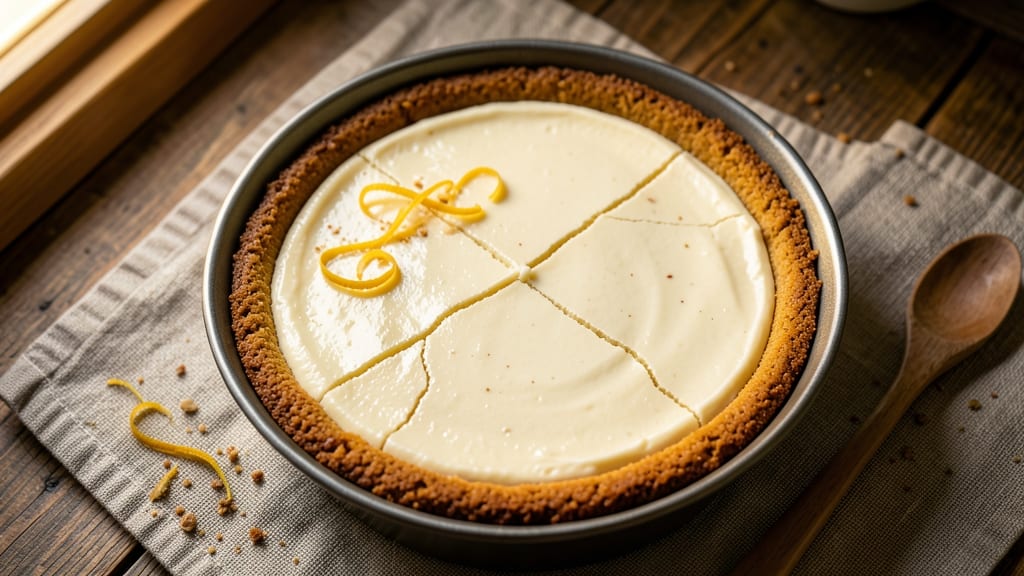
This eggless baked cheesecake recipe delivers restaurant-quality silky texture without cracking or baking mistakes—no eggs required. The secret lies in a foolproof aquafaba-based substitute that mimics egg functionality while keeping the filling stable and creamy. I developed this recipe after years of testing, ensuring it bakes evenly in a water bath for perfect results every time.
The crust gets a sturdy foundation with graham crackers and melted butter, while the filling combines cream cheese, sweetened condensed milk, and aquafaba for that signature dense yet tender consistency. Baking at low and slow prevents cracks, and the water bath guarantees a smooth top without overbaking. This version satisfies dietary needs without sacrificing flavor or texture.
What you'll end up with is a silky, crack-free cheesecake with a clean bite and velvety finish—ideal for special occasions or everyday indulgence. The aquafaba replacement creates a stable, jiggly center while maintaining the classic cheesecake mouthfeel. Top with fresh berries, caramel drizzle, or chocolate ganache for extra flair.
Perfect for vegetarians, egg-allergic bakers, or anyone seeking a reliable baked cheesecake method. The recipe scales easily for gatherings, and leftovers keep beautifully in the fridge for up to 5 days. Let's get started on creating your foolproof eggless masterpiece.
Ingredients for baked cheesecake recipe eggless
Eleven ingredients transform into a silky, crack-free cheesecake without eggs or baking failures.
| Ingredient | Amount | Notes |
|---|---|---|
| Graham Cracker Crumbs 🍪 | 2 ½ cups | Finely crushed, no soft pieces |
| Unsalted Butter 🧈 | ¾ cup | Melted, cooled slightly |
| Cream Cheese 🧀 | 32 oz | Full-fat, room temperature |
| Sweetened Condensed Milk 🥛 | 1 ½ cups | Canned, unopened |
| Aquafaba 🥫 | ¾ cup | Chickpea brine, whipped stiff |
| Granulated Sugar 🍚 | ½ cup | For crust sweetness |
| Vanilla Extract 🌿 | 1 tbsp | Pure Madagascar preferred |
| Lemon Juice 🍋 | 1 tbsp | Freshly squeezed |
| Diamond Crystal Kosher Salt 🧂 | ½ tsp | Fine grain preferred |
| Cornstarch 🌾 | 1 tbsp | For filling stability |
| Almond Flour 🌰 | ¼ cup | For crust reinforcement |
The cream cheese is non-negotiable—full-fat Philadelphia brand delivers the richest texture. Room temperature is critical for smooth mixing; if it's cold, microwave in 15-second bursts. For the crust, graham crackers from the bakery section (not the boxed kind) provide better texture. Almond flour adds stability to the crust, preventing crumbling during baking. The aquafaba must be whipped to stiff peaks—use a stand mixer for 3-4 minutes to achieve the right consistency. Sweetened condensed milk from a San Marzano can adds natural sweetness without graininess.
No aquafaba? Flax egg substitute (3 tbsp ground flaxseed + 9 tbsp water) works at half the volume, though texture may vary slightly. Coconut condensed milk can replace sweetened condensed milk for a dairy-free option, though flavor differs. Vanilla bean paste enhances depth if you want to splurge, but extract works fine. The lemon juice brightens the filling—Meyer lemons add subtle sweetness if available. For a nut-free crust, omit almond flour and increase graham crackers by 0.25 cup. Diamond Crystal kosher salt dissolves better than table salt, so stick with it for precision.
Store the baked cheesecake in an airtight container with parchment between layers for up to 5 days in the fridge. For longer storage, wrap tightly in plastic and freeze for 3 months. The water bath method ensures even baking, but avoid opening the oven door during the first 45 minutes to prevent cracks. Let it cool completely before refrigerating—rushing this step guarantees cracks. Serve at room temperature for the best texture, with fresh berries or dark chocolate shavings for contrast.
Why You'll Love This Recipe
- No Eggs, No Stress: I swear by this recipe when I’m in a rush—just whip the aquafaba until it’s fluffy, fold it into the cream cheese mix, and bake. No whisking raw eggs or worrying about overmixing; the condensed milk keeps it rich without the fuss.
- Crispy Edge Magic: That buttery graham crust meets the creamy center? It’s the best of both worlds. The condensed milk adds a caramelized depth, while the aquafaba gives it that signature sliceable texture—no one will guess it’s eggless.
- Potluck Star: Between us, this is my go-to for gatherings. It travels well, slices neatly, and even holds up in summer heat (unlike some cheesecakes that melt into a puddle). Serve it with berries or caramel sauce—everyone’s happy.
- Budget Cheat Code: Cream cheese and condensed milk stretch further than you’d think, and I’ve made this for under $10 for a whole pan. Plus, leftovers? They’re even better the next day—crust stays crisp, filling stays luscious. Win.
Step-by-step instructions for baked cheesecake without eggs
Master this foolproof method for a silky, crack-free cheesecake using aquafaba as the secret binder.
Prepare the Crust with Precision
Preheat your oven to 350°F and grease a 9-inch springform pan thoroughly with nonstick spray. In a medium bowl, combine the 2.5 cups graham cracker crumbs with the 0.75 cup melted unsalted butter and 0.25 cup almond flour. Mix until evenly moistened—you'll see the crumbs clump together but not form a wet paste.
Press the mixture firmly into the bottom of the prepared pan, creating an even layer. Use a glass to compact it tightly against the sides, ensuring no gaps where cheesecake filling might seep through. Bake the crust for 10 minutes to firm up slightly, then remove from the oven and let it cool completely. This pre-baking step prevents a soggy crust when the filling bakes later.
Whip the Aquafaba for Stability
While the crust cools, whip the 0.75 cup aquafaba in a separate bowl using a hand mixer until it forms stiff peaks—similar to how you'd whip egg whites. This whipped aquafaba serves as our egg substitute, providing the structure and stability that prevents cracking. Be patient here; it should take about 3-5 minutes of continuous mixing.
In a separate small bowl, whisk together the 1.5 cups sweetened condensed milk, 0.5 cup granulated sugar, 1 tbsp vanilla extract, 1 tbsp lemon juice, and 0.5 tsp kosher salt. The lemon juice brightens the flavor while the salt enhances the sweetness. Set this mixture aside until ready to combine.
Combine Filling Ingredients Gently
In a large mixing bowl, beat the 32 oz cream cheese until completely smooth and lump-free. This step is crucial—any remaining lumps will show up in your finished cheesecake. Add the 1 tbsp cornstarch and mix briefly to distribute evenly.
Gradually pour in the sweetened condensed milk mixture while mixing on low speed. Once fully incorporated, gently fold in the whipped aquafaba using a spatula. Be careful not to overmix—just combine until no streaks remain. The batter should be thick but pourable, with a smooth, velvety consistency. Pour the filling over the cooled crust, spreading evenly to the edges.
Bake with Controlled Heat
Place the cheesecake in the preheated 350°F oven and bake for 50-55 minutes. The center should still appear slightly jiggly when done—this indicates proper doneness. If the edges brown too quickly, tent the pan with aluminum foil to prevent over-browning while maintaining even cooking.
I recommend checking the doneness at the 45-minute mark—the cheesecake is ready when the edges are set but the center still wobbles gently. Remove from the oven and let it cool completely in the pan for 2 hours at room temperature. This gradual cooling prevents cracking as the cheesecake sets.
Chill and Serve for Perfect Texture
After cooling, refrigerate the cheesecake for at least 4 hours or overnight. This chilling period allows the flavors to meld and the texture to become silky smooth. When ready to serve, run a thin knife around the edges to loosen it from the pan, then release the springform ring.
The finished cheesecake should have a smooth, creamy texture with no cracks on the surface. If you notice any minor cracks, simply spread a thin layer of sweetened condensed milk over the top and return to the refrigerator for 30 minutes—this creates a protective seal that prevents further cracking. Serve chilled with fresh berries or a drizzle of caramel for an elegant presentation.
Pro Tips For Making Baked Cheesecake Recipe Eggless
- CHILL THE BATTER FIRST: Mix your aquafaba and cream cheese until smooth, then let the batter sit at room temp for 10-15 minutes before baking. I learned this the hard way—skipping it leads to cracks or a dense center. The condensed milk thickens better when the batter isn’t ice cold.
- MIX DRY CRUMBS LAST: Add graham cracker crumbs to the crust mix after melting the butter and pressing it into the pan. This keeps the crumbs from absorbing moisture too early, so your crust stays crisp instead of turning into a soggy base.
- BAKE LOW AND SLOW: Set your oven to 325°F (not 350°F) and bake for the full recommended time—no rushing. I was skeptical until I tried it: higher heat makes the top brown too fast while the middle stays undercooked. Patience here guarantees a creamy, set texture.
- WHISK AQUAFABA HARD: Use a hand mixer to whip the aquafaba until stiff peaks form before folding it into the cream cheese mixture. Sounds weird, but it works—this lightens the batter without eggs, giving you that classic cheesecake airiness. Skip this, and you’ll end up with something denser.
Troubleshooting great baked cheesecake recipe eggless
Crust Too Crumbly
If your crust breaks apart during baking or handling, the issue is usually under-mixed butter or too many dry crumbs. I find 0.75 cup melted butter (not softened) blends better with 2.5 cups graham cracker crumbs—melt it just until pourable, then let it cool slightly before mixing. Press the crust firmly into the pan using a glass measuring cup for even compaction. For extra stability, chill the crust in the pan for 15 minutes before adding filling. 🧈
Filling Too Runny
A runny filling often means the aquafaba wasn't whipped enough or the cream cheese wasn't smooth. Always whip the 0.75 cup aquafaba to stiff peaks (like meringue) using a stand mixer. For the cream cheese, beat it until completely lump-free—I use a hand mixer on medium-high for 2-3 minutes with the bowl warmed slightly in warm water. If the batter still seems too thin, add 1 tbsp cornstarch mixed with 1 tsp cold water to thicken. 🥫
Cracked Top Surface
Cracks usually appear from rapid temperature changes or overmixing. First, never open the oven door during the first 45 minutes of baking—this causes sudden cooling that triggers cracks. If cracks appear after baking, spread a thin layer of sweetened condensed milk over the top and refrigerate for 30 minutes to seal them. For prevention, bake at 350°F for exactly 50-55 minutes (no longer) and let the cheesecake cool gradually in the pan for 2 hours before chilling. 🔥
Dense or Grainy Texture
Graininess often comes from cold cream cheese or improper mixing. Always use room-temperature cream cheese (about 68°F)—microwave in 15-second bursts if needed. For a silky texture, mix the filling in two stages: first blend the cream cheese and cornstarch, then gradually add the sweetened condensed milk mixture. Avoid overmixing after adding the aquafaba—just fold gently until combined. If using coconut condensed milk as a substitute, reduce it by 0.25 cup to prevent excess moisture. 🧀
Soggy Crust
A soggy crust happens when the filling isn't fully set before chilling. To fix this, pre-bake the crust for 10 minutes at 350°F before adding filling. For extra insurance, brush the crust with 1 tbsp melted butter after pre-baking. If the crust still feels damp, chill the baked cheesecake for at least 6 hours (overnight is best) to let the filling firm up completely. Store leftovers in an airtight container with parchment between layers to maintain crispness. ❄️
Uneven Baking
Uneven baking often results from an oven that isn't properly calibrated or a pan that isn't level. Always place your 9-inch springform pan on the middle rack of the oven. If the edges brown faster, tent the pan with aluminum foil after 30 minutes. For even heat distribution, consider baking in a water bath: place the pan inside a larger roasting pan filled with 1 inch of hot water. This method ensures the center cooks evenly without overbrowning the edges. 🌡️
Nutrition facts
Frequently asked questions about eggless baked cheesecake
Can I substitute aquafaba with another egg replacement?
Yes! If you don't have aquafaba, try 3 tbsp ground flaxseed + 9 tbsp water (let it thicken for 5 minutes) or ½ cup applesauce per 0.75 cup aquafaba. For best texture, use 1 tbsp cornstarch extra to stabilize the filling. The aquafaba creates the signature silky texture, but these substitutes work in a pinch.
Why does my eggless cheesecake crack even with the water bath?
Cracks often happen from sudden temperature changes or overmixing. First, never open the oven door during the first 45 minutes of baking—this causes rapid cooling. If cracks appear, spread a thin layer of sweetened condensed milk over the top and refrigerate for 30 minutes to seal them. Also ensure your cream cheese is room temperature and the aquafaba is whipped to stiff peaks.
How do I make this cheesecake dairy-free?
Replace the 32 oz cream cheese with 32 oz vegan cream cheese (like Kite Hill) and use 1.5 cups coconut condensed milk instead of sweetened condensed milk. Reduce the coconut condensed milk by 0.25 cup to prevent excess moisture. The crust can stay the same or use a vegan graham cracker crust with dairy-free butter.
Can I bake this cheesecake without a water bath?
Technically yes, but a water bath ensures even baking and prevents cracks. If skipping it, bake at 325°F (instead of 350°F) and reduce baking time by 5-10 minutes. Monitor closely—the center should still be slightly jiggly when done. For extra insurance, tent the pan with foil after 30 minutes to slow browning.
How long can I store this cheesecake?
Store in an airtight container in the fridge for up to 5 days. For longer storage, wrap tightly in plastic and freeze for 3 months. Thaw overnight in the fridge before serving. To maintain crispness, place a piece of parchment between layers if stacking. The texture remains creamy when properly stored.