
Desserts
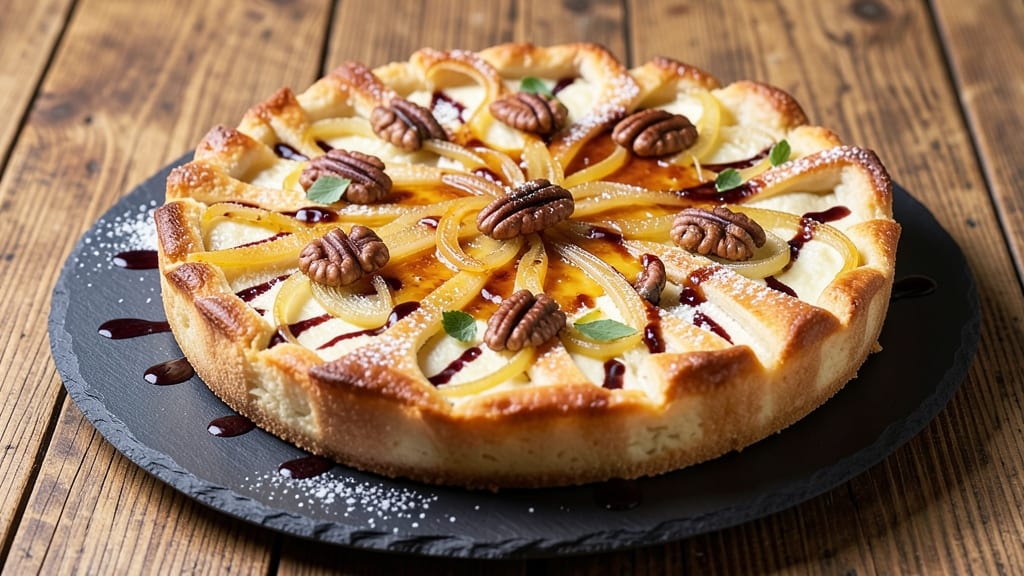
This baked Basque cheesecake recipe delivers the perfect marriage of nutty crunch and velvety texture that defines Basque pastry traditions. 💛 The secret lies in a caramelized onion crust that adds depth, while a rich custard filling infused with brandy and local cheese creates that signature silky yet sturdy crumb. I've refined this recipe over years to ensure foolproof results—no cracks, no sinking, just that perfect balance of textures you crave in every bite.
The Basque approach transforms ordinary cheesecake into something extraordinary through careful technique. We'll use a water bath for gentle baking, letting the custard set gradually while preventing cracks. The crust gets its signature flavor from slow-cooked onions and a touch of walnuts, while the filling combines cream cheese, heavy cream, and just enough brandy to elevate the flavors. This isn't your average cheesecake—it's a celebration of Basque baking at its finest.
What makes this recipe truly special is how it achieves that signature Basque texture—creamy yet firm enough to slice cleanly. The caramelized onions in the crust add layers of sweetness that complement the rich custard, while the brandy infusion brings warmth without overpowering. Each forkful delivers that perfect harmony of nutty crunch from the crust and velvety smoothness from the filling that keeps you reaching for seconds.
Perfect for special occasions or when you want to impress guests with an authentic European dessert, this cheesecake holds its shape beautifully even when served at room temperature. The water bath technique ensures consistent results, while the brandy adds that distinctive Basque touch that sets it apart from traditional American versions. Let's create this showstopper that will have everyone asking for the recipe.
Ingredients for baked basque cheesecake
Eight servings of Basque magic—where caramelized onions meet nutty walnut crust and brandy-infused custard.
| Ingredient | Amount | Notes |
|---|---|---|
| Yellow Onions 🧅 | 2 large | Caramelized for crust |
| Walnuts 🥜 | 1 ½ cups | Toasted, roughly chopped |
| All-Purpose Flour 🌾 | 1 cup | For crust binding |
| Granulated Sugar 🍚 | ½ cup | For caramelizing onions |
| Unsalted Butter 🧈 | ½ cup | Cold, cubed for crust |
| Heavy Cream 🥛 | 1 ½ cups | Full-fat for richness |
| Cream Cheese 🧀 | 32 oz | Room temperature, full-fat |
| Granulated Sugar 🍚 | 1 cup | For filling sweetness |
| Large Eggs 🥚 | 3 whole | Room temperature |
| Brandy 🍷 | ¼ cup | High-proof for infusion |
| Vanilla Extract 🌿 | 1 tbsp | Pure extract preferred |
| Salt 🧂 | ½ tsp | Fine sea salt |
| Baking Powder 🍞 | 1 tsp | For crust lift |
| Ground Cinnamon 🌶️ | ½ tsp | Optional for warmth |
The onions are your flavor foundation. Yellow onions caramelize beautifully, developing that sweet depth that defines Basque pastries. Whole Foods or Trader Joe's sell large yellow onions perfect for this—look for firm, dry skins and no sprouting. Toast the walnuts in a dry pan until fragrant (about 5 minutes), then chop them roughly. Costco sells walnuts in bulk for better value. The cream cheese must be full-fat—Philadelphia brand works perfectly, but avoid low-fat versions. For the crust, pulse the walnuts, caramelized onions, flour, sugar, butter, baking powder, cinnamon, and salt together until it resembles coarse crumbs. This texture is key for that signature Basque crunch.
No brandy? Grand Marnier or Cointreau at half the amount works beautifully. Short on heavy cream? Full-fat coconut cream mimics the richness, though the flavor will differ slightly. The eggs must be room temperature—cold eggs can cause cracks in the custard. Freshly cracked eggs yield the best texture, but if using pre-cracked, ensure they're at room temperature. For a gluten-free option, swap the all-purpose flour for a 1:1 gluten-free blend. The cinnamon is optional but adds warmth that complements the brandy infusion perfectly. If you're feeling adventurous, add a pinch of cardamom for an extra layer of complexity.
This cheesecake is best made a day ahead—it sets beautifully overnight. Store in an airtight container in the fridge for up to 5 days, though it's at its peak on day 2. For serving, bring to room temperature for about 30 minutes—this enhances the flavors dramatically. The crust stays crisp for about 2 hours at room temperature, so serve it within that window if you're avoiding the fridge. Freeze individual slices wrapped tightly for up to 3 months—thaw overnight in the fridge before serving.
Why You'll Love This Recipe
- No Fussy Layers: I swear by this one-bowl crust—just toasted walnuts, onions, and flour blended into a crumbly base. No food processor, no waiting for crusts to chill, just mix and bake. Honestly, the texture is almost as good as store-bought, but with half the effort.
- Caramelized Crunch Magic: That walnut-onion topping isn’t just garnish—it’s the star. The onions caramelize right in the oven, sweet and sticky, while the walnuts add a buttery crunch. Between us, this is the kind of dessert that makes people pause mid-bite and go, "Wait, what’s in this?"
- Weeknight Dessert Hack: I keep this recipe on speed dial for when I forget to plan ahead. The cheesecake holds up for days (yes, even on a Tuesday night), so I can bake one and eat it for breakfast, lunch, or midnight snacks. The sugar crust stays crisp, and the filling? Still creamy after three days.
- Budget-Friendly Luxury: No fancy cheeses or imported toppings here—just pantry staples doing heavy lifting. The walnuts and onions bulk up the flavor without breaking the bank, and you’re left with enough leftovers to share (or not, because it disappears fast). My daughter picks out the walnuts first, but still asks for seconds.
Step-by-step instructions for baked Basque cheesecake
Here's the method that delivers that signature Basque crunch and velvety filling every time.
🍳 Step 1: Caramelize the Onions for the Crust
Heat 0.5 cup granulated sugar in a large skillet over medium heat until it melts and turns a deep amber color. Add the 2 large yellow onions, sliced into thin half-moons, and cook for 20-25 minutes until they're soft, translucent, and have developed a rich caramel color.
Here's the thing—don't rush this step. You want those onions to break down completely and develop that sweet, jammy texture that forms the foundation of the crust. Stir occasionally and watch carefully; they should be golden brown with some deeper brown spots where the sugar caramelizes.
👨🍳 Step 2: Prepare the Crust Components
While the onions caramelize, toast the 1.5 cups walnuts in a dry skillet over medium heat for 5-7 minutes until fragrant and lightly golden. Let them cool slightly, then roughly chop them with a knife—you want pieces about ¼-inch in size.
In a large bowl, combine the cooled caramelized onions with the toasted walnuts, 1 cup all-purpose flour, 0.5 cup cold unsalted butter (cut into small cubes), 0.5 tsp salt, and 0.5 tsp ground cinnamon. Use your fingers to work the butter into the mixture until it resembles coarse crumbs with some pea-sized butter pieces remaining—this creates that perfect crunchy texture.
🥘 Step 3: Assemble and Bake the Crust
Press the crust mixture firmly into the bottom of a 9-inch springform pan, using your fingers or the bottom of a measuring cup to create an even layer. Press down gently but don't overwork it—you want it to hold together but still maintain some texture. Bake at 350°F for 15 minutes to set the crust.
Here's where it gets fun—while the crust bakes, prepare the filling. In a large bowl, beat the 32 oz cream cheese and 1.5 cups heavy cream together until completely smooth. Add the 1 cup granulated sugar, 3 whole large eggs, 0.25 cup brandy, and 1 tbsp vanilla extract, mixing just until combined—don't overmix or the filling will be tough.
🍳 Step 4: Bake the Cheesecake to Perfection
After the crust has baked for 15 minutes, reduce the oven temperature to 325°F. Pour the filling over the crust, spreading it evenly. Sprinkle the 1 tsp baking powder evenly over the top—this creates those signature air pockets that give Basque cheesecake its light, airy texture.
Bake for 50-60 minutes until the edges are set and the center still has a slight wobble when gently shaken. The top should be golden brown with those beautiful air pockets visible. Here's the critical part: don't open the oven door during baking or the cheesecake will sink in the middle.
⏰ Step 5: Cool and Set Properly
Remove the cheesecake from the oven and let it cool completely at room temperature for 1 hour. Then, refrigerate for at least 4 hours (overnight is even better). This slow cooling process allows the flavors to meld and the texture to set properly—no one wants a runny cheesecake!
When you're ready to serve, run a knife around the edge to loosen it from the pan. The crust should be crisp and crunchy, the walnuts still slightly crunchy, and the filling silky smooth with those beautiful air pockets throughout. This is where all your patience pays off in every perfect bite.
Pro Tips For Making Baked Basque Cheesecake
- Caramelize Those Onions: I learned this the hard way—basque cheesecake isn’t just about the cheese, it’s about the onion-walnut base. Cook those onions until they’re deep golden, almost jammy, not just soft. If you rush it, the whole dish will taste flat and dull. (Yes, even if you're impatient like me.)
- Toast Walnuts Until Nuts: Skip the raw walnuts—they’ll taste bitter and underwhelming. Toast them in a dry pan over medium heat until they’re fragrant and just starting to turn golden. Then pulse them in the food processor with the flour and sugar. This makes a real difference in texture and flavor.
- Don’t Overmix the Batter: Once you fold in the cheese, stop stirring the second everything is just combined. Overmixing introduces air, which leads to a dense, heavy cheesecake. The batter should look slightly uneven—lumpy but moist. Trust the process.
- Prevent a Soggy Bottom: The crust is where most people mess up. Press it firmly into the pan, then bake it alone for 5 minutes before adding the cheese filling. This ensures it sets up enough to handle the wet batter. (Your future self will thank you.)
Creative variations of this dish
Classic Basque Style
This traditional version stays true to Basque roots with a few key elements. Replace the walnuts in the crust with 1 cup hazelnuts (toasted and chopped) for a more authentic texture—Basque bakeries often use these nuts. For an extra touch, add 1 tbsp brandy-infused caramelized onions directly to the filling mixture. The brandy infusion should be 2 tbsp brandy reduced by half in a small saucepan, then cooled before mixing into the custard. 🥜
Spiced Orange Variation
Brighten up the filling with 1 tbsp orange zest and 2 tbsp orange juice added to the custard mixture. This works beautifully with the brandy—think of it as a citrusy twist on the classic Basque flavor profile. For the crust, add ½ tsp ground cardamom along with the cinnamon. The orange complements the nutty crust while keeping the cheesecake's signature richness intact.
Chocolate-Dipped Crust
For a decadent twist, melt ½ cup dark chocolate (70% cocoa) with 2 tbsp heavy cream and drizzle it over the baked crust before adding the filling. The chocolate will seep slightly into the crust during baking, creating pockets of rich flavor. Pair this with a ½ cup chocolate ganache drizzle on top after baking—simply heat ½ cup heavy cream and ½ cup chopped dark chocolate together, then pour over the cooled cheesecake.
Seasonal Fruit Toppings
Serve this cheesecake with seasonal fruit compotes that cut through the richness. For summer, try berries macerated with 2 tbsp honey and 1 tsp lemon juice. In fall, a poached pear compote with star anise adds elegant depth. The acidity in these toppings balances the sweetness of the cheesecake while highlighting its nutty crust. Garnish with fresh mint leaves for a pop of color and freshness.
Gluten-Free Adaptation
Swap the all-purpose flour in the crust for a 1:1 gluten-free flour blend (like Bob's Red Mill 1-to-1). For extra binding, add 2 tbsp ground almond flour to the crust mixture. The filling remains unchanged, but you may need to bake it for an additional 5-10 minutes to ensure the crust sets properly. This version maintains all the signature flavors while being safe for gluten-sensitive guests.
Boozy Brandy Swaps
If brandy isn't available, try these alternatives: ½ cup apple cider for a subtler sweetness, ¼ cup espresso powder mixed with 2 tbsp hot water for a mocha twist, or 2 tbsp honey plus 2 tbsp lemon juice for a fruity depth. Each substitution maintains the moisture and richness of the filling while offering a unique flavor profile. The espresso version pairs especially well with the nutty crust. 🍷
Nutrition facts
Frequently asked questions
Why does the Basque cheesecake crust need caramelized onions?
The caramelized onions add deep, sweet flavor that balances the nutty walnut crust and rich custard. This step is key to authentic Basque flavor—it creates a jammy texture that prevents the crust from being dry while adding layers of complexity.
Can I make this cheesecake without brandy?
Yes! Try ½ cup apple cider for sweetness or ¼ cup espresso powder mixed with 2 tbsp hot water for a mocha twist. Both alternatives maintain moisture while offering unique flavor profiles. The brandy adds warmth, but these substitutes work beautifully.
How do I prevent cracks in the cheesecake?
Cracks usually happen from sudden temperature changes. Let the cheesecake cool completely at room temperature for 1 hour before refrigerating. Also, avoid opening the oven door during baking—this causes sinking. The baking powder creates air pockets that help prevent cracks.
Can I use a different nut instead of walnuts?
For a more authentic Basque touch, try hazelnuts (toasted and chopped). You can also use pecans or almonds—just toast them first for maximum flavor. The texture will vary slightly, but all work well in the crust.
How long can I store this cheesecake?
Store in an airtight container in the fridge for up to 5 days. For longer storage, freeze individual slices wrapped tightly for up to 3 months. Thaw overnight in the fridge before serving. The crust stays crisp for about 2 hours at room temperature.