
Desserts
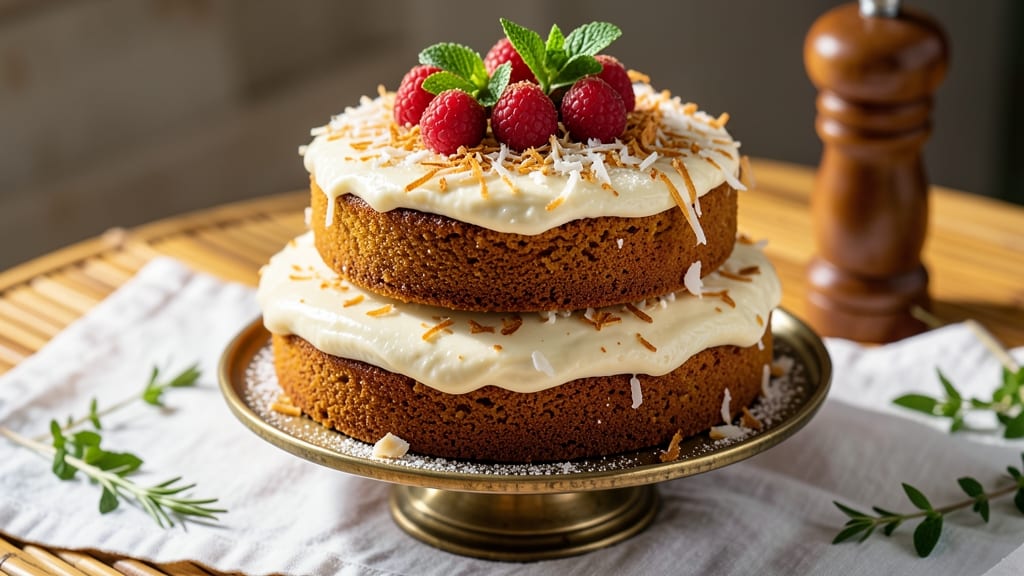
This Bahamian coconut cake recipe brings the island's signature tropical flavors to your kitchen with its signature moist crumb and toasted coconut crunch. 🌴 The secret lies in blending fresh coconut milk with traditional Bahamian spices like nutmeg and cinnamon, creating a tender cake that's as fragrant as it is delicious. I first tasted this cake during a visit to Nassau, where the warm, humid air made every bite feel like a vacation.
What sets this recipe apart is the perfect balance of textures—soft, moist layers with crispy toasted coconut on top and bottom, achieved through a simple layering technique. The cake's natural sweetness comes from brown sugar and a touch of dark rum, which infuses the batter with rich, caramelized notes. Baking at a moderate temperature ensures even cooking without drying out the cake.
By the time you pull it from the oven, you'll have a golden, fragrant cake with a tender crumb and that signature Bahamian coconut crunch. The aroma alone will transport you to a tropical paradise, while the flavors—warm spices, sweet coconut, and a hint of rum—make it perfect for celebrations or a special treat. This recipe delivers restaurant-quality results at home.
Serve it warm with a scoop of vanilla ice cream or dusted with powdered sugar for an authentic Bahamian touch. The cake keeps well for several days, making it ideal for meal prep or gifting. Let's get baking!
Ingredients for bahamian coconut cake
Simple pantry staples and a few tropical touches make this Bahamian coconut cake irresistible.
| Ingredient | Amount | Notes |
|---|---|---|
| All-Purpose Flour 🌾 | 2 ½ cups | Sifted for even texture |
| Granulated Sugar 🍚 | 2 cups | White or light brown |
| Unsalted Butter 🧈 | 1 cup | Room temperature, softened |
| Large Eggs 🥚 | 4 whole | Room temperature |
| Unsweetened Shredded Coconut 🥥 | 1 cup | Freshly shredded preferred |
| Vanilla Extract 🌸 | 2 tsp | Pure vanilla preferred |
| Baking Powder 🧂 | 2 tsp | Diamond Crystal preferred |
| Salt 🧂 | ½ tsp | Fine sea salt |
| Light Rum 🍹 | ½ cup | Dark or gold rum preferred |
| Coconut Milk 🥥 | 13 ½ oz | Full-fat canned coconut milk |
| Sweetened Condensed Milk 🥛 | 14 oz | High-quality brand preferred |
| Heavy Whipping Cream 🥛 | ½ cup | Chilled for whipping |
| Powdered Sugar 🍚 | 1 cup | For dusting topping |
| Toasted Coconut Flakes 🥥 | 1 cup | Homemade or store-bought |
The coconut milk and condensed milk are the heart of this cake. Trader Joe's has the best full-fat coconut milk cans—look for the ones with no additives. Goya condensed milk is my go-to for that authentic Caribbean sweetness, but any good brand works. The rum adds depth, so don't skimp—Appleton Estate or Bacardi are solid choices. For the shredded coconut, freshly shredded gives the best texture, but the pre-packaged kind in the baking aisle works too. Just check the ingredients—no added sugar or oils. Toast your own coconut flakes for the topping: spread them on a baking sheet and bake at 350°F for 8-10 minutes until golden and fragrant.
No rum? Orange juice or extra vanilla extract can stand in, but you'll lose that island character. Substituting coconut milk? Full-fat Greek yogurt thinned with milk works in a pinch, but the flavor won't be quite the same. For the cake batter, sift the flour and baking powder together—this prevents lumps and ensures a light texture. The condensed milk can be tricky to find? Sweetened evaporated milk plus extra sugar mimics it, though it's not identical. And if you're making this ahead, prep the filling and topping the day before—it saves time on baking day.
This cake keeps beautifully—3-4 days at room temperature covered loosely with plastic, or 1 week in the fridge. The topping stays crunchy if stored in an airtight container. For serving, I like to dust with extra powdered sugar right before slicing—it looks fancy and adds a little sweetness. Freezes well too: wrap tightly in plastic and freeze for up to 3 months. Just thaw at room temperature before serving. The cake actually tastes better the second day as the flavors meld together—perfect for making ahead for parties.
Why You'll Love This Recipe
- No-Fuss Mixing: This cake comes together in one bowl—no fancy layering, no fussing with frosting. Just cream butter and sugar, toss in eggs, fold in flour and coconut, and you’re done. Honestly, I’ve made it while scrolling through my phone.
- Tropical in Every Bite: That shredded coconut isn’t just decoration—it’s the star, toasting into caramelized pockets while the cake stays moist. Between us, the first slice is always the hardest to resist.
- Party or Picnic Ready: Slice it for a potluck, crumble it over ice cream, or pack it in lunchboxes—this cake handles it all. (Yes, even on a Tuesday night.) The rich, buttery layers keep it satisfying whether it’s a celebration or just a craving.
- Budget-Friendly Stretch: A single batch feeds six, and leftovers? Even better. The coconut’s natural sweetness means you can skip extra sugar, and the butter keeps it rich without breaking the bank. My secret weapon for when I need dessert but want to save.
Step-by-step instructions for Bahamian coconut cake
Let's bake this tropical masterpiece with layers of moist cake and crunchy coconut topping.
👨🍳 Step 1: Mix the Cake Batter with Tropical Flavor
Preheat your oven to 350°F and grease a 9-inch round cake pan or line it with parchment paper. In a large mixing bowl, combine the 2.5 cups all-purpose flour, 2 tsp baking powder, and 0.5 tsp salt. Sift this mixture together to remove any lumps and ensure an even texture throughout the cake.
In a separate large bowl, cream together the 1 cup softened unsalted butter and 2 cups granulated sugar on medium speed until light and fluffy—about 3-4 minutes. This step is crucial for creating that tender, moist crumb. Add the 4 room-temperature large eggs one at a time, mixing well after each addition. Stir in the 2 tsp vanilla extract and 0.5 cup light rum for that authentic Bahamian flavor.
Gradually add the dry ingredients to the wet mixture, mixing on low speed just until combined. Fold in the 1 cup unsweetened shredded coconut by hand with a spatula—don't overmix or the cake will be dense. The batter should be thick but pourable. Here's the thing—this batter is rich and moist, so don't worry if it looks thick. It's perfect for that tender crumb.
🍳 Step 2: Prepare the Coconut Milk Mixture
In a medium saucepan, combine the 13.5 oz coconut milk and 14 oz sweetened condensed milk. Heat over medium heat, stirring constantly, until the mixture just begins to simmer—about 5-7 minutes. You'll notice it thickens slightly and becomes smoother as it warms.
Remove from heat and let it cool for 10 minutes. While it cools, whip the 0.5 cup chilled heavy whipping cream in a separate bowl until soft peaks form. This cream will lighten our coconut mixture and add another layer of richness to the cake.
Once the coconut mixture has cooled slightly, gently fold in the whipped cream until fully combined. This creates our signature Bahamian coconut sauce that will soak into the cake layers. The mixture should be smooth and slightly thickened—like a rich pudding. I know it seems weird to mix these ingredients, but trust me, this is what gives the cake its signature moistness and tropical flavor.
🥘 Step 3: Assemble and Bake the Cake Layers
Pour half of the cake batter into your prepared cake pan and spread it evenly. Pour half of the coconut milk mixture over the batter, spreading it gently with a spatula to cover the entire surface. Repeat with the remaining batter and coconut mixture, creating two distinct layers.
Sprinkle the 1 cup toasted coconut flakes evenly over the top layer, pressing them gently into the coconut mixture so they stick. This creates that beautiful crunchy topping we all love. Bake for 45-50 minutes or until a toothpick inserted into the center comes out clean. The edges should be golden brown, and the top should be lightly caramelized from the coconut.
If you notice the top browning too quickly before the cake is fully baked, tent the pan with aluminum foil. The cake is done when it springs back slightly when touched and the internal temperature reaches 210°F. Real talk: Your oven might run hot, so start checking at the 40-minute mark to avoid overbaking.
⏰ Step 4: Cool and Dust with Powdered Sugar
Allow the cake to cool in the pan for 15 minutes before transferring it to a wire rack to cool completely. This gradual cooling prevents the cake from cracking as it sets. While it cools, make the coconut topping by mixing the 1 cup powdered sugar with 2 tablespoons toasted coconut flakes in a small bowl.
Once the cake is completely cool, dust the top generously with the powdered sugar mixture. This creates that signature Bahamian coconut cake presentation with that beautiful contrast of white powdered sugar against the golden toasted coconut. The cake should be moist but not soggy, with a perfect balance of tender crumb and crunchy coconut throughout.
Slice and serve at room temperature. Each bite should deliver that perfect combination of moist cake, rich coconut flavor, and satisfying crunch from the toasted coconut. This cake keeps well in the refrigerator for up to 3 days, though I doubt it'll last that long in your house!
Pro Tips For Making Bahamian Coconut Cake
- Preheat to 350°F: DESCRIPTION: The oven’s not just a guess—350°F is the sweet spot for Bahamian coconut cake. Too hot, and the outside burns before the center sets; too cool, and it stays dense. I learned this after a cake collapsed mid-slice because I rushed the temp. Let the oven fully preheat with a pan inside for 15 minutes first—your future self will notice the difference.
- Toast the coconut: DESCRIPTION: Skip this, and your cake will taste like a soggy dessert. Pulse the shredded coconut in a food processor for 10 seconds to break up clumps, then toast it in a dry pan over medium heat for 3–4 minutes until golden and fragrant. The nuttiness cuts through the sweetness, and it won’t turn to mush when baked. (Yes, even if you’re impatient like me.)
- Cream butter and sugar: DESCRIPTION: Don’t just mix—beat the butter and sugar until pale and fluffy, about 3–4 minutes. This aerates the batter, making the cake light instead of heavy. I used to skip it, and the texture was closer to a dense pound cake. A stand mixer handles this faster, but a hand mixer works if you’re patient. (Your arm will thank you later.)
- Don’t overmix the batter: DESCRIPTION: Once you fold in the flour and coconut, stop mixing after 10–12 strokes. Overmixing develops gluten, which turns your tender coconut cake into a chewy brick. The batter will look slightly lumpy—that’s normal. Smooth it out just enough to combine, then bake. Trust the process.
Essential equipment for perfect results
Must-Have Baking Tools
Start with a 9-inch round cake pan—I recommend a lightweight aluminum pan for even heat distribution. A stand mixer or hand mixer makes whipping the cream and creaming butter/sugar effortless, but a sturdy wooden spoon works if you're mixing by hand. Don't skip a fine-mesh sieve for sifting dry ingredients—this ensures a light, airy crumb. 🌴
Coconut Prep Essentials
For that signature toasted coconut crunch, you'll need a baking sheet and parchment paper. Spread 1 cup shredded coconut on the sheet and toast at 350°F for 8-10 minutes, stirring halfway. A microplane comes in handy if you're grating fresh coconut from a whole nut—just be gentle to avoid over-processing. Store-bought flakes work too, but homemade adds depth.
Temperature Control
An oven thermometer is a game-changer—your oven's displayed temperature can be off by 25°F or more. Place it near your cake pan while baking to ensure accurate 350°F heat. For the coconut milk mixture, a medium saucepan with medium heat prevents scorching. A digital kitchen scale helps measure the 14 oz sweetened condensed milk precisely, though a measuring cup works too.
Cooling and Serving
Invest in a wire cooling rack to prevent soggy bottoms—this cake needs proper airflow. For the powdered sugar topping, a fine-mesh sieve or sifter creates that professional dusting effect. A sharp serrated knife makes clean slices, while a small mixing bowl holds your powdered sugar-coconut flake mixture. Pro tip: Keep a spatula handy to gently press coconut flakes into the top layer before baking.
Optional Upgrades
Want to elevate further? A candy thermometer helps monitor the coconut milk mixture's simmering point. For rum lovers, a small measuring cup ensures precise ½ cup additions. A pastry brush comes in handy for greasing the pan—just use neutral oil or melted butter. And if you're making this often, a coconut milk can opener (like the OXO Good Grips) makes opening cans easier without spills. 💫
Nutrition facts
Frequently asked questions
Why does this recipe use both coconut milk and condensed milk?
The combination creates that signature Bahamian texture—coconut milk adds rich tropical flavor while condensed milk provides moisture and sweetness without needing extra sugar. The mixture thickens slightly when heated, creating a luscious sauce that soaks into the cake layers perfectly. It's what gives this cake its signature moist, almost pudding-like center!
Can I make this cake without rum?
Yes, but you'll lose some depth of flavor. Replace the ½ cup rum with ½ cup orange juice or add 1 extra teaspoon vanilla extract. For a non-alcoholic version, use ½ cup coconut water instead. The rum enhances the tropical flavor, but the cake will still be delicious without it.
How do I toast coconut flakes properly?
Spread 1 cup coconut flakes on a baking sheet lined with parchment paper. Toast at 350°F for 8-10 minutes, stirring halfway, until golden and fragrant. Watch closely—they burn quickly! For extra flavor, add a pinch of salt or cinnamon while toasting. Let cool completely before using to prevent melting when added to the cake.
Why does my cake sink in the middle?
This usually happens from overmixing the batter or opening the oven too soon. The cake needs 45-50 minutes at 350°F—check with a toothpick at 40 minutes. If it sinks, your oven may run hot. Try tenting with foil if the top browns too fast. Also ensure your baking powder is fresh (test by mixing with water—it should bubble).
Can I make this cake in a different pan size?
For a 9-inch round pan, the recipe works perfectly. For an 8-inch pan, reduce baking time by 5-7 minutes and check early. For a 10-inch pan, increase baking time by 5-10 minutes. Adjust the coconut flake topping proportionally—about 1 cup per 9-inch pan. Always use the same oven temperature.