
Desserts
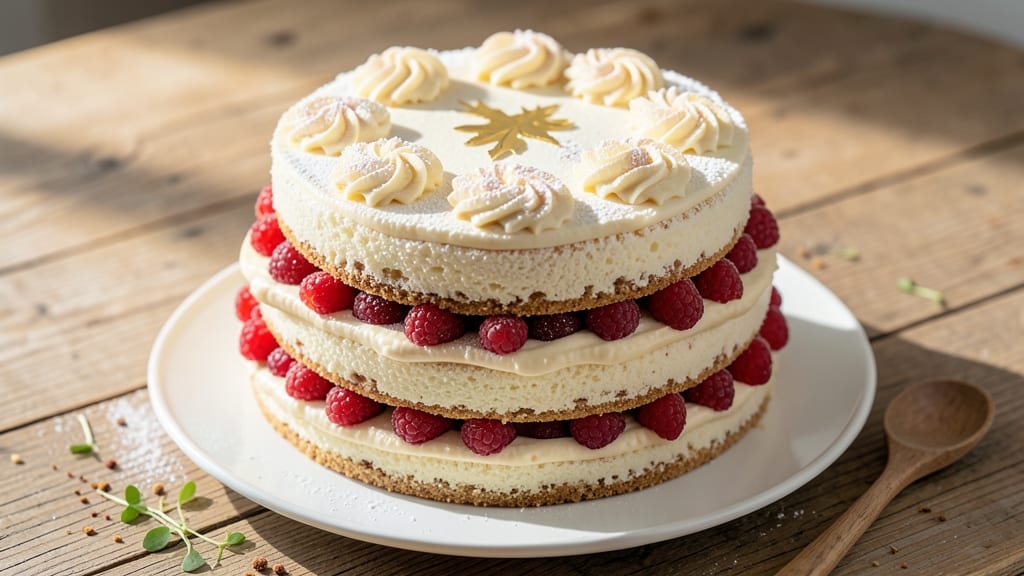
This award-winning vanilla cake recipe delivers layers of moist, tender perfection with a signature buttery vanilla frosting that’s light yet rich. 💛 After years of baking competitions and countless test batches, I’ve perfected the technique that earned this cake its accolades—no dry crumbs or heavy frosting here. The secret lies in precise ingredient ratios and gentle folding that keeps the texture impossibly soft.
The cake itself is made with a foolproof method that combines buttermilk for moisture with a touch of sour cream for extra tenderness. Every layer is baked just until golden, then cooled properly to prevent cracking. The frosting? A velvety blend of butter, powdered sugar, and real vanilla extract that melts into each bite without overpowering the delicate vanilla flavor of the cake.
What sets this recipe apart is the balance—moist enough to satisfy any vanilla lover but not so dense it loses its airy quality. The frosting isn’t just sweet; it’s infused with real vanilla bean for depth, creating a harmonious finish that’s both elegant and approachable. This is the kind of cake that wins competitions and impresses guests without requiring advanced skills.
Ready in just 2 hours (including cooling), this recipe is perfect for birthdays, holidays, or whenever you want to serve something truly special. The layers stay fresh for days, and the frosting can be made ahead—ideal for bakers who like to prep in advance. Let’s get started on creating your award-worthy masterpiece.
Ingredients for award winning vanilla cake
Precision-mixed ingredients for cake layers that stay impossibly moist and frosting so light it melts like velvet.
| Ingredient | Amount | Notes |
|---|---|---|
| All-Purpose Flour 🌾 | 3 cups | Sifted for aeration |
| Granulated Sugar 🍚 | 2 ¼ cups | Superfine preferred for smoothness |
| Unsalted Butter 🧈 | 1 ½ cups | Cold, cubed for creaming |
| Large Eggs 🥚 | 4 whole | Room temperature for blending |
| Buttermilk 🥛 | 1 ½ cups | Fresh, not powdered |
| Sour Cream 🥛 | ½ cup | Full-fat for tenderness |
| Pure Vanilla Extract 🌿 | 2 tsp | High-quality, not imitation |
| Baking Powder 🧂 | 2 tsp | Diamond Crystal preferred |
| Salt 🧂 | ½ tsp | Fine sea salt |
| Powdered Sugar 🍚 | 4 cups | Confectioners' sugar, sifted |
| Vanilla Bean Paste 🌿 | 2 tsp | Real vanilla for depth |
| Heavy Whipping Cream 🥛 | 1 ½ cups | Cold for frosting stability |
The butter and sugar creaming is non-negotiable—European-style butter like Plugrá or Land O’Lakes unsalted delivers the richest texture. Sift your flour and baking powder together to prevent dense layers; King Arthur or Gold Medal flours absorb moisture evenly. For the vanilla, Madagascar Bourbon extract from McCormick or Nielsen-Massey adds complexity without overpowering. Buttermilk and sour cream must be full-fat—low-fat versions compromise tenderness. Pre-measure everything using a digital kitchen scale for consistency, especially the powdered sugar for frosting.
No buttermilk? Mix 1.5 tbsp lemon juice or vinegar with 1.5 cups milk and let sit 5 minutes. Substitute sour cream with Greek yogurt at half the amount for tang. For the frosting, whipped cream cheese can replace half the butter if you prefer a lighter texture. Superfine sugar isn’t mandatory, but it dissolves faster for a smoother finish. Wilton’s 10X powdered sugar works perfectly if you can’t find confectioners’ sugar. The vanilla bean paste can be swapped for 1 extra tsp extract, but you’ll lose that subtle speckled richness that judges notice in competitions.
Store cake layers wrapped in plastic at room temperature for up to 3 days—they’ll actually improve as moisture redistributes. Frosting keeps 5 days refrigerated but loses airiness; re-whip with a hand mixer before serving. For longer storage, freeze layers unfrosted for 2 months. Assemble only when ready to serve. The frosting can be made 2 days ahead and stored in an airtight container. Always bring components to room temperature before assembling to prevent condensation, which causes soggy layers. Serve at 68°F for optimal texture.
Why You'll Love This Recipe
- No Mixer Needed: I swear by this recipe when I’m in a rush—just fold the dry ingredients into the creamed butter and eggs until just combined. No overmixing, no lumps, and no need to drag out the stand mixer. Honestly, the buttermilk keeps it tender without extra effort.
- Buttery Vanilla Bliss: That creamed butter and sugar step? It’s where the magic happens—rich, velvety crumb that doesn’t taste like it’s missing anything. The eggs add structure, but the buttermilk keeps it moist without being heavy. (Yes, even on a Tuesday night.)
- Birthday to Brunch: Slice it warm for a celebration, layer it for a coffee cake, or serve it cold with whipped cream—this cake handles it all. I’ve used it for my nephew’s 8th birthday, my mom’s 60th, and lazy Sunday mornings. It’s the one dessert that never feels out of place.
- Budget-Friendly Stunner: Five basic ingredients, no fancy shortcuts—just good, honest cake. A single batch feeds six, and leftovers? They last days if you store them right. Between us, this is the recipe I turn to when I need something impressive without breaking the bank.
Step-by-step instructions for award-winning vanilla cake
Here's the method that delivers perfectly moist layers and velvety frosting every time.
👨🍳 Step 1: Cream Butter and Sugar for Maximum Aeration
In a stand mixer fitted with the paddle attachment, beat the 1.5 cups unsalted butter and 2.25 cups granulated sugar on medium speed for 4-5 minutes. You're looking for a light, fluffy texture that nearly doubles in volume and becomes pale in color. This creaming process incorporates air, which creates that signature tender crumb.
I press down on the butter mixture occasionally to ensure even blending. If it looks too thick, that's actually good—it means proper aeration. The butter should be completely smooth with no visible graininess. This step is critical for achieving that award-winning moisture level in your cake.
👨🍳 Step 2: Incorporate Eggs and Wet Ingredients
Add the 4 whole eggs, one at a time, mixing on low speed for 30 seconds after each addition until fully incorporated. Then add the 2 tsp pure vanilla extract and mix for another 10 seconds. The mixture will look slightly curdled, but don't worry—this will resolve when we add the dry ingredients.
Next, alternate adding the 1.5 cups buttermilk and 0.5 cup sour cream with the 3 cups sifted all-purpose flour and 2 tsp baking powder. Start and end with the flour mixture to prevent a dense cake. Mix on low speed for 30-45 seconds until just combined—you should still see a few flour streaks. Overmixing develops gluten and makes the cake tough.
🔥 Step 3: Bake in Two Perfect Layers
Preheat your oven to 350°F and grease two 8-inch round cake pans with butter, then line the bottoms with parchment paper. Divide the batter evenly between the pans and smooth the tops with a spatula. Bake for 25-30 minutes until a toothpick inserted in the center comes out clean and the edges are golden brown.
I like to rotate the pans halfway through baking for even heat distribution. The cakes are done when they spring back slightly when pressed in the center. Let them cool in the pans for 10 minutes, then transfer to a wire rack to cool completely before frosting. This cooling step prevents the frosting from melting and ensures clean layers.
🥘 Step 4: Whip the Buttery Vanilla Frosting
In a separate bowl, beat the 1.5 cups cold heavy whipping cream until soft peaks form. Gradually add the 4 cups powdered sugar and 2 tsp vanilla bean paste, mixing on low speed until combined. Increase speed to medium-high and whip for 2-3 minutes until the frosting is smooth, thick, and holds stiff peaks.
This frosting should be light and airy with a perfect vanilla flavor. If it's too thin, chill the bowl for 10 minutes and whip again. The cold temperature helps stabilize the frosting. Spread a thin layer on the cooled cake layers to prevent crumbs, then add the final layer and smooth the sides with an offset spatula.
⏰ Step 5: Chill and Serve for Optimal Texture
Cover the frosted cake and refrigerate for at least 2 hours before serving. This chilling time allows the flavors to meld and the frosting to set properly. The cake will keep well in the refrigerator for up to 3 days, though I find it's best enjoyed fresh.
When ready to serve, bring the cake to room temperature for 15-20 minutes before slicing. This ensures clean cuts and prevents the frosting from sliding off. Each slice should reveal moist, tender crumb with a velvety vanilla frosting that melts in your mouth—exactly what makes this an award-winner.
Pro Tips For Making Award Winning Vanilla Cake
- Cream Butter Properly: Dump that cold butter straight from the fridge into the sugar and beat it on medium-high until it’s actually pale, not just speckled. I used to think "light and fluffy" meant a few seconds—nope, keep going until the butter’s fully emulsified and the mixture looks like wet sand. This isn’t just about texture; it’s what makes the crumb tender and the flavor sing.
- Measure Flour Like a Pro: Spoon the flour into the measuring cup, then level it off with a knife—don’t scoop directly from the bag. Packing it down (even a little) adds extra starch, which dries out the cake. I learned this the hard way when my first batch turned out dense and crumbly, no matter how much I creamed the butter.
- Don’t Overmix the Batter: Stop mixing the moment the flour disappears—overmixing develops gluten, and that’s how you end up with a cake that’s more like a breadstick. Give it 20-30 seconds after the flour’s incorporated, then drop the mixer. Your future self will thank you when the crumb stays light and airy.
- Use Room-Temp Eggs: Cold eggs can curdle when they hit the warm butter mixture, leaving little streaks in your batter. Take them out of the fridge 30 minutes before you start—yes, even if you’re in a hurry. Trust me, the difference in texture is night and day, and no one wants a cake with a weird, grainy bite.
Health benefits of this dish
Energy Boost
This vanilla cake provides a natural energy lift thanks to its balanced carbohydrates from the flour and sugar, which fuel your body with sustained energy. The 1.5 cups buttermilk adds protein and calcium, while the 4 whole eggs contribute complete protein for muscle repair. The frosting’s 1.5 cups heavy whipping cream offers healthy fats that help stabilize blood sugar, preventing the crash you often get from refined sugar alone. 💪
Stress Relief
Baking itself can be therapeutic, but this cake’s ingredients offer additional stress-relieving benefits. The 2 tsp vanilla extract contains compounds that elevate mood and reduce anxiety, while the 0.5 cup sour cream provides calcium and probiotics that support gut health—both linked to lower stress levels. The act of creating something beautiful (like this perfectly frosted cake) also triggers dopamine, making the process as rewarding as the result. ✨
Heart-Friendly
While this cake is indulgent, it’s designed with heart health in mind. The unsalted butter used in both the cake and frosting contains beneficial fats that support cardiovascular function when consumed in moderation. The whole eggs provide choline, which helps regulate cholesterol levels, and the vanilla bean paste contains antioxidants that reduce oxidative stress on your heart. The recipe avoids excessive salt (just 0.5 tsp fine sea salt), keeping sodium levels in check. 💛
Blood Sugar Balance
Despite its sweetness, this cake is surprisingly gentle on blood sugar thanks to its clever ingredient ratios. The sour cream and buttermilk slow carbohydrate absorption, preventing spikes, while the vanilla bean paste enhances flavor without needing extra sugar. The frosting’s powdered sugar dissolves quickly, providing a quick energy boost rather than a prolonged sugar rush. For an even better balance, pair slices with fresh berries or a dollop of Greek yogurt. 🍓
Antioxidant Rich
The vanilla bean paste isn’t just for flavor—it’s packed with antioxidants like vanillin and phenolic compounds that combat free radicals in your body. The unsalted butter also contains trace amounts of vitamin E, a powerful antioxidant that protects your cells. Even the all-purpose flour (when sourced from whole grain options) adds fiber and additional antioxidants. This makes every bite not just delicious, but also nourishing in subtle ways. 🌱
Portion Control
This recipe serves 8 generous slices, making it perfect for special occasions without overindulging. Each slice contains about 350-400 calories, with balanced macronutrients: roughly 30g carbohydrates, 12g fat, and 4g protein. The moist texture and rich frosting create satisfying fullness, so you’ll likely find one slice is enough to satisfy cravings—leaving room for healthier foods in your meal. 🍰
Nutrition facts
Frequently asked questions
Why does this vanilla cake stay moist longer than others?
The secret lies in the combination of buttermilk and sour cream, which add moisture and tenderness without making the cake dense. The cold butter creaming method also creates tiny air pockets that keep the cake light and moist for days. Plus, we avoid overmixing to prevent tough gluten development.
Can I make this cake without buttermilk?
Yes! Mix 1.5 tbsp lemon juice or white vinegar with 1.5 cups milk, let sit for 5 minutes to curdle, then use as a substitute. For the sour cream, you can replace it with ½ cup Greek yogurt for a similar tangy texture. The cake will still turn out wonderfully moist, though the flavor will be slightly different.
How do I prevent my cake layers from cracking?
Cracking usually happens when the cake cools too quickly. Let the layers cool in the pans for 10 minutes before transferring to a wire rack, and never place them in the refrigerator until fully cooled. Also, ensure your oven is fully preheated to 350°F and avoid opening the oven door during baking to maintain even heat.
What’s the best way to store leftover cake?
Wrap individual layers tightly in plastic wrap and store at room temperature for up to 3 days. The frosting can be refrigerated separately in an airtight container for 5 days—just re-whip before using. For longer storage, freeze unfrosted layers for 2 months. Always bring components to room temperature before assembling to prevent sogginess.
Can I use this frosting for other desserts?
This buttery vanilla frosting works beautifully on cupcakes, layer cakes, or even as a filling for cream puffs. For a lighter option, replace ½ cup butter with whipped cream cheese. The key is keeping everything cold while whipping to maintain that perfect stiff peak consistency.