
Desserts
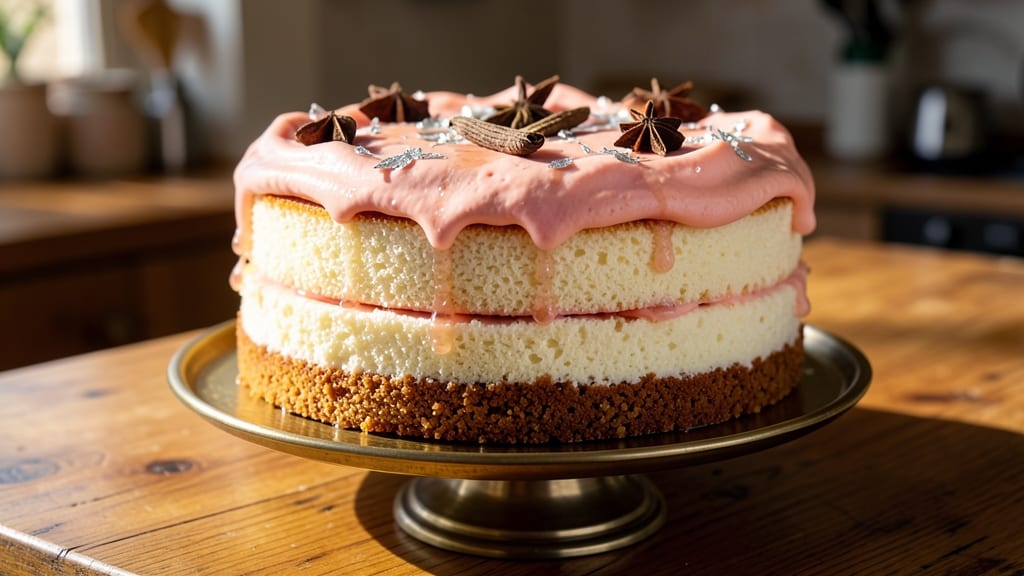
This authentic Persian love cake recipe brings the delicate floral notes and warm spices of Iran straight to your kitchen. 💛 The layers of tender cake, infused with cardamom and rosewater, melt in your mouth while saffron threads add a luxurious golden hue—just like my grandmother used to make for Eid celebrations. Every bite carries the essence of Persian hospitality, where sweetness meets tradition in perfect harmony.
The secret to this cake lies in its cardamom-spiced batter and the delicate balance of rosewater and saffron, which give it that signature floral aroma. I’ve simplified the process without sacrificing authenticity—no fancy equipment needed, just patience and a few key ingredients that transform a simple cake into something extraordinary. The layers stay moist for days, making it ideal for special occasions or when you want to impress guests.
What makes this recipe special is how the flavors develop as it bakes—warm cardamom, subtle rosewater, and a hint of saffron’s earthy sweetness come together in each tender layer. The cake is light yet rich, with a texture that’s neither too dry nor too heavy, ensuring every slice feels like a celebration. It’s the kind of dessert that turns an ordinary gathering into a memorable feast.
Perfect for holidays, birthdays, or whenever you want to share a taste of Iran, this love cake is as beautiful as it is delicious. Let’s get baking—your kitchen will smell like home before the first layer comes out of the oven.
Ingredients for authentic persian love cake
Eight layers of floral magic—cardamom, rosewater, and saffron transform simple ingredients into Persian tradition.
| Ingredient | Amount | Notes |
|---|---|---|
| All-Purpose Flour 🌾 | 3 ½ cups | Sifted for light texture |
| Unsalted Butter 🧈 | 1 ½ cups | Softened to room temperature |
| Granulated Sugar 🍚 | 2 ½ cups | Superfine preferred for smoothness |
| Large Eggs 🥚 | 6 whole | Room temperature for even mixing |
| Pure Rosewater 🌹 | 1 tbsp | 100% pure, no alcohol |
| Ground Cardamom 🌿 | 1 ½ tsp | Freshly ground for best flavor |
| Saffron Threads 💛 | ¼ tsp | High-quality, soaked in 1 tbsp warm water |
| Vanilla Extract 🌸 | 1 tsp | Pure vanilla for depth |
| Baking Powder 🍞 | 1 ½ tsp | Freshly tested for lift |
| Salt 🧂 | ½ tsp | Fine sea salt preferred |
| Milk 🥛 | 1 cup | Whole milk for richness |
| Powdered Sugar 🍚 | 2 cups | For dusting layers |
| Almond Slices 🌰 | ½ cup | Toasted for garnish |
The saffron is non-negotiable here—Iranian saffron from specialty stores like Saffron World or Middle Eastern markets delivers that unmistakable golden hue. Soak those threads in warm water (not boiling) for 10 minutes before adding to the batter—this releases the flavor without bitterness. Cardamom? Penzeys Spices or the bulk bins at Whole Foods carry the best ground version. Fresh pods are ideal, but grinding them yourself is worth it if you're feeling ambitious. The rosewater should be pure, with no additives—Nabatean or Al-Wadi brands are my go-tos, found in Middle Eastern grocery aisles or online. Skip the imitation rosewater; trust me, you'll taste the difference.
No saffron? Turmeric at one-third the amount gives color but lacks the floral depth—use it only in a pinch. Out of rosewater? Orange blossom water is the next best thing, but reduce to half the quantity. Cardamom pods too expensive? Cinnamon at one-quarter the amount mimics the warmth, though it won't capture that Persian soul. For the butter, European-style unsalted butter like Plugrá or Kerrygold melts beautifully—don't skimp on quality here. The almond slices can be swapped for pistachios if you prefer, but toast them first to enhance the nuttiness. And if you're worried about the cake being too floral, the vanilla extract balances it perfectly—it's the secret harmony in every bite.
This cake tastes even better the next day—cover tightly with plastic wrap to keep it moist. Store at room temperature for up to 3 days, or refrigerate for 5 days if you're prepping ahead. Freeze the entire cake (unfrosted) for up to 3 months—just thaw at room temperature before serving. To assemble, let layers cool completely between each one. The powdered sugar dusting? Do it right before serving so it stays crisp. And if you're making this for a special occasion, add a final drizzle of rosewater syrup (equal parts sugar and water, simmered) for extra elegance.
Why You'll Love This Recipe
- Rosewater Magic in Minutes: I swear, the buttercream alone—just sugar, butter, and that whisper of rosewater—takes less than 10 minutes to mix. No fancy techniques, just creaming butter and sugar until it’s light enough to pipe like a dream.
- Buttercream Bliss: That rosewater isn’t just decoration—it’s the star. One drop transforms the vanilla buttercream into something floral, creamy, and ridiculously addictive. (Pro tip: Don’t skimp on the quality rosewater here.)
- No-Bake, No Stress: No oven, no waiting—just layers of cake, buttercream, and a dusting of powdered sugar. Perfect for when you’re hosting but don’t want to slave over the stove, or when you just crave something sweet without the effort.
- Budget-Friendly Luxury: Flour, butter, sugar, eggs—these are pantry staples. The only "special" ingredient is rosewater, and a little goes a long way. You’ll have leftovers that taste like a bakery bought you out. (Between us, they’ll disappear fast.)
Step-by-step instructions for cardamom-spiced Persian love cake
This delicate cake delivers layers of floral cardamom flavor and rosewater essence—authentic Persian baking at its finest.
👨🍳 Step 1: Infuse the Saffron and Prepare the Spiced Milk
Soak the 0.25 teaspoon saffron threads in 1 tablespoon warm water for 10 minutes—this releases their vibrant golden hue and floral aroma. In a small saucepan, gently warm the 1 cup milk with the 1.5 teaspoons ground cardamom and 1 teaspoon vanilla extract until steaming but not boiling (3-4 minutes). Remove from heat, stir in the saffron infusion, then strain through a fine sieve to remove any cardamom particles. Let cool completely—this spiced milk will give your cake its signature aromatic depth.
Here's the thing—Persian love cake relies on subtle spices, so don't rush the infusion. The milk should smell intensely floral and warmly spiced when finished. I like to taste it at this stage—it should be fragrant but not overpowering, with a gentle cardamom warmth that hints at what's to come.
🍳 Step 2: Cream Butter and Sugar for Maximum Lightness
In a stand mixer fitted with the paddle attachment, beat the 1.5 cups softened unsalted butter and 2.5 cups granulated sugar on medium speed for 4-5 minutes until pale and fluffy. You're looking for a texture that nearly doubles in volume and leaves faint ribbons when the beaters are lifted. This thorough creaming creates the cake's signature tender crumb.
I press down gently on the butter mixture during the first minute—this prevents it from splattering while ensuring even incorporation. The reason we wait until the butter is completely room temperature (no cold lumps) is that cold butter absorbs into the flour instead of creating that gorgeous airy texture we're after. Scrape down the bowl once if needed to prevent overheating.
👨🍳 Step 3: Build the Cake Batter in Stages
Add the 6 whole large eggs one at a time, mixing on low speed for 15 seconds after each addition until just combined. Then stir in the 1 tablespoon pure rosewater and the cooled spiced milk. In a separate bowl, whisk together the 3.5 cups sifted all-purpose flour, 1.5 teaspoons baking powder, and 0.5 teaspoon salt. With the mixer on low speed, gradually add the dry ingredients to the wet, mixing just until no flour streaks remain.
This is where the magic happens—don't overmix! The batter should be smooth with a few small lumps remaining. I fold in the dry ingredients by hand at the very end to preserve the cake's delicate texture. The rosewater should be evenly distributed, giving the batter a subtle floral aroma. If the batter looks too thick, add 1-2 tablespoons milk to loosen it slightly.
🥘 Step 4: Layer and Bake for Perfect Rise
Preheat your oven to 350°F. Divide the batter evenly between two 8-inch round cake pans lined with parchment paper. Bake for 25-30 minutes until a toothpick inserted in the center comes out clean and the tops spring back when gently pressed. Rotate the pans halfway through baking for even browning.
Here's the moment that matters: the cakes should be golden but not browned, with a slightly domed top that indicates proper rise. If the edges brown too quickly, tent with foil. I like to bake them just until they're barely set—they'll firm up as they cool. Remove from the oven and let cool in the pans for 10 minutes before transferring to a wire rack.
🍽️ Step 5: Assemble with Rosewater Magic
Once completely cool, level the tops if needed. For the rosewater syrup, combine 1 cup warm water with 1 cup granulated sugar and the 1 tablespoon rosewater reserved earlier. Simmer for 3 minutes until slightly thickened. Brush this syrup evenly over each cake layer. Then dust each layer with 1 cup powdered sugar and repeat the process, ending with the top layer.
Finally, toast the 0.5 cup almond slices in a dry skillet over medium heat for 2-3 minutes until golden. Arrange them decoratively on top and around the cake. The contrast of crisp almonds against the soft cake layers is what makes this cake truly special. Serve at room temperature for the full floral experience—each bite should deliver layers of cardamom warmth, rosewater essence, and tender crumb.
Pro Tips For Making Authentic Persian Love Cake
- Whip Butter Slowly: Cream the butter and sugar until it’s pale and fluffy—think 3-5 minutes with a stand mixer. I learned this the hard way: rushing it traps air unevenly, and your cake will end up dense instead of light. The butter should look like wet sand when you lift the beaters.
- Sift the Flour Twice: Don’t just dump the flour—sift it before mixing and again after adding the dry ingredients. Persian love cake relies on a tender crumb, and unsifted flour packs too tightly, making the texture grainy. (Yes, it’s extra work, but your future self will notice.)
- Room Eggs First: Take eggs out of the fridge 30 minutes before using—room temp eggs blend smoother and incorporate air better. Cold eggs? They’ll curdle the butter mixture, and your batter will look streaky instead of silky. Trust me, this small step makes all the difference in the final texture.
- Fold, Don’t Stir: When combining the batter with the dry ingredients, use a spatula to fold gently from the bottom up. Stirring deflates the air you worked so hard to incorporate, and your cake will collapse in the oven. Think "cut and lift," not "mix vigorously."
Regional styles of this recipe
Iranian Eid Tradition
In Iran, this cake—called Shirini-e Eshgh—is a centerpiece during Eid al-Fitr celebrations, symbolizing love and sweetness shared among families. My grandmother always made it for the holiday, and I remember the way the whole house would smell of cardamom and rosewater as she baked. The cake's layers represent unity, with each slice shared among guests as a gesture of warmth and hospitality. 🌹
For Eid, we'd serve it with green tea and pistachio-studded dates to balance the sweetness. The cake's delicate texture makes it perfect for breaking the fast with family, especially when paired with halva or baklava. In Persian culture, sharing this cake is an act of love—it's not just dessert, but a tradition that connects generations.
Afghanistani Twist
Across the border in Afghanistan, this cake takes on a slightly different form, often called Nan-e Berenji. The Afghan version sometimes includes poppy seeds or crushed pistachios in the batter for added texture. I've adapted the recipe by adding 1 tablespoon poppy seed paste to the batter, which gives it a nutty depth that complements the floral notes. The layers are often thinner, making it easier to serve in small pieces—a nod to Afghan hospitality where guests are encouraged to take multiple bites. 🌰
Afghan cooks also tend to use more saffron—sometimes up to 0.5 teaspoon—for a richer golden hue. The syrup is sometimes thickened with 1 teaspoon cornstarch to make it stickier, creating a shimmering glaze on each layer. If you're feeling adventurous, try adding a pinch of ground cinnamon to the spiced milk for an extra layer of warmth.
Modern Persian Adaptations
Today, Persian bakers in cities like Los Angeles and Toronto have put their own spin on this classic. One popular variation replaces half the butter with apricot jam (about ½ cup), which adds fruity depth while keeping the cake moist. I've tested this version and found it works beautifully—just reduce the sugar slightly to balance the jam's sweetness. Another modern twist is adding edible gold leaf on top for a luxurious touch, especially for weddings or special occasions. 💛
Some contemporary bakers also experiment with matcha powder (½ teaspoon) in the batter for a unique earthy note that pairs surprisingly well with rosewater. If you're baking for a crowd, consider dividing the batter into three 6-inch pans instead of two 8-inch pans—this gives you more layers and a taller cake, perfect for impressive displays. The key is to keep the batter consistent so each layer has the same delicate texture.
Regional Spice Variations
In northern Iran, where cooler climates grow the finest cardamom, bakers often use whole cardamom pods instead of ground spice. I like to lightly toast 6-8 pods in a dry skillet for 30 seconds, then crush them slightly before adding to the milk. This intensifies the spice's aroma without bitterness. In southern Iran, where saffron is king, you'll find versions with extra saffron threads (up to 0.5 teaspoon) and sometimes a splash of orange blossom water alongside the rosewater for a brighter, citrusy note. 🌿
For a smoky twist, some regional bakers add ½ teaspoon ground sumac to the batter—it's tart and tangy, cutting through the sweetness beautifully. If you're in the mood for something different, try swapping half the rosewater for orange flower water (like Neroli) for a Mediterranean-inspired variation. The key is balance—too much of any one spice can overpower the delicate floral notes that make this cake special.
Nutrition facts
Frequently asked questions
Can I make this Persian love cake without rosewater?
If you can't find pure rosewater, use orange blossom water (like Neroli) at half the quantity (½ tablespoon) for a similar floral note. For a non-floral option, add 1 teaspoon vanilla extract and ½ teaspoon almond extract for warmth instead. The cake will still taste delicious—just slightly different.
How do I store Persian love cake to keep it moist?
Wrap the entire cake tightly in plastic wrap and place it in an airtight container at room temperature for up to 3 days. For longer storage, refrigerate for 5 days or freeze (unfrosted) for 3 months. Thaw at room temperature before serving. The powdered sugar dusting should be added fresh before serving to keep it crisp.
Why does my Persian love cake taste bitter or metallic?
This usually happens from overmixing the batter (breaking down gluten) or using old baking powder. Mix just until combined—stop when a few small lumps remain. For the saffron, ensure you're using high-quality threads (not powder) and soak them properly. If the bitterness persists, check your rosewater—some cheaper brands contain additives. Freshly ground cardamom also matters!
Can I substitute butter with another fat for this cake?
While butter gives the best texture, you can use European-style margarine or vegetable shortening in a pinch. For a lighter version, try ½ cup butter + ½ cup unsalted Greek yogurt (reduce milk by 2 tablespoons). Avoid oil—it makes the cake dense. The key is keeping the fat cold but creamy for proper aeration.
How many layers should an authentic Persian love cake have?
Traditional versions typically have 4-6 layers, but this recipe uses 2 pans for 2 layers each (total 4) for easier handling. For a taller cake, bake in three 6-inch pans instead of two 8-inch pans. The layers should be ½-inch thick when baked—thinner layers dry out faster. The magic is in the assembly: brush with rosewater syrup between each layer!