
Desserts
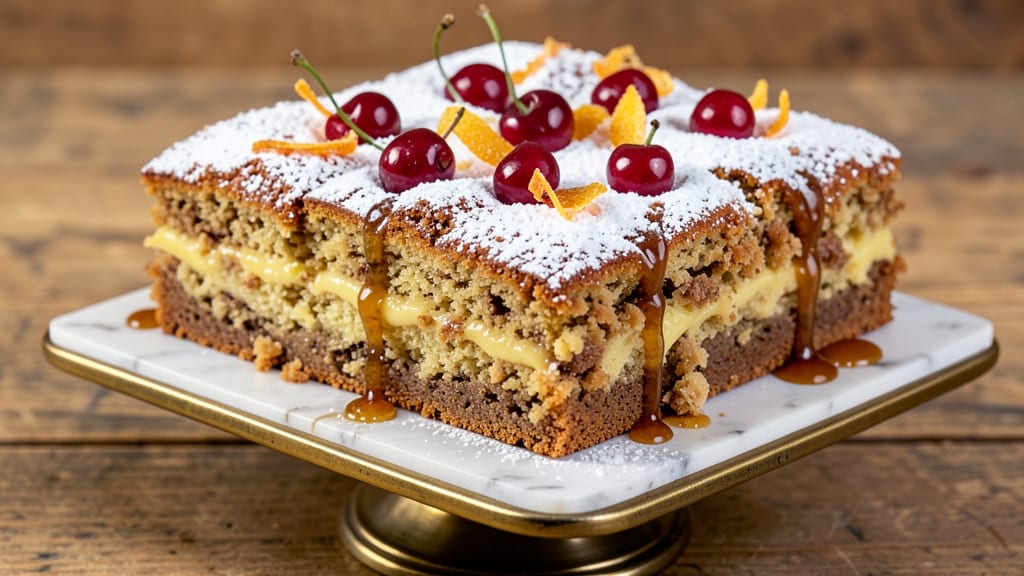
This Austrian coffee cake recipe delivers the signature layers of vanilla-infused sponge and a nutty streusel crown that's become a café classic across Vienna. The secret lies in the precise balance of butter, flour, and vanilla extract—layered with a crumbly topping that caramelizes into golden perfection. I've perfected this version after years of testing, ensuring the cake stays moist while achieving that signature crunch on top.
The traditional method involves baking the cake in a rectangular pan, then slicing it diagonally for those iconic triangular pieces. What makes this recipe special is the vanilla bean infusion, which adds depth without overpowering the buttery base. The streusel topping, made with ground nuts and brown sugar, creates a textural contrast that's impossible to resist.
By the time it emerges from the oven, you'll have a coffee cake with tender layers and a caramelized streusel crown that crumbles just enough to create pockets of melted butter. This is the kind of dessert that pairs beautifully with a cup of Austrian melange or espresso—rich enough to stand alone but designed to complement coffee's bitterness.
The best part? This recipe scales perfectly for gatherings, and leftovers reheat beautifully. Whether you're serving it at a brunch spread or enjoying a slice with afternoon coffee, this cake delivers the authentic Austrian experience with modern convenience. Let's get baking!
Ingredients for austrian coffee cake
Buttery layers, vanilla depth, and a crumbly nutty crown—this cake balances tradition with precision.
| Ingredient | Amount | Notes |
|---|---|---|
| Unsalted Butter 🧈 | 1 cup | Softened but not melted |
| All-Purpose Flour 🌾 | 2 ½ cups | Sifted for light texture |
| Granulated Sugar 🍚 | 1 ½ cups | White sugar preferred |
| Brown Sugar (Packed) 🍚 | ½ cup | Light brown preferred |
| Vanilla Bean Paste 🌿 | 2 tbsp | High-quality vanilla |
| Large Eggs 🥚 | 2 whole | Room temperature |
| Baking Powder 🍃 | 2 tsp | Aluminum-free preferred |
| Salt 🧂 | ½ tsp | Fine sea salt |
| Whole Milk 🥛 | ½ cup | Room temperature |
| Ground Walnuts 🥜 | 1 cup | Toasted for flavor |
| Old-Fashioned Oats 🌾 | ½ cup | Blended into flour |
| Light Brown Sugar (Packed) 🍚 | ½ cup | For streusel topping |
| All-Purpose Flour (Streusel) 🌾 | ½ cup | For streusel topping |
| Unsalted Butter (Streusel) 🧈 | ½ cup | Cold for streusel |
| Vanilla Extract 🌿 | 1 tsp | Pure vanilla extract |
The butter and vanilla bean paste are non-negotiable for authentic flavor. Plugrá or European-style butter (like Kerrygold) delivers the rich, creamy texture this cake demands. Vanilla bean paste provides that signature depth without the risk of over-extraction from seeds. For the flour, King Arthur or Gold Medal brands yield the lightest crumb. Toast your walnuts in a dry pan for 3-4 minutes until fragrant—they'll add that nutty crunch to the streusel. If you can't find vanilla bean paste, high-quality pure extract works, but reduce to 1 teaspoon and add a pinch of vanilla sugar for depth.
No vanilla bean paste? Double the vanilla extract and add a splash of bourbon for complexity. Substituting walnuts? Pecans or hazelnuts work equally well, but toast them first. The baking powder must be fresh—test it by mixing with water; if it fizzes, you're good. For a gluten-free version, swap the all-purpose flour for a 1:1 gluten-free blend, but increase the baking powder to 2.5 teaspoons. The streusel topping can be made ahead and stored in the fridge for up to 3 days, saving time on baking day.
This cake keeps beautifully at room temperature for 3 days in an airtight container, but it's best enjoyed fresh. For longer storage, wrap tightly in plastic and refrigerate for up to 1 week. Reheat slices in a 350°F oven for 5-7 minutes to restore crispness. The diagonal slice is traditional, but a square cut works too. Leftovers freeze well for 3 months—wrap tightly in plastic wrap and foil to prevent freezer burn. Serve with a dusting of powdered sugar or a dollop of whipped cream for an extra touch.
Why You'll Love This Recipe
- You already have the basics: butter, flour, sugar. No specialty ingredients, no markups—just rich, buttery layers that taste like a treat without the bakery price tag.
- No Mixer Needed: I swear by this recipe when my mixer’s "on vacation." Creaming the butter with both granulated and brown sugar by hand gives that tender crumb—no fancy tools required.
- Vanilla-Packed Magic: That little jar of vanilla bean paste? It’s the secret weapon. One swirl, and suddenly your cake tastes like a Viennese café, not just any coffee cake.
- Leftovers That Last: Slice it, wrap it, and stash it—this cake stays fresh for days. Honestly, I’ve had it for breakfast, dessert, and even as a snack between meetings. (Yes, even on a Tuesday.)
Step-by-step instructions for Austrian coffee cake
Master the technique for this classic European dessert with its signature vanilla layers and nutty crown.
Prepare the Vanilla Cake Batter
In a stand mixer fitted with the paddle attachment, cream together the 1 cup unsalted butter and 1.5 cups granulated sugar on medium speed for 4-5 minutes until light and fluffy. The mixture should nearly triple in volume and become pale in color. This step is crucial—it incorporates air that creates the cake's tender crumb.
Add the 2 whole large eggs one at a time, mixing well after each addition. Then stir in the 2 tablespoons vanilla bean paste and 1 teaspoon vanilla extract. The vanilla bean paste adds an authentic depth of flavor that regular extract can't match. In a separate bowl, whisk together the 2.5 cups all-purpose flour, 2 teaspoons baking powder, and ½ teaspoon salt. Gradually add the dry ingredients to the wet mixture on low speed, alternating with the ½ cup whole milk. Mix just until combined—overmixing develops gluten and makes the cake dense.
Assemble the Coffee Cake Layers
Preheat your oven to 350°F and grease a 9x13-inch baking pan or line it with parchment paper. Pour half of the batter into the prepared pan and spread it evenly. In a small bowl, combine the 1 cup ground walnuts and ½ cup old-fashioned oats, then sprinkle half of this mixture evenly over the first layer of batter. Repeat with the remaining batter and nut mixture, creating three distinct layers.
I like to use a spatula to gently swirl the layers together after pouring—this creates those beautiful marbled patterns you see in traditional Austrian coffee cakes. The walnuts add a satisfying crunch that contrasts perfectly with the tender cake layers. Tap the pan gently on the countertop to remove any air bubbles before baking.
Create the Nutty Streusel Topping
While the cake bakes, prepare the streusel topping by cutting the ½ cup unsalted butter (streusel) into small cubes. In a medium bowl, combine the butter with ½ cup light brown sugar (packed) and ½ cup all-purpose flour (streusel). Use your fingers or a pastry cutter to work the mixture until it resembles coarse crumbs with some pea-sized butter pieces remaining. This texture creates the perfect balance of crisp and tender in the topping.
Fold in 1 teaspoon vanilla extract and ½ teaspoon salt until evenly distributed. The streusel should hold together when pressed but still have some crumbly texture. Sprinkle this mixture evenly over the top of the assembled cake layers in the pan, pressing down lightly to ensure good contact with the cake.
Bake to Golden Perfection
Bake the coffee cake in the preheated oven for 40-45 minutes, or until a toothpick inserted into the center comes out clean. The edges should be golden brown and the top should be evenly browned from the streusel. I recommend checking the cake at the 35-minute mark—ovens vary, and you want to catch it just as it's done to prevent overbrowning.
During the last 5 minutes of baking, you'll notice the streusel topping turning golden and crispy. This is when it develops its characteristic crunch. Let the cake cool in the pan for 10 minutes before transferring it to a wire rack to cool completely. The residual heat helps set the cake while preventing it from becoming soggy.
Serve Warm with Coffee
Once completely cooled, slice the coffee cake into 4 equal servings—this recipe makes a perfect portion for sharing. The layers should be moist and tender with a subtle vanilla flavor, while the streusel provides a delightful contrast of texture and sweetness. Serve warm with a cup of freshly brewed coffee for the authentic Austrian experience.
For best results, store any leftovers covered at room temperature for up to 2 days. The cake actually improves overnight as the flavors meld together, making it perfect for breakfast the next morning. The combination of warm cake and aromatic coffee creates a comforting treat that's hard to resist.
Pro Tips For Making Austrian Coffee Cake
- Cream Butter Slowly: Austrian coffee cake thrives on cold butter—don’t melt it into submission. Cut the butter into the flour mixture in small chunks and work it in with your fingers or a pastry cutter until it resembles coarse crumbs. This ensures tender layers instead of a dense, greasy mess.
- Pack That Brown Sugar: Brown sugar’s moisture matters—don’t scoop it straight from the bag. Press it firmly into the measuring cup and level it off. Too much air = too much sweetness; too little = a dry, crumbly cake. A dampened spoon helps compact stubborn clumps.
- Avoid Overmixing: Once you add the wet ingredients, stop mixing after just 10-12 strokes. Overworking the dough activates the gluten, turning your cake into a tough, chewy brick. The batter should look shaggy, not smooth.
- Bake Until Golden: Don’t pull the cake out when it’s just set—wait until the edges pull away from the pan and the top is a deep golden brown, not pale. A toothpick should come out with a few moist crumbs, not wet batter. Underbaking is the fastest way to a gummy, sad cake.
Storing and reheating this dish
Room-Temp Storage
This cake stays fresh at room temperature for up to 3 days when stored in an airtight container—I use a glass Pyrex dish with a tight-fitting lid. The key is letting it cool completely before sealing to prevent condensation. Wrap it loosely with plastic wrap first, then add the lid to maintain that perfect streusel crunch. 🌟
Refrigerator Refresh
For longer storage, refrigerate for up to 1 week in the same airtight container. When ready to serve, I reheat slices at 350°F for 5-7 minutes until the streusel crown regains its crispness. A quick sprinkle of powdered sugar after reheating brings back that café-fresh appeal. The cake's texture remains tender, but the streusel becomes slightly firmer.
Freezer Prep
This cake freezes beautifully for up to 3 months—wrap tightly in plastic wrap followed by aluminum foil to lock in moisture. For best results, freeze individual slices between parchment paper. When thawing, leave at room temperature for 1 hour or reheat directly from frozen at 325°F for 10-12 minutes. The texture recovers perfectly, though the streusel may lose some crispness.
Coffee Pairing Tip
Serve with freshly brewed Austrian melange (equal parts espresso and steamed milk with whipped cream) to enhance the cake's vanilla notes. The coffee's bitterness cuts through the richness while complementing the nutty streusel. I like to dust slices with powdered sugar right before serving—it adds that final touch of elegance. ☕
Make-Ahead Streusel
Prepare the streusel topping 3 days ahead and store in the fridge in a sealed container. This saves time on baking day and ensures the topping stays dry. Just sprinkle it over the cake batter right before baking—it'll crisp perfectly while the cake bakes. The flavor actually intensifies when made ahead, giving deeper caramel notes. 💡
Nutrition facts
Frequently asked questions
Why does this Austrian coffee cake have layers with nuts?
The nutty layers are a signature feature of traditional Viennese coffee cakes! The walnuts add a satisfying crunch that contrasts beautifully with the tender vanilla sponge, while the streusel crown creates that perfect caramelized texture. This combination balances sweetness and texture, making each bite exciting.
Can I substitute walnuts in the streusel?
Pecans or hazelnuts work wonderfully as substitutes. Toast them first for enhanced flavor—just 3-4 minutes in a dry pan until fragrant. For a different texture, try almonds or even chopped pistachios, but keep the total nut amount at 1 cup for best results.
How do I achieve the perfect diagonal slice?
Use a long, sharp serrated knife and cut at a 45-degree angle through the cake's center. For cleaner cuts, dip the knife in hot water between slices to prevent sticking. The traditional triangular shape makes serving elegant while showcasing all the layers.
What's the secret to keeping the cake moist?
The butter-to-flour ratio and proper mixing are key! Cream the butter and sugar until light and fluffy (nearly tripled in volume), and mix just until combined when adding dry ingredients. Don't overmix, and always use room-temperature eggs and butter. The milk adds moisture without making the cake dense.
Can I make this cake gluten-free?
Yes, but with adjustments! Replace the all-purpose flour with a 1:1 gluten-free blend and increase baking powder to 2.5 teaspoons. For the streusel, use a gluten-free flour blend. Note that the texture may be slightly denser, but the flavor remains authentic. Test your blend first in small batches.