
Desserts
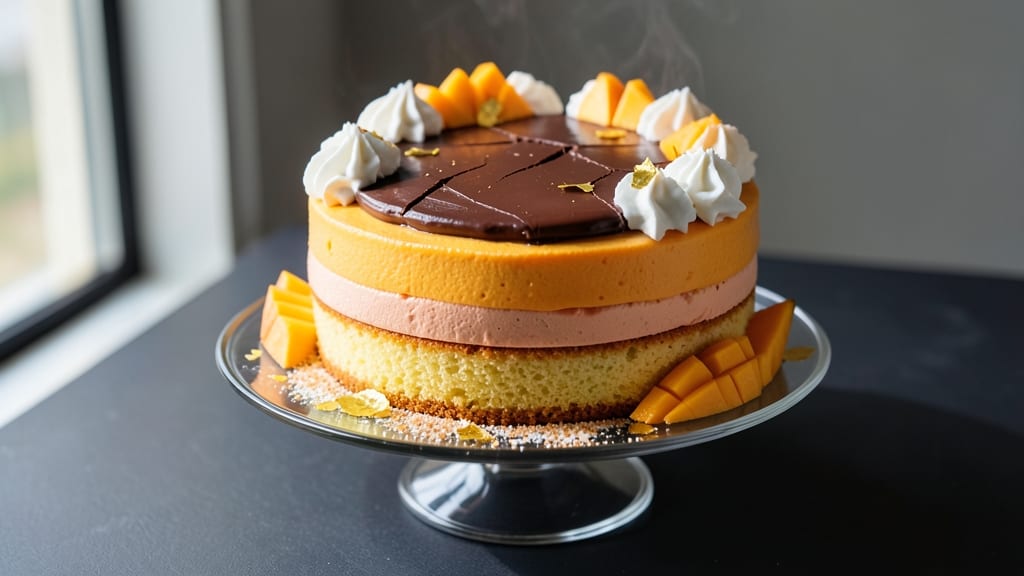
This Asian mango mousse cake delivers tropical lightness with layers of silky mousse, fragrant pandan sponge, and vibrant mango purée—perfect for summer celebrations. ✨ The secret lies in balancing texture: a delicate sponge base supports the airy mousse, while gelatin stabilizes the filling for clean cuts and elegant presentation. I developed this recipe after years of experimenting with Southeast Asian desserts, refining each layer to achieve that signature melt-in-your-mouth perfection.
The assembly process is where the magic happens—starting with a lightly sweetened pandan sponge that soaks up mango purée without becoming soggy. The mousse, infused with ripe mango and a touch of coconut milk, transforms into a velvety cloud when chilled properly. What sets this apart is the two-stage baking technique: first baking the sponge, then layering the mousse and purée between sheets of parchment for clean slices every time. Even beginners can achieve restaurant-quality results with these precise steps.
By the time you're done, you'll have a cake that's visually stunning—golden layers peeking through translucent mousse, topped with fresh mango slices and toasted coconut. The flavors are bright yet balanced: sweet mango, floral pandan, and creamy coconut create a symphony that feels both nostalgic and modern. This isn't just dessert; it's an experience that transports you to tropical paradise with every bite.
Perfect for birthdays, brunch gatherings, or when you want to impress without stress. The recipe scales easily for crowds, and leftovers keep beautifully in the fridge for up to 3 days. Let's create this showstopper together—your taste buds will thank you.
Ingredients for asian mango mousse cake
Eight ingredients transform into layers of tropical perfection—silky mousse, fragrant pandan sponge, and vibrant mango purée.
| Ingredient | Amount | Notes |
|---|---|---|
| All-Purpose Flour 🌾 | 1 ½ cups | Sifted for light texture |
| Unsweetened Coconut Milk 🥥 | 13 ½ oz | Full-fat can for creaminess |
| Granulated Sugar 🍚 | 1 ½ cups | Superfine preferred for smoothness |
| Pandan Extract 🌿 | 1 tbsp | Pure, not paste |
| Large Eggs 🥚 | 4 whole | Room temperature for blending |
| Baking Powder 🧂 | 1 ½ tsp | Aluminum-free for stability |
| Salt 🧂 | ½ tsp | Fine sea salt preferred |
| Ripe Mangoes 🥭 | 2 lbs | Sweet variety like Ataulfo |
| Granulated Sugar 🍚 | ½ cup | For mango purée sweetness |
| Unflavored Gelatin 🧪 | 1 tbsp | Bloomed in cold water first |
| Heavy Whipping Cream 🥛 | 1 ½ cups | Full-fat for stability |
| Powdered Sugar 🍚 | 1 cup | For mousse sweetness |
| Toasted Coconut Flakes 🥥 | ½ cup | For garnish |
| Lemon Juice 🍋 | 1 tbsp | Freshly squeezed |
The pandan extract is non-negotiable for that signature floral aroma—look for pure extract at Asian markets or online. Ataulfo mangoes are ideal for their sweetness, but any ripe mango works. For the coconut milk, full-fat canned versions like Thai Kitchen give the best creaminess. If you can't find pure pandan extract, pandan paste diluted with water works in a pinch, but reduce the liquid in the sponge by 1 tbsp. The gelatin needs to bloom properly—soak it in cold water for 10 minutes before heating to avoid lumps.
No pandan extract? Vanilla extract at half the amount gives a different but pleasant floral note. Short on mangoes? Substitute with 1.5 cups mango purée from a can (like Del Monte), but add 1 tbsp lemon juice to brighten the flavor. For a lighter texture, replace half the heavy cream with whipped coconut cream. The coconut flakes should be toasted until golden—watch closely to avoid burning. If your gelatin sets too firmly, add 1 tsp extra powdered sugar to soften the texture slightly.
Store the assembled cake in an airtight container with parchment between layers for up to 3 days in the fridge. For longer storage, freeze for 1 month—thaw overnight in the fridge before serving. The mango purée can be prepped 2 days ahead and stored in the fridge. The sponge should be baked and cooled completely before assembly to prevent sogginess. Garnish with fresh mango slices and toasted coconut just before serving for the best presentation.
Why You'll Love This Recipe
- No Mixer Needed: I swear by this—just whisk the eggs with sugar until fluffy (no stand mixer required). The coconut milk and pandan extract blend in like magic, and the batter’s so light you’ll wonder why you ever baked anything heavier.
- Tropical in Minutes: That first bite? Pure mango sunshine with a whisper of pandan’s floral note—like a vacation in your mouth. The coconut milk keeps it creamy without tasting like it’s trying too hard, and the sugar caramelizes just enough to give it that subtle chew.
- Party or Pajamas: Bring it to a potluck or eat it straight from the pan at 10 PM—no judgment. The layers stay intact for days, so it’s my go-to for birthdays, lazy Sundays, or when I’m too tired to care about presentation. (My roommates steal slices when they think I’m not looking.)
- Pantry Goldmine: Honestly, you’re probably already stocked for this. Flour, sugar, eggs? Basic staples. The coconut milk adds richness without breaking the bank, and pandan extract (a little goes far) turns something simple into something special. Leftovers? They disappear faster than I can say “second slice.”
Step-by-step instructions for Asian mango mousse cake
Here's how to assemble this tropical masterpiece with silky layers and vibrant mango flavor.
👨🍳 Step 1: Prepare the Mango Purée Base
Peel and dice the 2 lbs ripe mangoes into small cubes, removing all pits. Transfer to a food processor and blend until completely smooth, scraping down the sides as needed. Add 1 tbsp lemon juice and 0.5 cup granulated sugar, then blend again until fully incorporated. The purée should be vibrant orange and completely free of any texture—this is your flavor foundation.
Strain through a fine-mesh sieve to remove any remaining pulp if needed. You should have about 3 cups of mango purée. Set aside in a clean bowl. This step is crucial—overripe mangoes will make your cake too watery, while underripe will lack sweetness. The purée should taste like concentrated mango sunshine with just the right balance of tartness from the lemon.
🍳 Step 2: Make the Pandan-Infused Coconut Cake Layer
Preheat your oven to 350°F and grease an 8-inch round cake pan. In a large bowl, whisk together the 1.5 cups all-purpose flour, 1.5 tsp baking powder, and 0.5 tsp salt. Sift the flour mixture directly over 1.5 cups granulated sugar and 4 whole large eggs in another bowl, then gently fold together using a spatula until just combined.
In a small saucepan, heat 13.5 oz unsweetened coconut milk over medium heat until steaming. Remove from heat and stir in 1 tbsp pandan extract. Let it cool slightly, then gradually pour into the batter while folding gently. The batter should be thick but pourable. Pour into the prepared pan and bake for 30-35 minutes until a toothpick inserted comes out clean and the top springs back when touched. Let cool completely before removing from the pan.
🥘 Step 3: Create the Silky Mango Mousse Filling
Bloom 1 tbsp unflavored gelatin in ¼ cup cold water for 10 minutes until fully softened. In a heatproof bowl, combine the bloomed gelatin with 3 cups mango purée and place over a pot of simmering water (double boiler), stirring constantly until completely dissolved and smooth. Remove from heat and let cool to room temperature. This step is where the magic happens—the gelatin will transform your purée into a luxurious, wobbling mousse.
Once cooled, whip 1.5 cups heavy whipping cream to stiff peaks, then gently fold into the mango mixture along with 1 cup powdered sugar. The result should be a light, airy mousse that holds its shape when spooned. If it's too thick, chill for 15 minutes before proceeding. The mousse should be vibrant orange with just the right balance of sweetness and mango intensity.
🥘 Step 4: Assemble the Cake Layers
Level the cooled cake layer by slicing off any domed top. Place the cake base on a serving plate and spread half of the mango mousse evenly over the top. Return the remaining mousse to the refrigerator for 10 minutes to firm up slightly before spreading the second layer. The mousse should be cool but still spreadable—this ensures clean layers without melting.
Gently press the second layer of cake onto the mousse, then cover the entire cake with the remaining mousse. Use an offset spatula to create smooth, even swirls on the top. Sprinkle 0.5 cup toasted coconut flakes evenly over the surface for texture and visual appeal. Chill in the refrigerator for at least 4 hours or overnight to allow the layers to fully set and flavors to meld.
⏰ Step 5: Serve with Tropical Flair
When ready to serve, run a thin knife around the edges to loosen the cake. Lift carefully from the plate and slice into 8 equal wedges. The perfect slice should show layers of golden cake, vibrant mango mousse, and toasted coconut on top. Serve immediately for the best texture—this cake is best enjoyed slightly chilled but not frozen.
Each bite should deliver a perfect balance: the light, slightly dense cake, the silky mango mousse with its tropical sweetness, and the crunch of toasted coconut. Garnish with additional mango slices or coconut flakes if desired. The cake keeps well in the refrigerator for 3 days, though I promise it won't last that long!
Pro Tips For Making Asian Mango Mousse Cake
- Whisk Eggs Room-Temp: Cold eggs from the fridge won’t blend smoothly into that silky mousse—your cake will end up lumpy if you skip this. Pop them in a bowl of warm water for 5 minutes first, then pat dry. Trust me, the difference is night and day.
- Strain the Coconut Milk: The thick, creamy part of canned coconut milk is where the magic happens, but the watery bit? That’s just extra work. Use a fine-mesh sieve to strain it out before mixing—your batter will be richer, and you’ll avoid that watery texture in the final cake.
- Don’t Overmix the Batter: I’ve done it—beat that flour and coconut milk mix until it looks like glue, and suddenly your cake turns dense instead of light. Mix just until combined, then fold in the egg mixture gently. A few streaks? That’s fine. Overworking it ruins the texture.
- Chill the Mousse Before Baking: If you bake the mousse right after mixing, it’ll sink in the middle like a sad puddle. Pop the pan in the fridge for 20 minutes first—just enough to set it slightly. The heat will work with you, not against you, and you’ll get that perfect rise every time.
Dietary considerations for this asian mango mousse cake
Gluten-Free Adaptation
Replace the 1.5 cups all-purpose flour with a 1:1 gluten-free baking flour blend like Bob's Red Mill or King Arthur, which includes xanthan gum for structure. For best results, add ½ tsp extra baking powder to compensate for reduced lift. The pandan-infused coconut milk base remains the same, but ensure your gluten-free flour is sifted thoroughly to avoid dense texture. 🌾
Dairy-Free Options
Swap heavy whipping cream for full-fat coconut cream (chilled overnight) to achieve stiff peaks. For the coconut milk in the sponge, use unsweetened coconut cream instead of regular coconut milk. The gelatin in the mousse can be replaced with agar-agar (½ tsp dissolved in ¼ cup water) for a vegan-friendly alternative. Test the coconut cream's whipping ability first—some brands separate more than others.
Lower Sugar Version
Reduce the 1.5 cups granulated sugar in the sponge to 1 cup, and the 0.5 cup sugar in the mango purée to ¼ cup. Use 1 tbsp monk fruit sweetener (like Lakanto) blended with the sugar to maintain volume without added calories. The powdered sugar in the mousse can be cut to ½ cup while adding 1 tsp vanilla extract to enhance perceived sweetness. Taste the mango purée before adding sugar—ripe Ataulfo mangoes often need less sweetening.
Nut-Free Considerations
This recipe is naturally nut-free, but always check labels on pandan extract and toasted coconut flakes for cross-contamination warnings. For extra caution, toast unsweetened shredded coconut yourself using a clean, dedicated toaster oven. Store all ingredients in sealed containers to prevent accidental mixing with nut products. The gelatin and coconut milk components are inherently safe for nut allergies.
Egg-Free Substitution
Replace the 4 whole eggs with 4 flax eggs (4 tbsp ground flaxseed + 12 tbsp water, mixed and rested for 5 minutes) or aquafaba (¼ cup per egg, whipped to stiff peaks). The aquafaba method works best for the mousse's airy texture—whip the 1.5 cups aquafaba with 1 cup powdered sugar and 1 tsp cream of tartar to stabilize. For the sponge, add 1 tsp apple cider vinegar to the coconut milk mixture to help activate the baking powder.
Nutrition facts
Frequently asked questions
Can I make this cake without pandan extract?
Yes! If you can't find pandan extract, substitute with ½ tbsp vanilla extract for a floral note or 1 tsp coconut extract for a tropical twist. The cake will still taste delicious—just with a slightly different aroma. For a more authentic flavor, try blending fresh pandan leaves (if available) with water to create a homemade extract.
How do I know when my mangoes are ripe enough?
Look for mangoes that yield slightly to gentle pressure and have a sweet, tropical fragrance near the stem. Ataulfo mangoes should be soft like a ripe avocado, while other varieties may need a slightly firmer touch. Avoid mangoes with dry, wrinkled skin or an overly sour smell—they'll make your cake taste bland or watery.
Why did my mousse turn out too runny?
This usually happens if the gelatin wasn't bloomed properly or the mousse wasn't chilled long enough. Always bloom gelatin in cold water for 10 minutes before heating, and let the mousse set in the fridge for at least 4 hours. For extra stability, add 1 extra tsp gelatin or chill the mousse for 2 hours before assembling the cake.
Can I prepare this cake ahead of time?
The mango purée can be made 2 days ahead and stored in the fridge. The cake layers can be baked and refrigerated separately for up to 3 days before assembly. The fully assembled cake keeps well in an airtight container for 3 days in the fridge—just let it sit at room temperature for 30 minutes before serving for the best texture.
What's the best way to slice clean layers?
Use a hot knife (dipped in hot water and wiped dry) for perfectly clean slices. Run the knife around the edges of the cake first, then slice through the center. For extra precision, chill the cake for 1 extra hour before serving. This technique works especially well with the mousse layers, giving you that restaurant-quality presentation.