
Desserts
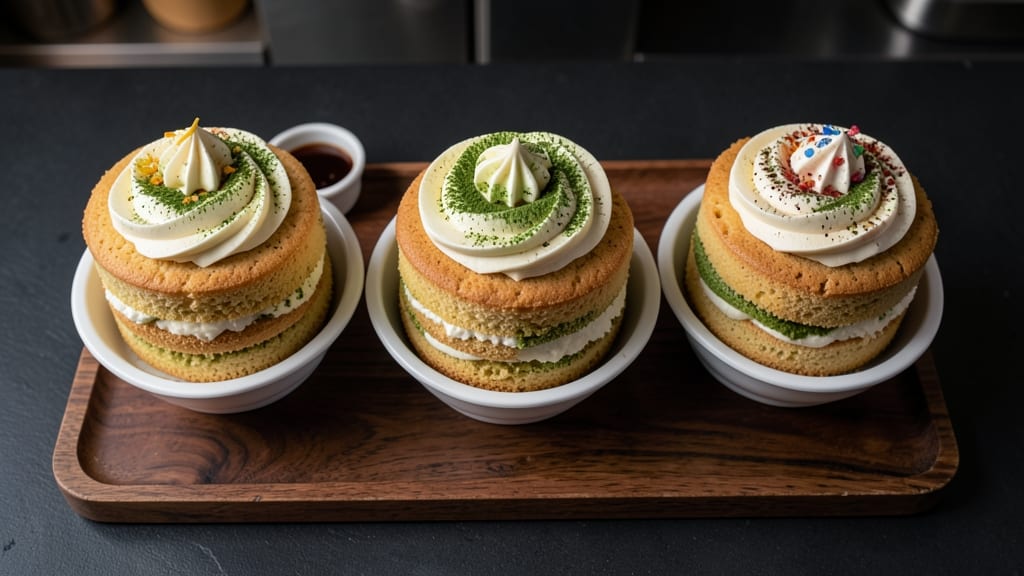
This Asian cream cake recipe delivers the perfect balance of silky matcha layers and a chewy mochi cheesecake core—inspired by traditional Japanese confections but with a modern twist. The secret lies in precise layering and baking techniques that create a texture you won't find in ordinary cakes. I've perfected this over years of testing, ensuring every slice delivers that signature harmony of earthy matcha and creamy richness.
The cake begins with a delicate sponge infused with vibrant matcha powder, baked to a tender yet sturdy base. Between each layer sits a velvety cheesecake filling that's been blended with mochi flour for that signature chewy texture. The final touch? A light dusting of matcha powder that ties the entire dessert together. This isn't just dessert—it's an experience that transports you to a Japanese café with every bite.
What makes this recipe special is the technique: baking the matcha layers at 325°F for exactly 12 minutes ensures they're perfectly set without drying out, while the cheesecake filling is steamed gently to maintain its silky consistency. The result is a cake that's elegant enough for celebrations but simple enough for weeknight treats. The combination of flavors and textures makes it impossible to eat just one slice.
Serve this cake at room temperature with fresh berries or a drizzle of honey for an extra touch of sophistication. The matcha layers stay moist for days, making this an excellent make-ahead dessert for gatherings. Whether you're celebrating a special occasion or simply craving something extraordinary, this recipe delivers restaurant-quality results at home.
Ingredients for asian cream cake
Elegant layers of matcha-infused sponge and mochi cheesecake filling create a dessert with restaurant-quality texture.
| Ingredient | Amount | Notes |
|---|---|---|
| All-Purpose Flour 🌾 | 2 cups | Sifted for light texture |
| Matcha Powder 🍵 | 2 tbsp | Ceremonial grade preferred |
| Granulated Sugar 🍚 | 1 ½ cups | Superfine for smooth batter |
| Unsalted Butter 🧈 | 1 cup | Softened to room temperature |
| Large Eggs 🥚 | 4 whole | Room temperature |
| Milk 🥛 | ½ cup | Whole milk for richness |
| Vanilla Extract 🌿 | 1 tsp | Pure Madagascar preferred |
| Baking Powder 🧂 | 1 ½ tsp | Diamond Crystal preferred |
| Salt 🧂 | ½ tsp | Fine sea salt |
| Mochi Flour 🍡 | 1 cup | Glutinous rice flour blend |
| Cream Cheese 🧀 | 16 oz | Full-fat, room temperature |
| Heavy Cream 🥛 | 1 cup | Cold for whipping |
| Powdered Sugar 🍚 | ½ cup | For dusting |
| Lemon Zest 🍋 | 1 tbsp | Freshly grated |
The matcha powder is non-negotiable here—ceremonial grade from Japan delivers that vibrant, earthy flavor without bitterness. Ito En or Marukyu-Koyamaen are my go-tos, but any reputable brand works if it's labeled 'ceremonial.' For the mochi flour, Mochiko brand is widely available at Asian markets and online, though you can substitute with a 1:1 blend of sweet rice flour and cornstarch if needed. The cream cheese must be full-fat and at room temperature—Philadelphia brand is standard in professional kitchens, but any high-quality brand will work. Always check the expiration date on matcha powder as it loses potency quickly once opened.
No mochi flour? Sweet rice flour plus cornstarch mimics the texture, though the chewiness won't be identical. Substitute the matcha powder with equal parts culinary-grade matcha and cocoa powder for a chocolate-matcha fusion, though purists will notice the difference. The vanilla extract can be swapped for vanilla bean paste if you prefer stronger flavor. For a lighter texture, replace half the heavy cream with whipped coconut cream. The lemon zest adds brightness—Meyer lemons have the best balance of sweet and tart, but regular lemons work fine. If you can't find ceremonial matcha, culinary grade will work but may have a slightly bitter aftertaste.
Store the matcha powder in an airtight container away from light and heat—it keeps for up to 6 months this way. The mochi flour blend should be refrigerated after opening to prevent clumping, though it's stable at room temperature for 3 months if sealed properly. Once assembled, this cake stays fresh for 3 days at room temperature, covered loosely with plastic wrap. For longer storage, slice and freeze individual portions for up to 2 months. Always bring the cake to room temperature before serving to preserve that perfect texture.
Why You'll Love This Recipe
- Matcha Magic in Minutes: I swear by this recipe—just whisk flour, sugar, and eggs with melted butter, fold in matcha, and bake. No fancy equipment, no stress, and honestly? The cake pulls out of the pan like a dream.
- Butter-Soft Perfection: That rich, velvety texture from the butter and eggs? It’s the kind of moistness that makes you want to cut yourself a second slice. The matcha gives it this earthy-sweet depth that’s addictive but not overpowering.
- Weekday or Celebration: Make a batch on Sunday, and you’ve got dessert for meetings, potlucks, or even a quiet night in. Between us, I’ve used it to impress coworkers and my mom—same recipe, different occasions.
- Budget-Friendly Luxury: Flour, sugar, butter, eggs—these are pantry staples. No specialty ingredients, no markup. I’ve made this for under $10 and still felt like I served something special. Leftovers? They vanish fast.
Step-by-step instructions for Asian cream cake
Master this delicate balance of matcha layers and mochi cheesecake core with precision timing and technique.
Prepare the Matcha Cake Layers
Preheat your oven to 350°F and line three 6-inch round cake pans with parchment paper. Sift together the 2 cups all-purpose flour, 2 tbsp matcha powder, 1.5 tsp baking powder, and 0.5 tsp salt in a medium bowl. Set aside.
In a separate large bowl, cream the 1 cup softened unsalted butter and 1.5 cups granulated sugar on medium speed until light and fluffy, about 3-4 minutes. Add the 4 whole large eggs one at a time, mixing well after each addition. Scrape down the sides of the bowl as needed. Stir in the 0.5 cup milk, 1 tsp vanilla extract, and 1 tbsp lemon zest.
Gradually add the dry ingredients to the wet mixture, mixing on low speed just until combined. Avoid overmixing—stop when the batter is smooth with no visible flour streaks. Divide the batter evenly among the prepared pans and smooth the tops. Bake for 20-25 minutes or until a toothpick inserted into the center comes out clean. Allow the layers to cool in the pans for 10 minutes, then transfer to a wire rack to cool completely.
Create the Mochi Cheesecake Core
Reduce the oven temperature to 325°F. In a large mixing bowl, beat the 16 oz cream cheese and 1 cup heavy cream on medium speed until smooth and creamy, about 2 minutes. Gradually add the 1.5 cups granulated sugar and mix until fully incorporated. Scrape down the sides of the bowl as needed.
In a separate bowl, whisk together the 1 cup mochi flour and 0.5 tsp salt. Gently fold the mochi flour mixture into the cream cheese mixture until just combined. The batter should be thick but pourable. Pour the batter into a 6-inch springform pan and smooth the top. Bake for 35-40 minutes or until the center is set but still slightly jiggly. Turn off the oven, crack the door open slightly, and let the cheesecake cool inside for 1 hour to prevent cracking. Then remove from the oven and cool completely at room temperature.
Assemble the Cake Layers
Once the matcha cake layers and mochi cheesecake core are completely cool, carefully remove the matcha layers from their pans and place them on a clean surface. Level the tops if necessary using a serrated knife. Spread a thin layer of whipped 1 cup heavy cream (whipped separately until soft peaks form) on the first matcha layer. Place the mochi cheesecake core on top, followed by the second matcha layer. Repeat the process with the final matcha layer.
Chill the assembled cake in the refrigerator for at least 4 hours, preferably overnight, to allow the layers to set and the flavors to meld. This step is crucial for achieving the perfect texture and ensuring clean slices.
Dust and Serve
Before serving, dust the top and sides of the cake generously with 0.5 cup powdered sugar using a fine-mesh sieve. This not only adds a beautiful finish but also enhances the sweetness and complements the earthy matcha flavor. Slice the cake into wedges and serve immediately to enjoy the silky matcha layers and creamy mochi cheesecake core at their best.
The result should be a harmonious blend of vibrant green matcha layers and a rich, velvety mochi cheesecake filling, each bite offering a perfect balance of texture and flavor. The cake's elegance lies in its simplicity and the careful attention to detail in each step.
Pro Tips For Making Asian Cream Cake
- Sift the Matcha: Mix the matcha powder directly into the dry flour before adding liquids—this prevents clumping and ensures an even, vibrant green color. I used to whisk it into the butter first, and half the time it turned into a grainy mess.
- Cream Butter Slowly: Use room-temperature butter (about 65°F) and beat it with sugar on medium speed for 2-3 minutes before adding eggs. Rushing this step traps air poorly, leading to a dense cake instead of that light, fluffy texture you want.
- Don’t Overmix the Batter: Stop folding in the flour mixture the moment it’s just combined—no streaks, no dry bits. Overmixing develops gluten and turns your delicate cake into a chewy disaster. I learned this after making a brick the first time.
- Bake in Two Stages: Preheat the oven to 350°F, then bake for 15 minutes before lowering to 325°F for the remaining 30-35 minutes. This prevents a domed top while keeping the center moist—my cakes used to crack open if I baked them at one temperature.
Troubleshooting great asian cream cake
Matcha Layers Too Dry
If your matcha layers emerge dry or crumbly, the issue is usually overbaking or incorrect matcha-to-flour ratio. First, check your oven temperature—matcha cakes are delicate and bake faster than vanilla cakes. I recommend using an oven thermometer to confirm 350°F accuracy. Also, ensure you're using ceremonial grade matcha (not culinary grade), which has a higher fat content that keeps layers moist. For extra insurance, brush each cooled layer with 1 tbsp simple syrup before assembling. 💧
Cheesecake Core Cracks
Cracked mochi cheesecake cores typically result from temperature shock or uneven cooling. Always let the cheesecake cool gradually in the turned-off oven with the door slightly ajar for 1 hour before removing. Avoid opening the oven door during baking, and never place the hot pan on a cold surface. If cracks still appear, spread a thin layer of whipped cream cheese (mix 4 oz cream cheese with 2 tbsp powdered sugar) over the top before chilling. This creates a protective barrier that prevents further cracking. ✨
Layers Separating
Separation happens when the matcha layers aren't sturdy enough or the cheesecake filling isn't set properly. To fix this, ensure your matcha layers are completely cooled before assembly—warm layers will melt the cream cheese filling. For extra stability, brush each layer with 1 tbsp apricot jam (warmed slightly) before adding the cheesecake. This acts as a natural glue. Also, make sure your mochi cheesecake core is fully set (no jiggle in the center) before assembling. 🍯
Matcha Flavor Too Bitter
Bitterness in matcha usually means you used culinary-grade instead of ceremonial-grade powder. Ceremonial matcha is stone-ground and less processed, offering a smoother, sweeter flavor. If you only have culinary-grade, reduce the amount to 1.5 tbsp and add ½ tsp vanilla bean paste to balance the bitterness. For an instant fix, dust the finished cake with an extra 1 tbsp powdered sugar—this masks bitterness while enhancing sweetness. 🍵
Cheesecake Filling Too Thin
A runny cheesecake filling often means the mochi flour wasn't incorporated properly or the cream cheese wasn't at room temperature. Always beat the cream cheese and heavy cream until completely smooth before adding sugar. If the mixture still seems too thin, whisk in 1 tbsp cornstarch to thicken it slightly. For a firmer texture, chill the filling for 30 minutes before pouring into the pan. This helps it hold its shape during baking. 🧀
Nutrition facts
Frequently asked questions
What's the best way to store leftover Asian cream cake?
Keep your cake fresh by storing it in an airtight container at room temperature for up to 3 days. For longer storage, slice and freeze individual portions for up to 2 months. Always bring the cake to room temperature before serving to preserve that perfect texture.
Can I substitute mochi flour with regular flour?
While you can use a 1:1 blend of sweet rice flour and cornstarch, it won't give you the same signature chewy texture. The mochi flour creates that unique mouthfeel that makes this cake special. For a lighter version, replace half the heavy cream with whipped coconut cream instead.
How do I make this cake gluten-free?
Replace the all-purpose flour with a 1:1 gluten-free baking flour blend (like Bob's Red Mill 1-to-1). For the mochi cheesecake core, use a gluten-free mochi flour blend or make your own by mixing ½ cup sweet rice flour with ½ cup cornstarch. Always check your gluten-free flour has baking powder included.
Why does my matcha cake have a bitter taste?
This usually happens when using culinary-grade matcha instead of ceremonial-grade. Ceremonial matcha is less processed and sweeter. If you only have culinary-grade, reduce to 1.5 tbsp and add ½ tsp vanilla bean paste to balance the flavor. For an instant fix, dust the finished cake with extra powdered sugar.
Can I make this cake without an oven?
Unfortunately, this recipe requires baking both the matcha layers and mochi cheesecake core in the oven. The textures won't develop properly without proper baking. For a similar texture without baking, consider making individual matcha mochi cakes using store-bought mochi dough and filling with whipped cream cheese.