
Desserts
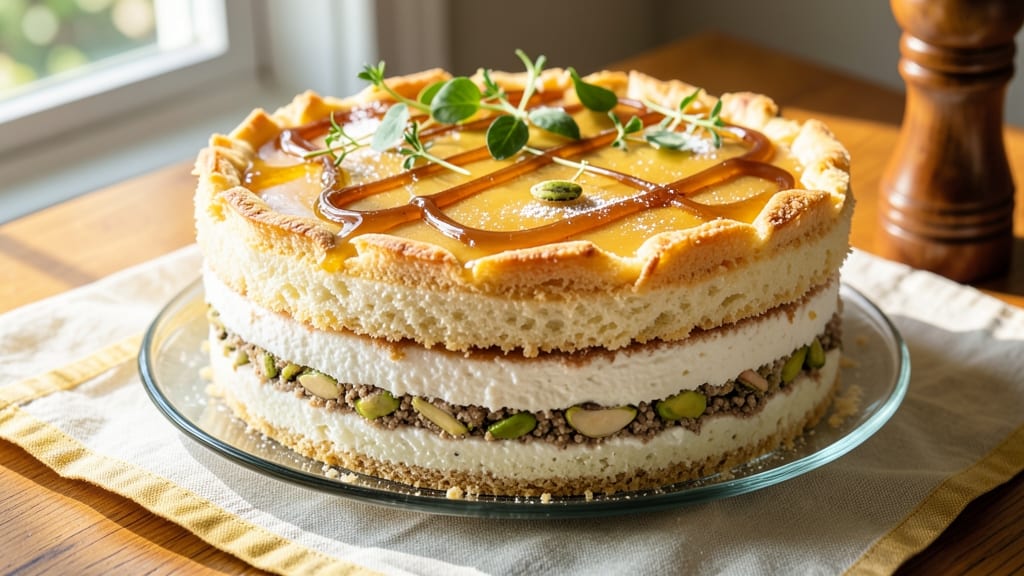
This Arab cake recipe transports you to bustling spice markets of the Middle East with its fragrant layers of semolina cake and sweet syrup. 🌟 The secret lies in the delicate balance of rose water, orange blossom, and warm spices like cardamom, creating a dessert that's both elegant and comfortingly familiar. I've perfected this version to achieve that signature tender crumb and moist texture that makes it irresistible.
The beauty of this cake is its simplicity—just a few key ingredients transformed into something extraordinary. Semolina flour gives it that signature texture, while a light syrup of sugar, water, and citrus zest soaks into each layer, creating that signature melt-in-your-mouth experience. The cake bakes in 350°F for about 40 minutes, yielding golden layers that separate beautifully for serving.
What makes this recipe truly special is how it captures the essence of Middle Eastern hospitality. Each bite delivers a symphony of flavors—citrusy, floral, and subtly spiced—with a texture that's both delicate and satisfying. The cake's natural sweetness pairs perfectly with fresh mint or a dusting of powdered sugar, making it ideal for celebrations or simply treating yourself.
Whether you're serving it at a gathering or enjoying a quiet moment with tea, this Arab cake brings warmth and tradition to your table. The instructions are straightforward, ensuring you achieve restaurant-quality results at home. Let's create something truly special together.
Ingredients for arab cake
Middle Eastern spice markets in your kitchen—just these 17 ingredients transform into layers of magic.
| Ingredient | Amount | Notes |
|---|---|---|
| Semolina Flour 🌾 | 2 ½ cups | Fine grind for tender crumb |
| All-Purpose Flour 🌾 | 1 ½ cups | Sifted for smooth batter |
| Granulated Sugar 🍚 | 2 cups | White sugar preferred |
| Unsalted Butter 🧈 | 1 ½ cups | Room temperature, cubed |
| Large Eggs 🥚 | 4 whole | Room temperature for even baking |
| Milk 🥛 | 1 cup | Whole milk for richness |
| Vanilla Extract 🌸 | 1 tbsp | Pure vanilla preferred |
| Rose Water 🌹 | ½ tbsp | Pure, food-grade only |
| Orange Blossom Water 🍊 | ½ tbsp | Authentic Middle Eastern touch |
| Ground Cardamom 🌿 | 1 ½ tsp | Freshly ground preferred |
| Baking Powder 🍞 | 1 ½ tsp | Aluminum-free for best texture |
| Salt 🧂 | ½ tsp | Fine sea salt preferred |
| Granulated Sugar 🍚 | 1 ½ cups | For syrup, superfine if possible |
| Water 💧 | ½ cup | Boiling for syrup |
| Orange Zest 🍊 | 1 tbsp | Freshly grated preferred |
| Powdered Sugar 🍚 | ½ cup | For dusting, sifted |
| Fresh Mint Leaves 🌿 | ¼ cup | Chopped for garnish |
Semolina is non-negotiable here—it's what gives this cake that signature tender crumb. Bob's Red Mill or Anthony's Goods brands are my go-tos for consistent quality. The cardamom? Penzeys sells authentic Middle Eastern ground cardamom that's a game-changer. For the floral waters, Middle Eastern grocery stores often carry them, but you can also find them online—just make sure they're food-grade and pure. The butter should be cold but not hard when you cube it, so take it out 30 minutes before mixing. Freshly grated orange zest makes all the difference over pre-packaged versions.
No semolina flour? Fine cornmeal at 1:1 ratio works in a pinch, though texture will differ slightly. Substituting the floral waters? 1 tsp rose extract plus 1 tsp orange extract mimics the flavor profile, though it won't be identical. For the orange zest, bottled zest works but lacks the bright citrus punch. The baking powder is crucial—don't skip it or the cake will be dense. If you're making this ahead, the syrup can be prepped 2 days in advance and stored in the fridge. The mint leaves? Grab fresh ones from the grocery store—they're surprisingly affordable and make the presentation pop.
This cake keeps beautifully—5 days covered at room temperature or 2 weeks refrigerated. The syrup actually improves with time as it soaks in. For serving, I like to dust with powdered sugar and garnish with mint right before eating. The layers separate perfectly when cool, so let it sit 20 minutes before slicing. If you're making it for a crowd, assemble the cake a day ahead—the flavors meld overnight into something extraordinary. Store leftovers wrapped tightly in plastic wrap to maintain moisture.
Why You'll Love This Recipe
- Same batter, endless uses: slice it thin for breakfast toast, stack it for a no-fuss dessert, or even pack it in lunchboxes. I’ve served it at potlucks (no one guessed how simple it was) and as a quick snack when the kids came home starving.
- No Mixer Needed: I swear by this one—just fold the semolina and flour together, melt the butter into the sugar, and fold in eggs like you’re making a quick cloud. No stand mixer, no fuss, just a bowl and a spatula.
- Buttery-Sweet Magic: That butter-sugar base? It’s next-level—rich but not heavy, with the semolina giving it this perfect crumb that stays moist for days. Honestly, the first time I bit into it, I thought, “Why haven’t I made this sooner?”
- Weekday or Celebration: Same batter, endless uses: slice it thin for breakfast toast, stack it for a no-fuss dessert, or even pack it in lunchboxes. I’ve served it at potlucks (no one guessed how simple it was) and as a quick snack when the kids came home starving.
Step-by-step instructions for Middle Eastern spice infusion in layers
This Arab cake delivers layers of floral aroma and cardamom warmth—let's build it properly.
👨🍳 Step 1: Prepare the Spiced Cake Batter
In a large mixing bowl, combine the 2.5 cups semolina flour and 1.5 cups all-purpose flour. Sift in the 1.5 tsp baking powder and 0.5 tsp salt while whisking to remove any lumps. This ensures your cake will rise evenly and have that signature tender crumb.
In a separate bowl, cream the 1.5 cups unsalted butter and 2 cups granulated sugar together on medium speed until light and fluffy—about 5-7 minutes. This step incorporates air, which creates that delicate texture we're after. Add the 4 whole large eggs one at a time, mixing well after each addition.
In a small bowl, whisk together the 1 cup milk, 1 tbsp vanilla extract, 0.5 tbsp rose water, 0.5 tbsp orange blossom water, and 1.5 tsp ground cardamom. The floral notes will infuse beautifully into the batter. Gradually add this liquid mixture to the butter-sugar mixture while mixing on low speed.
👨🍳 Step 2: Combine Dry Ingredients and Fold Gently
With the mixer on low speed, gradually add the dry flour mixture to the wet ingredients. Mix just until combined—about 30 seconds. Overmixing develops gluten, which can make the cake dense. Here's the thing—you want to see a few streaks of flour remaining in the batter.
Fold in the 1 tbsp orange zest using a rubber spatula. This adds a bright citrus note that balances the floral and spiced flavors. The batter should be smooth but slightly thick—like a well-tempered cake batter should be. Transfer it to a greased and floured 9x13-inch baking pan or two 9-inch round pans if making layers.
🔥 Step 3: Bake the Cake Layers
Preheat your oven to 350°F. Bake the cake for 30-35 minutes or until a toothpick inserted in the center comes out clean. The cake should be golden brown on top and spring back when gently pressed. I like to tap the pan lightly—if it sounds hollow, it's done.
Let the cake cool in the pan for 10 minutes before transferring to a wire rack to cool completely. This prevents cracking as it cools. The cake layers should be moist but not gummy—this is where the semolina flour shines by creating that tender texture.
🥘 Step 4: Prepare the Orange Syrup
While the cake cools, make the syrup by combining the 1.5 cups granulated sugar and 0.5 cup water in a small saucepan. Bring to a boil over medium heat, then reduce heat and let it simmer for 5 minutes until slightly thickened. Remove from heat and stir in the 1 tbsp orange zest. Let it cool slightly—it should be warm but not hot when you use it.
Once the cake layers are completely cool, use a long serrated knife to level the tops if needed. Then, brush each layer generously with the warm orange syrup. This step is crucial—it keeps the cake moist and adds that signature citrus brightness that defines Arab cakes.
🍽️ Step 5: Assemble and Garnish
Layer the cakes with a thin layer of the remaining orange syrup between each layer for extra moisture. For a classic look, dust the top and sides with 0.5 cup powdered sugar sifted evenly. Finally, garnish with the 0.25 cup chopped fresh mint leaves just before serving.
Slice and serve at room temperature. The contrast of the floral syrup, cardamom warmth, and mint garnish creates a symphony of Middle Eastern flavors in every bite. This cake keeps well for 3-4 days covered at room temperature or can be refrigerated for up to 5 days.
Pro Tips For Making Arab Cake
- Sift the Semolina: Don’t just dump that semolina—sift it twice with the all-purpose flour. The coarse bits sink to the bottom of your bowl, and if they clump in the batter, your cake turns out dense instead of light. I learned this the hard way when my first batch looked like a brick.
- Cream Butter Cold: Take your unsalted butter straight from the fridge—no thawing—and beat it with the sugar until it’s pale and fluffy. Cold butter incorporates air better, and that’s what makes the crumb tender. Skip this, and you’ll end up with a cake that’s more like a shortbread cookie.
- Eggs at Room Temp: Crack those eggs into a separate bowl first, then let them sit for 10 minutes before adding them to the batter. Room-temperature eggs blend smoother and emulsify better, so your cake rises evenly instead of sinking in the middle. Yes, even if you’re impatient like me.
- Don’t Overbake: Pull the cake out when the center still has a slight wobble—about 160°F (71°C) on an instant-read thermometer. Overbaking dries out the semolina and turns the texture gummy. I used to wait for the toothpick test, but this method guarantees perfect moisture every time.
Perfect pairings for this arab cake
Tea Pairings
Arab cake shines with traditional Middle Eastern teas like sahleb or mint tea. The floral notes of rose water and orange blossom in the cake harmonize beautifully with the cardamom and saffron flavors in sahleb. For a lighter option, green tea with a hint of lemon complements the citrus zest without overpowering. I always serve it with hot black tea—the warmth contrasts perfectly with the cake's delicate sweetness. 🍵
Coffee Complements
For a richer pairing, try Arabic coffee (qahwa) with its signature cardamom flavor. The spices in the coffee mirror the cardamom in the cake, creating a cohesive flavor experience. If you prefer espresso, a small cup with a dash of orange zest on top echoes the cake's citrus notes. Avoid overly sweet coffees—they'll clash with the cake's natural sweetness. 💫
Fresh Fruit Contrasts
Serve with sliced pomegranate or orange segments to add a tart contrast to the sweet cake. The pomegranate's ruby seeds create a stunning visual presentation, while the orange's acidity cuts through the richness. For a tropical twist, mango slices with a sprinkle of chili powder add a sweet-spicy balance that's surprisingly delicious. 🍊
Dessert Wine Options
If you're serving this with wine, go for Muscat or Sultana—these sweet dessert wines complement the cake's floral and citrus notes. For a drier option, Moscato d'Asti offers a light effervescence that cleanses the palate. Avoid heavy reds or tannic wines that would overpower the delicate flavors. A small glass enhances the experience without competing with the cake. 🍷
Seasonal Variations
In summer, serve the cake chilled with iced hibiscus tea (karkade) for a refreshing contrast. During winter, pair it with spiced chai to amplify the cardamom warmth. For holiday celebrations, add a cinnamon stick to the tea or garnish the cake with edible gold leaf for extra elegance. The pairings should always enhance the cake's natural flavors. ✨
Nutrition facts
Frequently asked questions
What makes this Arab cake different from other Middle Eastern desserts?
This recipe captures the signature semolina texture and floral-spice blend that defines Arab cakes. Unlike denser desserts like baklava, it uses a light, airy batter with rose water, orange blossom, and cardamom for that authentic Middle Eastern aroma. The citrus syrup soaking the layers creates a moist, tender crumb that's uniquely different from other cakes.
Can I substitute rose water or orange blossom water?
For best results, use authentic food-grade floral waters—they're essential for the traditional flavor. As a substitute, try 1 tsp rose extract plus 1 tsp orange extract, but the taste won't be identical. If unavailable, you can omit them but reduce the vanilla to 2 tbsp to maintain sweetness. The floral notes are what make this cake truly special!
Why does my cake turn out dense instead of light?
Overmixing the batter develops gluten, making the cake dense. Mix just until combined—about 30 seconds after adding flour. Also, ensure your butter is room temperature (not melted) and your flour is sifted. Baking powder is crucial—don't skip it! If your oven runs hot, reduce temperature to 325°F and check at 25 minutes.
How do I store this cake for maximum freshness?
Keep it covered at room temperature for 3-4 days or refrigerated for 5 days. The syrup actually improves with time as it soaks in! For longer storage, freeze layers wrapped tightly in plastic for up to 3 months. Thaw overnight in the fridge—never at room temperature. The powdered sugar garnish should be added fresh before serving.
Can I make this cake gluten-free?
Yes! Replace the all-purpose flour with a 1:1 gluten-free baking flour blend and the semolina with fine cornmeal or gluten-free semolina. Add 1 tsp xanthan gum to help bind the cake. Note that texture may differ slightly—gluten-free versions tend to be more crumbly. Test with a small batch first to adjust ratios.