
Desserts
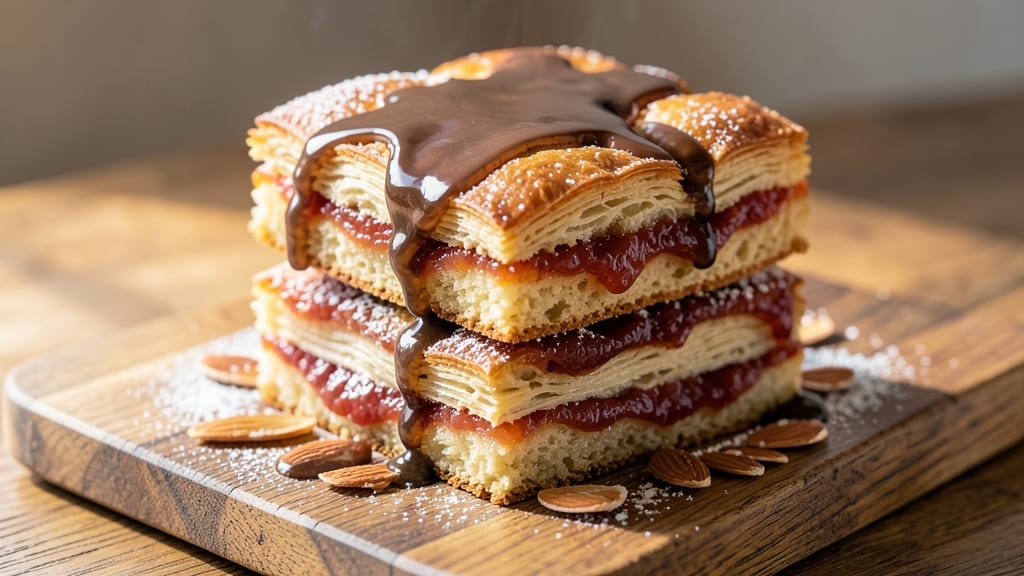
This apricot danish coffee cake delivers layers of buttery pastry wrapped around caramelized apricot filling, crowned with a streusel that crumbles into golden perfection. 💛 The secret lies in a yeast-based dough infused with espresso powder—subtle enough to enhance the fruit's natural sweetness without overpowering it. I've perfected this recipe over years of baking, ensuring every slice stays moist for days while the apricot compote remains sticky and jammy at the core.
The magic happens in the layers: a tender, slightly sweetened dough forms the base, while a streusel topping of brown sugar, flour, and butter creates that signature crunch. Between them, a warm apricot compote—simmered with cinnamon and a touch of vanilla—binds everything together. Baking at 350°F for 35-40 minutes ensures the cake rises just enough to create those coveted peaks while keeping the center tender.
What makes this recipe stand out is the balance of textures—moist cake, crisp streusel, and jammy fruit—all harmonized with a light coffee glaze that ties the flavors together. The espresso-infused butter in the dough adds depth, while cardamom in the streusel introduces a warm, aromatic note that complements the apricots beautifully. This isn't just a coffee cake; it's a dessert that feels like a hug.
Perfect for brunch, weekend gatherings, or a special treat, this apricot danish coffee cake is versatile enough to adapt with seasonal fruit or spices. Whether you're a seasoned baker or trying your hand at yeast dough, the step-by-step instructions will guide you to a showstopping result. Let's get started!
Ingredients for apricot danish coffee cake
Buttery yeast dough, jammy apricot filling, and a cardamom-spiced streusel—this cake is pure comfort in every bite.
| Ingredient | Amount | Notes |
|---|---|---|
| All-Purpose Flour 🌾 | 4 cups | Sifted for light texture |
| Granulated Sugar 🍚 | ¾ cup | For dough sweetness |
| Instant Yeast 🍞 | 2 ¼ tsp | Active dry works too |
| Espresso Powder ☕ | 1 tbsp | Enhances apricot flavor |
| Unsalted Butter 🧈 | ¾ cup | Cold, cubed for dough |
| Large Eggs 🥚 | 2 whole | Room temperature preferred |
| Milk 🥛 | ½ cup | Warm for yeast activation |
| Salt 🧂 | ½ tsp | Kosher or sea salt |
| Vanilla Extract 🍯 | 1 tsp | Pure vanilla preferred |
| Dried Apricots 🍑 | 1 ½ cups | Chopped, not sweetened |
| Brown Sugar 🍚 | ½ cup | Packed, for streusel |
| All-Purpose Flour 🌾 | ½ cup | Extra for streusel |
| Cold Unsalted Butter 🧈 | ¼ cup | Cubed, for streusel |
| Ground Cinnamon 🌿 | 1 tsp | For apricot filling |
| Ground Cardamom 🍃 | ½ tsp | For streusel aroma |
| Powdered Sugar 🍚 | ½ cup | For coffee glaze |
| Heavy Cream 🥛 | ¼ cup | For glaze base |
| Espresso Powder ☕ | ½ tsp | For glaze depth |
The apricots are the heart of this cake, so look for dried, unsweetened at stores like Whole Foods or Trader Joe's—they have the best texture. Chop them yourself for even distribution (no need to soak). The yeast? Fresh is best if you're feeling fancy, but instant works fine. For the butter, I always use Plugrá—it's European-style and melts beautifully. Keep everything cold until the dough comes together, or you'll end up with a greasy mess instead of flaky layers.
No dried apricots? Fresh apricots work too—just peel, pit, and chop them before simmering with sugar and spices. Short on cardamom? Double the cinnamon—it's a close second. The streusel can be made ahead and stored in the fridge for 3 days, saving you time on baking day. For the glaze, if you can't find heavy cream, half-and-half thinned with milk works in a pinch. And trust me on the espresso powder—it's what makes this taste like a bakery, not a home kitchen.
This cake keeps beautifully—3 days at room temperature wrapped tightly, or 5 days in the fridge. The glaze might soften, so pop it back in the oven for 10 seconds to set before serving. Freezes for 3 months if you want to make it ahead for a party. I always bake mine the night before so the flavors meld overnight. Slice it thick—everyone will ask for seconds
Why You'll Love This Recipe
- No Yeast Nightmare: I swear by this recipe because it uses instant yeast—no waiting for it to dissolve in warm water. Just toss it straight into the dry ingredients with the flour, and you’re done. Honestly, that’s half the battle won before you even start mixing.
- Espresso Butter Magic: That little packet of espresso powder isn’t just for show—it deepens the coffee cake’s richness while balancing the apricot’s natural sweetness. The butter gets infused with it, so every bite has this subtle, sophisticated depth that makes it taste like a bakery secret.
- Weekday Breakfast Hero: Between us, this cake is my go-to for busy mornings. Slice it up the night before, and it’s ready to grab on the way out—no reheating needed. My kids even ask for it on school nights, and that’s saying something.
- Budget-Friendly Luxury: You’d think a cake this good would break the bank, but it doesn’t. A single batch uses just a stick of butter and a handful of sugar, yet it feels like a special treat. Leftovers? They last days, and honestly, they taste even better the second day.
Step-by-step instructions for apricot danish coffee cake
Here's how to create layers of moist crumb and caramelized apricot perfection—every step matters.
👨🍳 Step 1: Mix the Yeast Dough for Maximum Rise
In a stand mixer fitted with the dough hook, combine the 4 cups all-purpose flour, 0.75 cup granulated sugar, 2.25 tsp instant yeast, 1 tbsp espresso powder, and 0.5 tsp salt. Mix on low speed for 30 seconds to blend dry ingredients completely.
Add the 0.75 cup cold cubed unsalted butter and mix on low until the butter is fully incorporated and the mixture resembles coarse crumbs. In a separate bowl, whisk together the 2 whole eggs, 0.5 cup warm milk, and 1 tsp vanilla extract until smooth. With the mixer running on low, gradually pour in the egg mixture while scraping down the sides of the bowl as needed.
Increase speed to medium and knead for 5-7 minutes until the dough is smooth and elastic, pulling away from the sides of the bowl. You'll know it's ready when it forms a "windowpane"—stretch a small piece between your fingers and it should be thin enough to see light through without tearing. This dough needs time to develop gluten for that tender, moist crumb.
🥘 Step 2: Assemble the Apricot Filling and Streusel
While the dough rests, prepare the apricot filling by chopping the 1.5 cups dried apricots into small, irregular pieces—you want them to stay intact but soften beautifully during baking. In a small bowl, combine the chopped apricots with 0.5 cup brown sugar, 1 tsp ground cinnamon, and 0.5 tsp ground cardamom. Toss gently to coat evenly.
For the streusel topping, pulse the 0.5 cup all-purpose flour and 0.5 cup brown sugar together in a food processor until combined. Add the 0.25 cup cold cubed unsalted butter and pulse until the mixture resembles coarse crumbs with some pea-sized butter pieces remaining. This texture creates the perfect crunchy contrast to the soft cake layers.
🔥 Step 3: Layer and Bake for Perfect Rise
Preheat your oven to 350°F and grease a 9x13-inch baking pan. Divide the dough into three equal portions and roll each into a 10x12-inch rectangle on a lightly floured surface. Transfer two-thirds of the apricot filling evenly over the first dough rectangle, leaving a ½-inch border around the edges.
Top with the second dough rectangle, then add the remaining apricot filling. Seal the edges by pinching them together with your fingers. Sprinkle the streusel mixture evenly over the top layer, pressing down gently with your fingers to ensure good contact. Bake for 40-45 minutes until the top is golden brown and a toothpick inserted in the center comes out clean.
⏰ Step 4: Cool and Glaze for Decadent Finish
Remove the cake from the oven and let it cool in the pan for 10 minutes. While it cools, prepare the coffee glaze by whisking together the 0.5 cup powdered sugar, 0.25 cup heavy cream, and 0.5 tsp espresso powder until smooth. The glaze should be thick enough to coat the back of a spoon but still pourable.
Transfer the cake to a wire rack and let it cool completely. Once fully cooled, drizzle the glaze evenly over the top and sides. For extra shine, use the back of a spoon to spread the glaze into an even layer. The cake will keep in an airtight container at room temperature for up to 3 days, though I promise it won't last that long!
Pro Tips For Making Apricot Danish Coffee Cake
- Chill the Dough: After mixing your yeast dough, let it rest 1–2 hours at room temp, then refrigerate it overnight. I learned this the hard way—skipping the cold rise makes the cake dense and flat. The slow fermentation deepens the coffee flavor and gives those layers proper lift.
- Measure Butter Cold: Use unsalted butter straight from the fridge, cut into cubes. Melted butter in the dough makes the cake greasy and collapses the structure. Cold butter creates flaky layers, even in a coffee cake—trust me, your knife will thank you.
- Avoid Overmixing Apricots: Fold dried apricots into the dough gently—just until evenly distributed. I used to pulse them in a food processor, thinking it’d help, but it turns them mushy. Keep them whole or roughly chopped for texture, and the cake stays tender.
- Preheat Pan + Parchment: Place a sheet of parchment paper in your baking pan before adding the dough, then preheat the pan for 5 minutes. This guarantees even browning and prevents sticking—no more scraping cake off the pan when it’s done. (Yes, even if you’re in a hurry.)
Wine and beer pairings for this apricot danish coffee cake
Coffee-Inspired Wines
A bold Italian dessert wine like Vin Santo from Tuscany is my go-to pairing—its honeyed notes and caramel undertones mirror the apricot's sweetness while the coffee glaze's acidity cuts through the richness. Serve slightly chilled (55-60°F) to enhance its nutty, oxidative complexity. For a more robust option, try a Tawny Port (10-20 year) with its toasted, dried fruit character that complements the cake's caramelized apricots. 🍷
Light Beer Contrasts
Skip the heavy stouts—this cake pairs beautifully with a crisp Belgian Witbier like Hoegaarden. The coriander and citrus notes in the beer cleanse your palate between bites, while its effervescence balances the cake's density. For a local favorite, try a light American lager with just a touch of vanilla (like Miller Lite or Coors Light)—the subtle malt sweetness won't overpower the apricot. Serve at 40-45°F for the best refreshment. 🍺
Espresso Cocktail Twist
For a boozy pairing, blend 1 oz espresso, 1 oz vanilla syrup, and 2 oz cold heavy cream> (the same cream used in the glaze!) in a shaker with ice. Strain into a chilled martini glass and garnish with a sprinkle of cardamom pods. The creamy texture echoes the cake's moist crumb, while the espresso deepens the coffee notes. This drink works as a pre-dinner aperitif or a dessert companion. ☕
Spiced Wine Alternative
Warm a bottle of Moscato d'Asti with ½ tsp cinnamon sticks and ¼ tsp cardamom pods for 5 minutes—the spices infuse beautifully without overpowering. The wine's berry notes contrast the apricot while the warmth of the spices bridges the cake's flavors. Serve in small wine glasses to maintain the dessert's elegant presentation. For a non-alcoholic version, use sparkling grape juice and the same spice infusion. 🍇
After-Dinner Digestif
End the meal with a dark rum like Appleton Estate or Diplomático Reserva Exclusiva, served neat with a dash of Angostura bitters. The rum's caramel and vanilla notes harmonize with the cake's glaze, while the bitters add a sophisticated finish. For a coffee twist, add a ½ tsp instant espresso powder> to the glass before pouring—it creates a layered effect that mirrors the cake's complexity. Sip slowly to savor the pairing. 🥃
Nutrition facts
Frequently asked questions
Can I substitute fresh apricots for dried in this recipe?
Yes! Use 2 cups fresh apricots instead of dried. Peel, pit, and chop them into small pieces, then simmer with 0.25 cup water, 0.25 cup brown sugar, and 1 tsp cinnamon for 5 minutes until softened. The texture will be juicier, so you may need to reduce the streusel slightly to avoid a soggy top.
Why does my cake sink in the middle after baking?
This usually happens if the yeast isn't activated properly or the oven temperature isn't accurate. Always use warm (110°F) milk for the yeast and let the dough rise in a warm place (75-80°F) until doubled. An oven thermometer is key—many home ovens run 25°F hotter than set. Also, avoid opening the oven during baking to prevent sudden temperature drops.
How can I make this gluten-free without sacrificing texture?
Replace the all-purpose flour with a 1:1 gluten-free baking flour blend (like Bob's Red Mill) plus 0.5 tsp xanthan gum. For the streusel, use almond flour instead of regular flour. The yeast dough will be slightly denser, so let it rise 10-15 minutes longer. The coffee glaze stays the same—it's naturally gluten-free!
Can I bake this in a different pan shape?
Yes, but adjust the baking time and streusel quantity. For a 9x9-inch square pan, bake 5-7 minutes longer and reduce streusel by 25%. For a 9-inch round cake pan, use the same total baking time but spread the streusel evenly. The dough layers should be about ½-inch thick each for even baking. Always grease nonstick pans well!
What's the best way to reheat slices for serving?
For the best texture, warm slices at 300°F for 5-7 minutes wrapped in foil. This revives the streusel's crunch while keeping the cake moist. Avoid the microwave—it makes the glaze soggy. If serving cold, sprinkle with extra powdered sugar or coffee crystals for freshness.