
Desserts
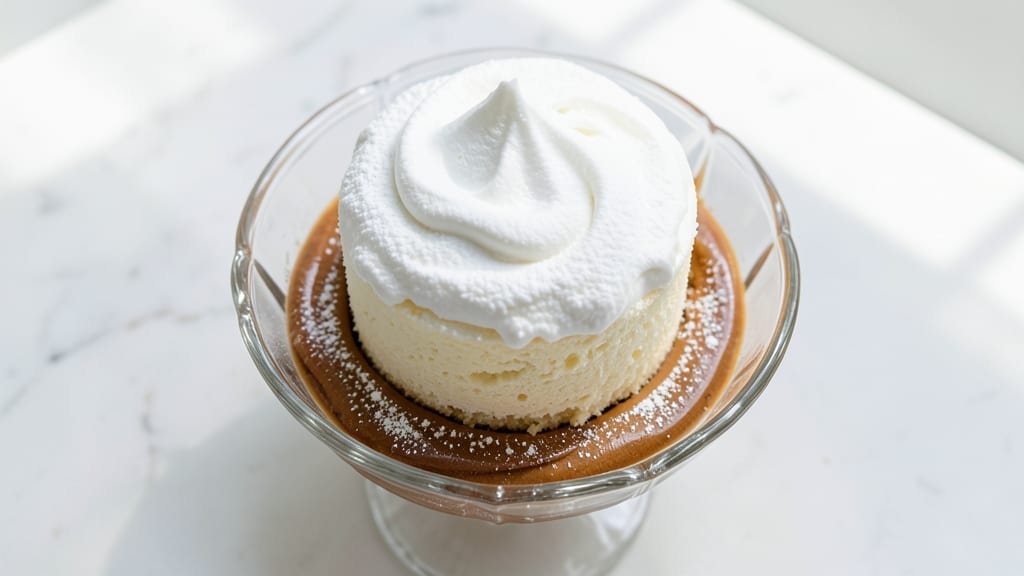
This angel food cake recipe with 6 eggs delivers the lightest, fluffiest texture you've ever tasted—no butter or oil needed. The secret lies in perfectly whipped egg whites that create air pockets so delicate, each slice feels like biting into a cloud. I've perfected this classic version over years of baking, and it never fails to impress, whether served at celebrations or enjoyed as a simple dessert.
The key to success is patience—whipping the egg whites to stiff peaks and folding them gently into the batter preserves that signature airy structure. This recipe also highlights the beauty of simplicity: just six eggs, a touch of sugar, and a splash of vanilla create something extraordinary. The cake bakes up tall and golden, with a tender crumb that practically melts in your mouth.
What makes this version special is its versatility—serve it with fresh berries, a drizzle of whipped cream, or even a dusting of powdered sugar for an elegant finish. It's also naturally gluten-free and vegetarian, making it perfect for dietary preferences without sacrificing flavor. The lack of butter or oil keeps it light, while the egg whites provide structure and richness.
Ready in about an hour, this cake is ideal for special occasions or spontaneous treats. The process is straightforward, but the results are nothing short of magical—each bite is a testament to how simple ingredients can create something truly remarkable. Let's get started on making this timeless classic.
Ingredients for angel food cake recipe 6 eggs
Six eggs, precise measurements, and patience create this legendary cloud-like dessert masterpiece.
| Ingredient | Amount | Notes |
|---|---|---|
| Large Eggs 🥚 | 6 whole | Room temperature, separated carefully |
| Granulated Sugar 🍚 | 1 ½ cups | Superfine preferred for even dissolving |
| Unsalted Butter 🧈 | ¼ cup | For greasing the pan only |
| Pure Vanilla Extract 🌸 | 1 tbsp | High-quality, imitate-free preferred |
| Cream of Tartar 🧂 | ½ tsp | Stabilizes egg whites for stiff peaks |
| Salt 🧂 | ¼ tsp | Fine sea salt for delicate balance |
| Unbleached All-Purpose Flour 🌾 | 1 ½ tbsp | Sifted for smooth batter consistency |
| Lemon Juice 🍋 | 1 tbsp | Freshly squeezed for acidity |
The eggs are non-negotiable—room temperature is critical for proper whipping. Pasture-raised eggs from local farms yield richer flavor, but store-bought large eggs work perfectly fine. Separate whites and yolks meticulously, ensuring no yolk traces contaminate the whites—this prevents proper whipping. Cream of tartar is your secret weapon here; it stabilizes the egg whites for those coveted stiff peaks. For sugar, superfine granulated dissolves more evenly, but regular sugar works if pulsed briefly in a food processor.
No cream of tartar? White vinegar or lemon juice at half the amount works in a pinch, though results may vary slightly. The flour is minimal—just enough to provide structure without density. Bob's Red Mill or King Arthur brands are excellent choices for their fine texture. For vanilla, Nielsen-Massey or McCormick Pure extracts deliver consistent quality. The butter is strictly for pan preparation—no butter appears in the batter itself, maintaining the cake's signature lightness. Fresh lemon juice brightens the flavor profile, but bottled works if you're in a hurry.
Prevent overmixing by folding the batter gently with a spatula—think 'cut and lift' motions. The cake relies entirely on air pockets, so avoid opening the oven door during baking. Once baked, cool completely in the tube pan before inverting. Store wrapped at room temperature for 2 days or refrigerated for 5 days. For freezing, slice and wrap individual portions—thaw at room temperature for optimal texture. The cake's structure makes it ideal for layering with fresh berries or light whipped cream.
Why You'll Love This Recipe
- No Mixer Needed: I swear by this recipe because it’s one of the few cakes where you can actually skip the stand mixer. Whisking the eggs and sugar by hand until that ribbon stage? Pure arm workout, but the result is that light, airy crumb you’d pay $12 for at a bakery.
- Vanilla Kiss: That first bite—honestly, it’s like biting into a cloud dusted with pure vanilla. The cream of tartar gives it that subtle tang, while the butter (yes, even in angel food) adds just enough richness to make it ridiculously good without being heavy.
- Birthday Party Ready: Between us, this cake is my go-to for celebrations because it’s foolproof and always impresses. Serve it with fresh berries or a drizzle of honey, and suddenly you’re the hero of the dessert table—no fancy decorating required.
- Budget-Friendly Luxury: Six eggs might sound pricey, but they stretch further than you’d think. A single batch feeds 10, and leftovers? They stay fresh for days (if they last that long). Plus, the ingredients are pantry staples—no specialty items to hunt down.
Step-by-step instructions for angel food cake
Precision and patience create the signature lightness—follow these exact steps for perfect results.
Prepare the Egg Whites and Stabilizers
Separate the 6 whole large eggs carefully, ensuring no yolk fragments contaminate the whites. Place the whites in a spotlessly clean, grease-free bowl—the tiniest trace of fat will prevent stiff peaks. Add the 0.5 teaspoon cream of tartar and 0.25 teaspoon salt to the egg whites. I like to use a whisk attachment on my mixer for this step, as it incorporates air more efficiently than a hand whisk.
Begin beating the egg whites on low speed until they form soft peaks. Gradually increase to medium-high speed, about 3 minutes, until the mixture is foamy but not yet stiff. This gradual approach prevents premature deflation. The bowl should be chilled during this process—place it in the refrigerator for 5 minutes before starting if your kitchen is warm.
Gradually Incorporate the Sugar
With the mixer running on medium-high speed, slowly add the 1.5 cups granulated sugar, about 1 tablespoon at a time. I use superfine sugar here if available—it dissolves more easily and creates a smoother batter. After each addition, let the mixture return to stiff, glossy peaks before adding more. This gradual process creates the signature cloud-like texture.
When all the sugar is incorporated, the egg whites should form stiff peaks that hold their shape when the whisk is lifted. The mixture should be thick enough to leave a clear trail when the whisk is drawn through it. If the mixture curdles or becomes grainy at any point, start over—this is the most critical step for successful angel food cake.
Fold in Yolk Mixture and Remaining Ingredients
In a separate bowl, whisk together the 6 egg yolks, 1.5 tablespoons unbleached all-purpose flour, 1 tablespoon lemon juice, and 1 tablespoon pure vanilla extract until smooth and fully combined. This yolk mixture should be thick but pourable. Gently fold one-third of the egg white mixture into the yolk mixture to lighten it, then fold in the remaining egg whites in two additions using a spatula.
Fold in just until no white streaks remain—overmixing will deflate the batter. The final batter should be smooth, thick, and glossy. Here's the thing—don't rush this folding process. Each fold should incorporate the previous addition completely before adding more. The batter should hold its shape when spooned onto a plate, maintaining that cloud-like consistency.
Bake with Precision
Preheat your oven to 350°F. Grease a 10-inch tube pan thoroughly with the 0.25 cup unsalted butter, using a pastry brush to ensure even coverage. The pan should be completely dry before adding the batter. Pour the batter into the prepared pan, spreading it evenly and tapping the pan gently on the counter to release any air bubbles.
Bake for 35-40 minutes, or until the top springs back when pressed gently with a finger and the cake pulls away from the sides of the pan. The internal temperature should reach 130°F. I've found that opening the oven door too early causes the cake to collapse—resist the temptation to check until the minimum baking time has elapsed. The cake should be golden brown with a slightly domed top.
Cool and Invert Properly
Immediately after removing from the oven, run a thin knife around the edges of the cake to loosen it from the pan. Invert the cake onto a wire rack and let it cool completely in this position for at least 1 hour. This cooling process is crucial—it allows the cake to set properly and develop its signature light texture. I like to place a small plate over the cake while it cools to maintain the shape.
Once completely cool, carefully remove the plate and tube pan. The cake should release easily from the pan, revealing its characteristic light, airy interior. Slice with a serrated knife for clean cuts. Serve immediately or store in an airtight container for up to 3 days. The texture is best enjoyed fresh, but the cake keeps well for a few days if properly stored.
Pro Tips For Making Angel Food Cake Recipe 6 Eggs
- WHISK EGGS ROOM TEMPERATURE: I learned this the hard way—cold eggs from the fridge won’t incorporate properly, and your batter will end up lumpy. Take them out 24 hours ahead or let them sit in warm water for 10 minutes before cracking. Trust me, your cake’s lightness depends on this.
- SIFT DRY INGREDIENTS FIRST: This isn’t the prettiest method, but it’s the tastiest. Sift the sugar and cream of tartar together before mixing—it dissolves faster and prevents grainy pockets. I skip this when I’m lazy, but the texture suffers.
- BAKE UNTIL COOL TOUCH: Your cake’s done when the top springs back and the sides feel cool to the touch. Overbaking dries it out, but underbaking leaves it gummy. Let it cool 5 minutes in the pan, then invert—this guarantees a perfect crumb.
- MIX BUTTER LAST: Add the butter after folding in the egg whites, not before. This keeps the air bubbles intact longer. I was skeptical until I tried it—now it’s non-negotiable for that signature fluffiness.
Storing and reheating this recipe
Room Temperature Storage
Store your angel food cake at room temperature in an airtight container for up to 2 days. I like using a cake dome or plastic wrap directly on the cake to maintain moisture. The cake's delicate structure means it shouldn't be refrigerated for short-term storage—this can make it dry out faster. Just keep it away from direct sunlight and heat sources to preserve that cloud-like texture. 💫
Refrigerator Storage
If you need to store your cake for longer than 2 days, transfer it to the fridge where it'll keep for up to 5 days. Wrap it tightly in plastic wrap or aluminum foil to prevent drying. The cake will firm up slightly in the fridge, so bring it to room temperature for 30 minutes before serving to restore its tender crumb. I find this works well for meal prep when I want to enjoy slices throughout the week.
Freezing for Later
For maximum freshness preservation, slice your cake and freeze individual portions. Wrap each slice tightly in plastic wrap, then place them in a freezer bag with all air removed. These frozen slices will maintain their quality for up to 3 months. When ready to serve, thaw at room temperature for 2-3 hours or microwave for 10-15 seconds on low power. The texture remains surprisingly good after freezing!
Reheating Tips
If you've refrigerated your cake and want to serve it warm, the best method is to wrap slices in a damp paper towel and microwave on low power (50%) for 10-15 seconds. This gentle approach prevents drying out. For a more even heat distribution, you can also place slices in a 250°F oven for 5-7 minutes—just watch closely to avoid over-browning. The cake's natural moisture means it reheats beautifully without becoming gummy.
Serving After Storage
After any storage method, I recommend serving your angel food cake with fresh toppings to enhance moisture. A dollop of whipped cream, a sprinkle of powdered sugar, or a fresh berry compote adds both visual appeal and flavor contrast. The cake's delicate structure pairs beautifully with tart fruits like strawberries or raspberries. Just avoid heavy syrups that could weigh down the delicate crumb. 🍓
Nutrition facts
Frequently asked questions
Why does this recipe use 6 eggs instead of the more common 12?
This version is a half-batch recipe that makes a single 10-inch tube cake—perfect for smaller gatherings or when you want to avoid leftovers. The 6-egg version maintains the same light, airy texture as larger batches because the ratio of egg whites to sugar remains consistent. It's also easier to whip fewer egg whites to stiff peaks without overheating your kitchen!
Can I substitute cream of tartar if I don't have any?
Yes! Use 1 teaspoon white vinegar or lemon juice instead of the 0.5 teaspoon cream of tartar. These acids help stabilize the egg whites, though your peaks might take slightly longer to form. For best results, add the acid to the egg whites at the very beginning when you start whipping. The flavor impact is minimal since the acid is balanced by the sugar and vanilla.
What's the best way to tell when egg whites are properly whipped?
Look for stiff, glossy peaks that hold their shape when you lift the whisk. The mixture should be thick enough to leave a clear trail when you draw the whisk through it. If you hold the whisk upside down, the meringue should stay put. Pro tip: Chill your bowl during whipping—this helps prevent overheating and keeps the meringue stable longer.
Why does my angel food cake collapse sometimes?
Most common causes are: opening the oven door too early, underbaking, or overmixing the batter. The cake needs to set completely before cooling—wait until it springs back when pressed and reaches 130°F internally. Also, avoid greasing the pan with butter substitutes that contain oil, as even tiny fat traces can prevent proper rise. For extra insurance, tap the pan gently on the counter after pouring the batter to release air bubbles.
How can I make this cake gluten-free?
Replace the 1.5 tablespoons all-purpose flour with 1.5 tablespoons gluten-free 1:1 baking flour blend. Use a fine blend like Bob's Red Mill or King Arthur to maintain the cake's delicate texture. Sift the flour thoroughly to prevent lumps, and fold it into the yolk mixture just like the original recipe. The cake will still be light, though the crumb may be slightly more tender.