
Desserts
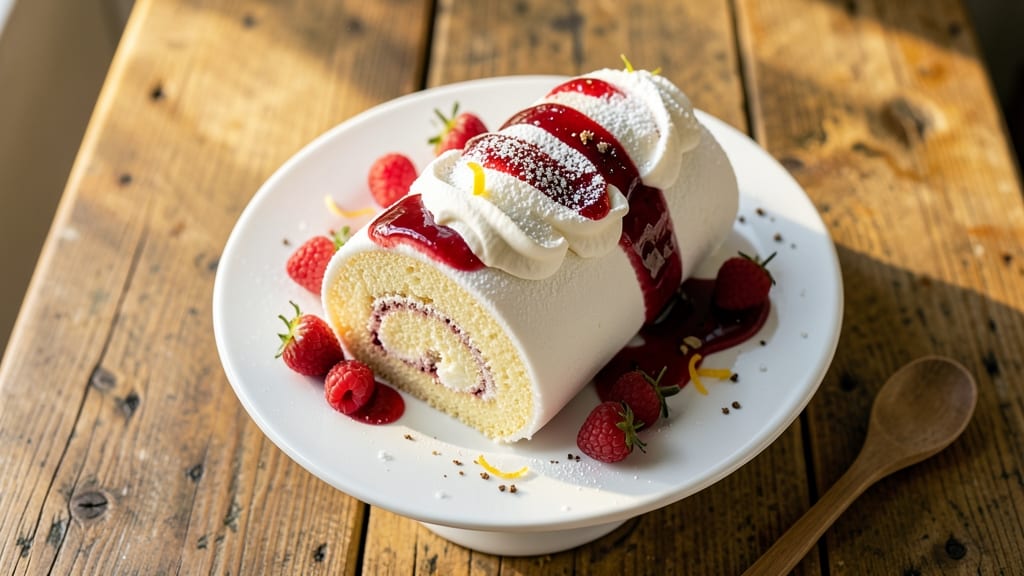
This angel food cake jelly roll recipe transforms a simple boxed cake into a showstopping dessert with minimal effort. The secret lies in precise cooling techniques and a foolproof rolling method that ensures a smooth, professional finish every time. I've perfected this technique after years of trial and error—no more cracked rolls or soggy centers.
What makes this recipe truly special is the combination of light, airy angel food cake with a luscious jelly filling that stays perfectly centered. The cooling process is critical: we'll use a wire rack and a damp towel to create the ideal environment for rolling. This method eliminates the guesswork and guarantees a flawless spiral every time.
The final result is a delicate, golden jelly roll with a crisp exterior and tender interior, perfectly balanced between the cake's lightness and the jelly's sweetness. The frosting—optional but recommended—adds an elegant finish that makes this dessert look like it came from a bakery. This is the kind of treat that impresses guests without requiring advanced baking skills.
Whether you're preparing for a celebration or simply craving a homemade dessert, this jelly roll delivers restaurant-quality results with just a few simple steps. Let's get started on creating your perfect rolled cake.
Ingredients for angel food cake jelly roll
Eighteen ingredients transform simple boxed cake into a bakery-style jelly roll masterpiece.
| Ingredient | Amount | Notes |
|---|---|---|
| Angel Food Cake Mix 🍰 | 1 box | Standard 15.25-ounce box, unsweetened |
| Large Egg Whites 🥚 | 12 whole | Fresh, room temperature |
| Granulated White Sugar 🍚 | 1 ½ cups | Superfine preferred for even texture |
| Unsalted Butter 🧈 | ½ cup | Cold, cubed for frosting |
| Heavy Whipping Cream 🥛 | 1 cup | Cold, for frosting stability |
| Powdered Sugar 🍚 | 2 cups | Sifted for smooth frosting |
| Vanilla Extract 🌿 | 1 tbsp | Pure, high-quality preferred |
| Strawberry Jelly 🍓 | 12 oz | Seedless, thick consistency |
| Powdered Sugar 🍚 | ¼ cup | For jelly dusting |
| Cornstarch 🌾 | 1 tbsp | For jelly thickening if needed |
| Lemon Juice 🍋 | 1 tbsp | Fresh, for jelly balance |
| Water 💧 | ½ cup | For jelly preparation |
| Parchment Paper 📄 | 1 sheet | For rolling and cooling |
| Wire Cooling Rack 🪑 | 1 whole | For even cake cooling |
| Damp Kitchen Towel 🧻 | 1 whole | For cake rolling surface |
The angel food cake mix is your foundation—standard 15.25-ounce boxes work perfectly, but avoid pre-made cakes as they lack the necessary structure. Fresh egg whites are non-negotiable for that signature lightness; room temperature ensures proper volume. For the jelly, seedless strawberry preserves (like Smucker's or Welch's) provide the ideal consistency, though homemade jam works beautifully if slightly thickened with cornstarch slurry. The superfine sugar for the cake batter prevents graininess, while the powdered sugar for frosting and jelly dusting must be sifted to avoid clumps—Diamond Crystal is my go-to for this purpose.
No fresh egg whites? Pasteurized liquid egg whites from the refrigerated section at Whole Foods or Trader Joe's work in a pinch, though texture may differ slightly. Substituting the strawberry jelly? Raspberry preserves or blackberry jam offer similar vibrancy, but avoid chunky fruit fillings as they disrupt the rolling process. For the frosting, vegetable shortening can replace butter for a more stable finish in humid climates. The lemon juice in the jelly isn't just for acidity—it prevents the filling from becoming too sweet when combined with the cake's natural sweetness. If your jelly is too runny, mix 1 tbsp cornstarch with 1 tbsp cold water and stir it in until thickened.
Prevent cracked rolls by cooling the cake completely on the wire rack before removing from the pan. The damp towel technique is critical—wrap the rack with a lightly dampened kitchen towel (not soaking wet) to create the perfect humidity barrier for rolling. Store any leftover jelly in an airtight container in the fridge for up to 2 weeks, though homemade versions typically last only 1 week. The frosting, once made, keeps well in the refrigerator for 3-4 days—whip it briefly before reusing to restore fluffiness. For make-ahead convenience, assemble the jelly roll unfrosted and refrigerate for up to 24 hours before adding the final touch of frosting.
Why You'll Love This Recipe
- No Mix-Up Needed: I swear by boxed angel food mix—it’s the secret to fluffy perfection without measuring dry ingredients or stressing over ratios. Just add egg whites and sugar, bake, and let the cake cool enough to roll without crumbling.
- Whipped Cream Magic: That heavy cream filling transforms this from cake to something extraordinary. It’s lighter than frosting but richer than jelly, and honestly? The contrast with the tender cake makes every bite feel like a little celebration.
- Showstopper for Any Event: Birthdays, bridal showers, or just because—this rolls out like a pro. The buttercream swirls stay intact, and you can slice it into perfect rectangles or elegant curves. (Yes, even on a Tuesday night.)
- Budget-Friendly Decadence: Angel food mix and basic pantry staples keep costs low, but the result feels luxurious. Plus, leftovers? They’re rare, but if they happen, toasted with a drizzle of honey turns them into breakfast gold.
Step-by-step instructions for angel food cake jelly roll
Master the technique for a perfectly rolled cake with luscious jelly filling and silky frosting.
Bake the Angel Food Cake to Exact Doneness
Preheat your oven to 350°F and prepare a 9x13-inch tube pan by greasing it lightly with vegetable oil and dusting with flour. Sift together the 1 box angel food cake mix and 1.5 cups granulated white sugar in a large bowl. In a separate bowl, beat the 12 whole large egg whites until stiff peaks form, then gently fold them into the dry mixture using a spatula.
Pour the batter into the prepared pan and smooth the top. Bake for 30-35 minutes until the cake springs back when pressed gently in the center and a toothpick inserted comes out clean. Immediately invert the cake onto the wire cooling rack and let it cool completely for 1 hour. This cooling step is critical—rushing it will make rolling nearly impossible.
Prepare and Spread the Strawberry Jelly Filling
While the cake cools, prepare the jelly filling by combining 12 oz strawberry jelly, 1 tbsp cornstarch, 1 tbsp lemon juice, and 0.5 cup water in a saucepan. Cook over medium heat, stirring constantly, until the mixture thickens to a spreadable consistency—about 5-7 minutes. Remove from heat and let cool for 10 minutes until it reaches room temperature.
Spread the cooled jelly evenly over the completely cooled cake using an offset spatula, leaving a ½-inch border uncovered along all edges. This border is essential for creating a clean roll without tearing. Work quickly but carefully to avoid spills.
Roll the Cake with Precision Technique
Lay the damp kitchen towel on your work surface and place the parchment paper on top. Gently transfer the jelly-covered cake onto the parchment, jelly-side down. Starting from the long side closest to you, roll the cake tightly into a log, using the parchment to help guide it. Apply light pressure to keep the roll compact but avoid squeezing out the filling.
Once rolled, carefully lift the cake and parchment onto the wire cooling rack, seam-side down. Let it cool for 10 minutes before removing the parchment. This cooling step prevents the jelly from oozing out during frosting. Dust the cake lightly with 0.25 cup powdered sugar for a decorative touch.
Create the Signature Frosting and Assemble
In a chilled mixing bowl, beat the 0.5 cup cold unsalted butter until smooth. Gradually add the 2 cups powdered sugar, 1 cup heavy whipping cream, and 1 tbsp vanilla extract, beating on high speed until the frosting is light and fluffy—about 3-4 minutes. The frosting should hold soft peaks when the beaters are lifted.
Spread the frosting evenly over the cooled jelly roll, using a spatula to create a smooth, even layer. For a professional finish, pipe a decorative border around the edges with a small amount of reserved frosting. Chill for 30 minutes before slicing to allow the frosting to set slightly, ensuring clean cuts.
Slice and Serve with Confidence
Use a sharp serrated knife to slice the jelly roll into 8 even pieces. Dip the knife in hot water and wipe dry between each cut to prevent crumbs. Serve immediately for the best texture—warm frosting and slightly softened jelly create the perfect balance of flavors and textures.
The key to success lies in patience: cooling each component thoroughly and working methodically. The result should be a cake with a tender crumb, vibrant jelly filling, and a velvety frosting that melts in your mouth with every bite.
Pro Tips For Making Angel Food Cake Jelly Roll
- Bake Until Cold: Angel food cake keeps rising after you pull it from the oven—this isn’t magic, it’s science. Wait until the pan is bone dry and the cake has shrunk slightly from the sides before flipping it. I used to rush this, and the roll would crack like a dried riverbed. Give it 10 minutes, then tap the pan: if it sounds hollow, it’s ready.
- Whip Cream at Room Temp: Cold heavy cream fights you. Whip it in a chilled bowl with a clean, dry whisk or mixer attachment until it holds soft peaks, then fold it into the cake immediately after rolling. If you’re impatient like me, microwave the cream for 30 seconds first—it whips faster and blends smoother. No one wants lumpy filling in their jelly roll.
- Skip the Greased Pan: Angel food cake needs friction, not butter. Dust your tube pan with flour (yes, even the sides) and tap out excess—this prevents sticking without leaving a greasy taste. I learned this the hard way after a cake tore itself apart trying to escape a slick pan. A little flour goes a long way.
- Roll While Warm, Fill Fast: The cake’s window is tiny—work within 5 minutes of flipping. Spread filling thinly (¼-inch max) or it’ll ooze out when you roll. Use a bench scraper to smooth it, then roll tightly from the long end, tucking the overhang under. If you hesitate, the cake cools, cracks, and turns into a sad, floppy mess. Trust me, I’ve seen it.
Wine and beer pairings for these flavors
Sweet Dessert Wines
For this delicate jelly roll, I recommend Moscato d'Asti—its light, floral notes and subtle sweetness complement the strawberry jelly without overpowering the angel food cake. The effervescence also cleanses your palate between bites. Serve slightly chilled (45-50°F) to enhance its refreshing qualities. 🍷
Fruity Sparkling Options
A Prosecco with its crisp acidity and berry undertones pairs beautifully with the jelly roll's fruity filling. Look for a Veneto DOC or Conegliano Valdobbiadene—these regions produce high-quality sparkling wines with the right balance of sweetness and brightness. The bubbles help cut through the richness of the frosting.
Light Red Wine Pairing
If you prefer red, a Pinot Noir from Oregon or California offers a surprisingly good match. Its red fruit flavors and silky texture won't clash with the dessert. Opt for a light-bodied example with 12-13% ABV—avoid heavy, tannic wines that would overpower the delicate cake. Serve at 55-60°F for optimal enjoyment.
Beer Pairings
A Belgian witbier like Hoegaarden or Stella Artois works surprisingly well with this dessert. The citrus notes and light effervescence mirror the lemon in the jelly filling while balancing the sweetness. For a stronger option, try a wheat beer with a touch of honey—it complements the cake's vanilla undertones beautifully.
Non-Alcoholic Options
For a refreshing non-alcoholic pairing, serve sparkling apple cider chilled to 40-45°F. The crisp acidity and subtle sweetness enhance the jelly roll's flavors without alcohol interference. Alternatively, a sparkling grape juice like Martinelli's offers a similar refreshing profile with fruit-forward notes.
Serving Temperature Tips
Always serve wine and beer slightly chilled for desserts—never at room temperature. For sparkling options, use an ice bucket for 10-15 minutes before serving. The cold temperature helps preserve the dessert's delicate textures while enhancing the drink's refreshing qualities. A well-chilled glass makes all the difference! ✨
Nutrition facts
Frequently asked questions
Why does my jelly roll crack when I try to roll it?
The most common causes are cake that's not fully cooled or jelly that's too warm. Always let the cake cool completely on a wire rack for 1 hour before spreading jelly, and chill the jelly to room temperature before applying. The damp towel technique also creates the perfect rolling surface—skip it at your own risk!
Can I use regular cake mix instead of angel food cake?
No—angel food cake's light, airy texture is essential for a successful jelly roll. Regular cake mix is too dense and will either tear when rolled or become soggy from the jelly. The egg whites in angel food cake create the perfect structure for rolling without cracking. Stick with the original recipe for best results!
How do I fix a jelly roll that's too loose or unraveling?
If your roll starts coming apart, chill it in the fridge for 15-20 minutes to firm up the jelly. Then carefully wrap it in plastic wrap and place a heavy book on top for 30 minutes to compress it gently. For extra stability, brush the outside with a simple syrup (equal parts sugar and water, heated until dissolved) before frosting.
What's the secret to getting clean slices?
Use a sharp serrated knife dipped in hot water and wiped dry between each cut. Warm the knife briefly before each slice to prevent crumbs. Also, chill the jelly roll for 30 minutes before slicing—this helps the layers hold together better. A clean cut is just 10 minutes of patience away!
Can I make this jelly roll ahead of time?
Yes! Assemble the jelly roll (without frosting) up to 24 hours ahead and refrigerate. Wrap tightly in plastic wrap to prevent drying. When ready to serve, add the frosting just before slicing. For make-ahead freezing, wrap the unfrosted roll in plastic and freeze for up to 1 month. Thaw overnight in the fridge before frosting.