
Desserts
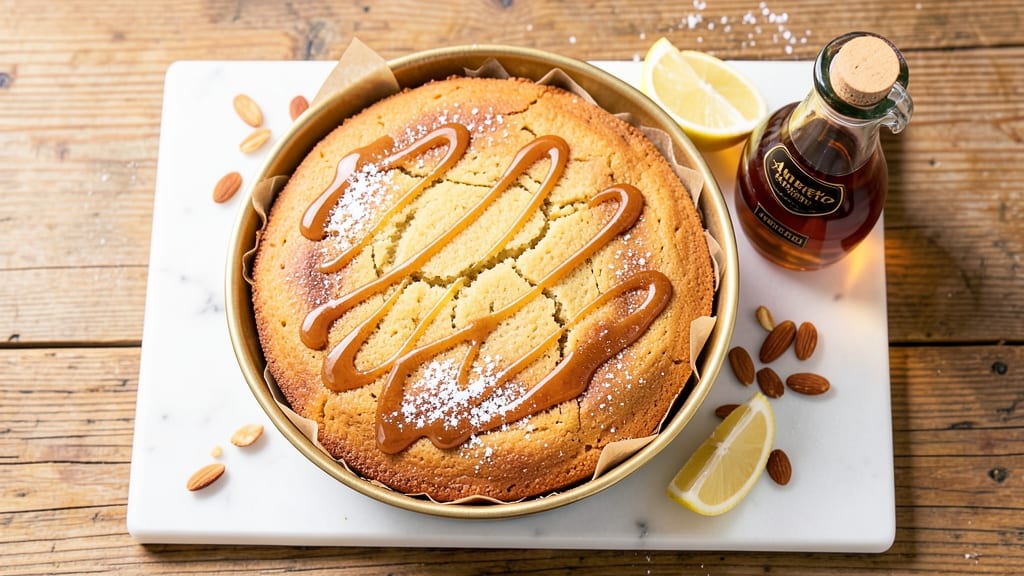
The amaretto sponge cake transforms a classic dessert into something sophisticated with its nutty liqueur swirls and impossibly light layers. This recipe delivers a tender crumb and aromatic amaretto flavor that elevates any occasion—whether it's a dinner party or a simple weekend treat. The secret lies in folding whipped egg whites into the batter just right, creating air pockets that make each slice melt in your mouth.
What sets this sponge cake apart is the amaretto liqueur, which infuses the batter with a rich, almond-kissed depth that pairs perfectly with the buttery sponge. No special equipment is needed—just a few simple techniques to ensure a foolproof rise and even bake. The result? A cake that's light enough to feel airy yet sturdy enough to hold its shape, with just the right amount of moisture to keep every bite tender.
Once baked, the cake layers are stacked with a thin layer of amaretto buttercream, creating those signature swirls that make it visually stunning. A light dusting of powdered sugar adds a professional finish, while optional fresh fruit or berries on top introduce a bright contrast to the nutty flavors. This is the kind of dessert that feels special without requiring hours in the kitchen.
Perfect for celebrating, gifting, or enjoying with coffee, this recipe scales easily for any occasion. Let's get started on creating your own restaurant-worthy amaretto sponge cake.
Ingredients for amaretto sponge cake
Eighteen ingredients for a restaurant-worthy dessert with nutty depth and light layers.
| Ingredient | Amount | Notes |
|---|---|---|
| All-Purpose Flour 🌾 | 2 ½ cups | Sifted for light texture |
| Granulated Sugar 🍚 | 1 ½ cups | Superfine preferred for smoothness |
| Unsalted Butter 🧈 | 1 cup | Room temperature, cubed |
| Large Eggs 🥚 | 6 whole | Room temperature, separated |
| Amaretto Liqueur 🍶 | ½ cup | High-quality, 25% ABV |
| Vanilla Extract 🌸 | 1 tbsp | Pure Madagascar preferred |
| Baking Powder 🧂 | 1 ½ tsp | Aluminum-free preferred |
| Salt 🧂 | ½ tsp | Fine sea salt |
| Powdered Sugar 🍚 | 3 cups | For buttercream and dusting |
| Heavy Cream 🥛 | 1 cup | Cold for buttercream |
| Almond Extract 🌿 | ½ tsp | Enhances amaretto flavor |
| Lemon Zest 🍋 | 1 tbsp | Brightens flavor profile |
The amaretto liqueur is the heart of this cake—Disaronno or Galliano are the gold standards, but any quality brand works. Look for bottles with at least 25% ABV to ensure rich flavor without overpowering. Butter matters too: European-style brands like Plugrá or Kerrygold melt beautifully for the buttercream. Flour should be sifted to avoid dense layers—King Arthur or Bob's Red Mill are reliable choices. Eggs need to be room temperature for proper volume, so take them out 30 minutes before baking.
No amaretto? Almond extract plus a splash of apricot jam mimics the flavor (use half the amount of extract). Running out of vanilla? Pure Madagascar is ideal, but imitation works in a pinch. For the buttercream, heavy cream must be cold—whipping cream from Trader Joe's is my go-to for stability. Lemon zest can be substituted with 1 tsp lemon juice if you're short on zest, though fresh is always better. Powdered sugar should be sifted before mixing to avoid lumps—Domino brand works perfectly for this.
Store cake layers wrapped in plastic at room temperature for 2 days or in the fridge for 4 days. Buttercream can be refrigerated for 5 days or frozen for 3 months—thaw overnight in the fridge before using. For best results, assemble the cake within 4 hours of baking. If making ahead, bake layers, cool completely, then wrap individually. Dust with powdered sugar just before serving to keep it fresh.
Why You'll Love This Recipe
- Let’s be real: most cakes turn dry by day two. Not this one. The amaretto keeps the crumb tender, and the buttercream stays creamy if you store it right (wrapped tightly, obviously). I’ve had this cake last four days, and it’s still just as good—proof that simple ingredients win.
- One-Bowl Wonder: I swear by this recipe—just mix, bake, and call it done. No fancy layers, no fussing with whipped meringue or multiple pans. The buttercream filling gets folded right in the bowl, and honestly? That’s half the battle won before you even preheat the oven.
- Almond-Kissed Magic: That splash of amaretto isn’t just flavor—it’s vibration. The almond notes from the liqueur sing through every bite, buttery and slightly boozy without tasting like a cocktail. (Yes, even if you’re not a huge fan of alcohol, the sweetness balances it perfectly.)
- Party in a Box: Slice it, stack it, or serve it whole—this cake’s your go-to for birthdays, book club gatherings, or just because. Between us, I’ve used it to impress coworkers at holiday potlucks, and no one ever guessed it took less than an hour. The buttercream keeps it lush, so it holds up like a champ.
Step-by-step instructions for amaretto sponge cake
Mastering this recipe delivers layers of tender crumb and rich amaretto flavor. Precision matters at every stage.
Prepare the Cake Batter with Exact Technique
Preheat your oven to 350°F and grease two 8-inch round cake pans with butter, then line the bottoms with parchment paper. Sift together the 2.5 cups all-purpose flour, 1.5 teaspoons baking powder, and 0.5 teaspoon salt in a medium bowl. Set aside—this dry mix needs to stay light and airy.
In a separate large bowl, beat the 1 cup unsalted butter and 1.5 cups granulated sugar on medium speed with an electric mixer until light and fluffy, about 3-4 minutes. This creaming process incorporates air, which creates that signature sponge cake texture. Add the 6 whole large eggs, one at a time, beating well after each addition until fully incorporated. The mixture should nearly triple in volume and become pale yellow.
Add the 1 tablespoon vanilla extract, 0.5 cup amaretto liqueur, and 0.5 teaspoon almond extract to the butter mixture. Mix on low speed just until combined—overmixing develops gluten and makes the cake dense. Gently fold in the dry ingredients using a spatula in a cutting motion until just combined. The batter should be smooth with no visible flour streaks. Divide the batter evenly between the prepared pans.
Bake Until Springy and Golden
Place the cake pans in the preheated oven and bake for 25-30 minutes, or until a toothpick inserted into the center comes out clean and the tops spring back when gently pressed. The edges should be golden brown, but the centers should remain slightly puffed. Rotate the pans halfway through baking for even heat distribution.
Here's the thing—don't open the oven door during the first 20 minutes of baking. The sudden temperature drop causes the cakes to sink. When they're done, remove them from the oven and let them cool in the pans for 10 minutes before transferring to a wire rack to cool completely. This gradual cooling prevents cracking.
Create the Amaretto Buttercream
In a stand mixer fitted with the whisk attachment, beat the 1 cup cold heavy cream on medium-high speed until soft peaks form, about 2-3 minutes. In a separate large bowl, beat the 1 cup unsalted butter (softened but not melted) until smooth and creamy. Gradually add the 3 cups powdered sugar, mixing on low speed until combined.
Add the 1 tablespoon lemon zest and 0.5 teaspoon almond extract to the butter mixture. Beat on medium speed until light and fluffy, about 2-3 minutes. Gently fold in the whipped cream until fully incorporated. This buttercream should be thick but spreadable—if it's too stiff, add 1-2 teaspoons of milk to loosen it.
Assemble the Cake with Swirls
Place the first cake layer on a serving plate. Spread a thin layer of buttercream over the top, leaving a ½-inch border uncovered. Pour ¼ cup of the amaretto liqueur evenly over the buttercream layer—this creates the signature swirl. Place the second cake layer on top and repeat the buttercream and amaretto process. Cover the entire cake with a final layer of buttercream, smoothing the top with a spatula.
Use a long serrated knife to create decorative swirls on the sides of the cake. Dust the top and sides with additional powdered sugar for a finished look. Chill the cake in the refrigerator for at least 1 hour before serving to allow the flavors to meld and the layers to set. This step ensures clean slices and prevents the buttercream from sliding off.
Serve with Confidence
Slice the cake into 8 equal wedges using a sharp knife dipped in hot water and wiped clean between cuts. This prevents the crumb from tearing. Serve at room temperature for the best texture and flavor balance. The cake should have a moist, tender crumb with a subtle almond flavor from the amaretto and almond extract, brightened by the lemon zest.
For an extra touch, garnish each slice with a dusting of powdered sugar and a few drops of amaretto liqueur. Store any leftovers in an airtight container in the refrigerator for up to 3 days, though I doubt it will last that long. The combination of the light sponge and rich buttercream makes this cake irresistible.
Pro Tips For Making Amaretto Sponge Cake
- Whip Eggs to Ribbon Stage: Stop when the egg mixture holds a stiff peak that trails like ribbon—no overmixing. I learned this the hard way after a batch turned dense and chewy; the amaretto flavor got lost in the heaviness. Room-temperature eggs (yes, even in winter) blend faster and incorporate better.
- Measure Amaretto Precisely: Use a kitchen scale for the liqueur—1.5 ounces (45ml) is the sweet spot. Too little and the cake’s subtle almond-kissed aroma fades; too much and it tastes like a boozy pudding. Pour it into the butter first, then emulsify with the eggs—this keeps the alcohol from evaporating while mixing.
- Avoid Overbaking the Cake: Pull it out when the top springs back just slightly to touch—no waiting for a golden crust. Amaretto sponge dries out fast, and the moment it’s done is fleeting. If your oven runs hot, check at 22 minutes; if it’s stubborn, go by the toothpick test (a few moist crumbs are fine).
- Soften Butter Before Creaming: Cold butter makes tough cake; room temp (65°F/18°C) gives a tender crumb. Rub it between your fingers—it should dent but not smear. Skip the microwave: spread it on a plate and let it sit for 30 minutes while you prep the rest. Your future self will thank you for the fluffier texture.
Common mistakes when making great amaretto sponge cake
Overmixing the Batter
This is the #1 mistake that turns a light sponge cake into a dense brick. When folding in the dry ingredients, use a spatula with a gentle "J" motion—never stir vigorously. Overmixing develops gluten, which makes the cake tough. Stop as soon as you see no more flour streaks, and the batter should look smooth and ribbon-like. I've ruined cakes by beating them like I was making pancake batter—don't make my mistake!
Skipping Room-Temp Eggs
Cold eggs from the fridge won't whip properly, and they can cause your cake to sink. Let your 6 large eggs sit at room temperature for at least 30 minutes before using. Pro tip: Place them in a bowl of warm water for 10 minutes if you're short on time. Room-temperature eggs also emulsify better with the butter, creating that signature light texture. Trust me, this small step makes a huge difference.
Opening the Oven Too Soon
The first 20 minutes of baking are critical—never open the oven door during this time. The sudden temperature drop causes the cakes to collapse. If you need to check doneness, use the toothpick test through the oven window instead. I've seen cakes go from perfectly domed to flat pancakes in seconds because someone couldn't wait. Patience here pays off with beautiful, springy layers.
Uneven Buttercream Consistency
If your buttercream is too stiff, it won't spread smoothly, and the cake will look messy. The fix? Add 1-2 teaspoons of milk at a time until it reaches a thick but spreadable consistency. Too loose? Chill it for 10 minutes to firm up. I once made buttercream so runny it dripped off the cake—Domino powdered sugar is my go-to for stability, but if yours behaves differently, adjust gradually. The goal is a buttercream that holds its shape but still creates those pretty swirls.
Overfilling the Pans
Stuffing pans with too much batter causes overflow and uneven baking. Your 8-inch pans should be filled no more than ⅔ full. I learned this the hard way when my first attempt created a mess in the oven. Use a scale if you're unsure—12-14 ounces of batter per pan is ideal. This ensures even baking and clean layers when you slice.
Forgetting the Chill Step
Skipping the 1-hour fridge chill after assembly leads to messy slices and buttercream sliding off. The cake needs time to set properly. If you're in a hurry, pop it in the freezer for 30 minutes—just don't leave it there longer than 1 hour, or the buttercream will harden. This step also lets the amaretto flavors meld together beautifully. 💫
Nutrition facts
Frequently asked questions
Can I substitute amaretto liqueur in this recipe?
Yes! If you don't have amaretto, mix 0.5 teaspoon almond extract with 1 tablespoon apricot jam (warmed slightly) for a similar nutty flavor. For a stronger effect, use 0.25 cup almond extract alone, but reduce the buttercream almond extract by 0.25 teaspoon to balance flavors. The jam adds moisture that mimics the liqueur's contribution.
How do I make this gluten-free?
Replace the 2.5 cups all-purpose flour with a 1:1 gluten-free flour blend (like Bob's Red Mill or King Arthur). Add 0.5 teaspoon xanthan gum to help bind the batter. Reduce baking powder to 1 teaspoon and increase baking time by 2-3 minutes—gluten-free cakes often need extra time to set. Test with a toothpick!
Why did my cake sink in the middle?
This usually happens from overmixing (developing gluten) or opening the oven door too soon. The batter should be smooth with no flour streaks, and resist the urge to peek during the first 20 minutes of baking. If the cake sinks slightly but springs back when pressed, it's still fine—just let it cool completely before slicing.
Can I bake this cake in a different pan size?
Yes, but adjust the batter quantity. For a 9-inch pan, reduce batter by 20% (about 1.2 cups total). For a 6-inch pan, increase by 50% (about 1.9 cups total). Always fill pans ⅔ full—overfilling causes uneven baking. Use the same baking time but check with a toothpick at the lower end of the range.
How long can I store the cake layers before assembling?
Baked layers can be wrapped tightly in plastic and stored at room temperature for 2 days or in the fridge for 4 days. For longer storage, freeze layers (unfrosted) for up to 3 months. Thaw overnight in the fridge before assembling. The buttercream should be made fresh the day of assembly for the best texture, but you can prep it 1 day ahead and store it refrigerated.