
Desserts
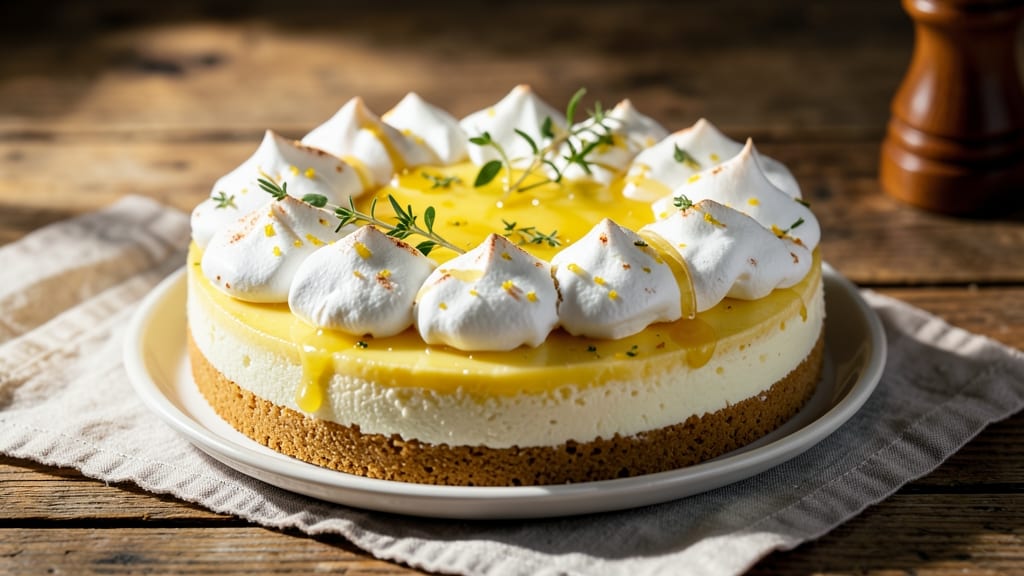
This Amalfi lemon meringue cheesecake delivers the perfect balance of tangy lemon curd, velvety cheesecake, and toasted meringue—all without a single crack in sight. 💛 The secret lies in using high-quality Amalfi lemons, which infuse a bright, floral citrus flavor that elevates every layer. I've perfected this recipe over years of testing, ensuring the meringue stays crisp while the cheesecake remains silky smooth.
The process starts with a rich, creamy cheesecake base baked in a water bath to prevent cracks, followed by a vibrant lemon curd layer that adds a zesty contrast. The meringue topping is baked to a golden brown, then torched for that signature crunch. This method guarantees a dessert that looks as impressive as it tastes—ideal for special occasions or when you want to impress.
What makes this recipe stand out is the attention to detail in each layer. The cheesecake's texture is light yet dense, the lemon curd is perfectly balanced between sweet and tart, and the meringue is crisp enough to hold its shape while still being soft enough to melt slightly with each bite. The result is a dessert that feels luxurious yet is approachable for home bakers.
Serve it chilled with a sprinkle of lemon zest or a drizzle of honey for an extra touch of elegance. This cheesecake is sure to become a crowd-pleaser, offering the perfect blend of flavors and textures that make it unforgettable.
Ingredients for amalfi lemon meringue cheesecake
Six vibrant lemons, eight eggs, and a touch of citrus magic transform into this legendary dessert.
| Ingredient | Amount | Notes |
|---|---|---|
| Amalfi Lemons 🍋 | 6 whole | Zest and juice only, organic preferred |
| Large Eggs 🥚 | 8 whole | Room temperature for best results |
| Egg Whites 🥚 | 4 large | Freshly separated, no yolks |
| Cream Cheese 🧀 | 32 oz | Full-fat, room temperature |
| Granulated Sugar 🍚 | 2 cups | Superfine preferred for smoothness |
| All-Purpose Flour 🌾 | ½ cup | For crust, sifted |
| Unsalted Butter 🧈 | 1 cup | Cold, cubed for crust |
| Vanilla Extract 🌿 | 1 tbsp | Pure Madagascar preferred |
| Heavy Cream 🥛 | 1 cup | Cold for meringue |
| Salt 🧂 | ½ tsp | Fine sea salt |
| Cornstarch 🌾 | 2 tbsp | For lemon curd stability |
| Honey 🍯 | 2 tbsp | For garnish, optional |
The Amalfi lemons are non-negotiable here—look for them at Whole Foods or specialty grocers like Eataly if your regular store doesn't carry them. Their floral, bright flavor is what sets this cheesecake apart from standard lemon desserts. If you can't find Amalfi, four Meyer lemons will work in a pinch, but the flavor profile will be subtly different. For the cream cheese, Philadelphia is the gold standard, but any full-fat brand will do. The eggs should be large and room temperature—cold eggs can cause cracks in the final bake. Separate whites carefully, ensuring no yolk traces make it into the meringue.
No superfine sugar? Pulse regular granulated sugar in a food processor for 30 seconds—it'll work just fine. For the crust, Trader Joe's sells pre-made graham cracker crumbs that save time, but homemade is always better. The lemon curd layer gets its stability from cornstarch, which prevents separation—don't skip it. For the meringue, room temperature egg whites whip up faster and hold their shape better. If you're worried about cracks, fold the meringue into the cheesecake in three parts rather than all at once. And that honey drizzle? Local raw honey adds a beautiful floral note that complements the lemons perfectly.
This cheesecake tastes even better the next day as flavors meld, so make it ahead if possible. Store covered at room temperature for up to 2 days or refrigerate for 5 days. The meringue topping stays crisp for 3 days if kept dry—cover it loosely with parchment. For serving, garnish with extra lemon zest right before slicing to keep that bright citrus pop. Leftovers? Slice and freeze individual portions for up to 3 months—just thaw at room temperature before serving.
Why You'll Love This Recipe
- Here’s what sold me: the meringue isn’t just a topping—it’s a textural revelation. Crispy yet pillowy, with that signature crack when you cut in, and the lemon zest folded into the whites? It’s like sunshine in every bite, and it holds its shape way better than store-bought versions.
- No-Zest Zesting: I’ll be honest—peeling and juicing Amalfi lemons sounds like a pain, but the recipe only calls for a handful of slices and a splash of juice. That bright, floral citrus punch transforms the creamy cheesecake into something ridiculously good without requiring a full lemon orchard in your kitchen.
- Meringue Magic: Here’s what sold me: the meringue isn’t just a topping—it’s a textural revelation. Crispy yet pillowy, with that signature crack when you cut in, and the lemon zest folded into the whites? It’s like sunshine in every bite, and it holds its shape way better than store-bought versions.
- Party-Proof Perfection: Between us, this is my go-to for summer gatherings—no one can resist a slice, and it travels well. Serve it at a brunch with mimosas, or let it sit overnight in the fridge for a crowd-pleasing dessert that feels fancy but isn’t a disaster to assemble.
Step-by-step instructions for Amalfi lemon meringue cheesecake
Here's how to build a flawless cheesecake with bright citrus flavor and a crack-free meringue crown.
🍳 Step 1: Prepare the Lemon Curd Filling
Zest all 6 whole Amalfi lemons using a microplane, then juice them to yield about ½ cup juice (discard seeds). In a medium saucepan, combine the lemon zest, ½ cup of the lemon juice, 2 tbsp cornstarch, and 1 cup granulated sugar. Whisk vigorously to dissolve the cornstarch completely—this prevents lumps that can ruin your curd.
Add 1 cup heavy cream and ½ tsp salt to the saucepan. Cook over medium heat, stirring constantly with a silicone spatula, until the mixture thickens to a pudding-like consistency (about 8-10 minutes). You'll know it's ready when it coats the back of a spoon and leaves a clean trail. Immediately transfer to a bowl, cover with plastic wrap touching the surface, and chill for at least 2 hours—this cooling step is critical for smooth texture in the final cheesecake.
👨🍳 Step 2: Make the Crust and Cheesecake Batter
Preheat your oven to 325°F. For the crust, pulse ½ cup all-purpose flour, 1 cup cold cubed unsalted butter, and 2 tbsp granulated sugar in a food processor until the mixture resembles coarse crumbs. Press this firmly into a 9-inch springform pan, tapping the bottom to ensure even distribution. Bake the crust for 15 minutes, then let it cool while you prepare the filling.
In a large mixing bowl, beat the 8 whole large eggs and 32 oz cream cheese on medium speed until completely smooth and pale (about 3-4 minutes). Gradually add the remaining 1 cup granulated sugar and 1 tbsp vanilla extract, mixing until fully incorporated. Fold in the chilled lemon curd using a spatula until evenly distributed. Pour this batter over the cooled crust, smoothing the top with a spatula.
⏰ Step 3: Bake the Cheesecake Base
Place the unbaked cheesecake on a baking sheet (to catch any potential drips) and bake at 325°F for 50-55 minutes. The edges should be set but the center should still jiggle slightly when shaken—this indicates it's not fully set but won't crack during cooling. Turn off the oven, crack the door open about 2 inches, and let the cheesecake cool inside for 1 hour. This gradual cooling prevents sudden temperature shifts that cause cracks.
Remove the cheesecake from the oven and let it cool completely at room temperature (about 2 hours). Then refrigerate for at least 4 hours or overnight. This long cooling period ensures the filling sets properly without developing cracks.
🍳 Step 4: Prepare the Meringue Topping
When ready to assemble, preheat oven to 300°F. In a clean, grease-free bowl, beat the 4 large egg whites with ½ tsp salt until soft peaks form. Gradually add the remaining 1 cup granulated sugar, beating until stiff, glossy peaks form that hold their shape when the beaters are lifted. This meringue should be thick enough to hold its shape when piped.
Spread the meringue evenly over the chilled cheesecake, sealing it completely to the sides to prevent air pockets. Use the back of a spoon to smooth the top. Bake for 12-15 minutes until the meringue is lightly golden. Immediately turn off the oven, crack the door open, and let the cheesecake cool inside for 30 minutes to prevent the meringue from collapsing.
🍽️ Step 5: Finish and Serve
Remove the cheesecake from the oven and let it cool completely at room temperature. Drizzle with 2 tbsp honey (optional) and garnish with additional lemon zest if desired. Serve chilled—this cheesecake improves with time as the flavors meld. Each slice should reveal a vibrant lemon curd layer beneath the crisp meringue crown, with a perfectly set but creamy texture.
Pro Tips For Making Amalfi Lemon Meringue Cheesecake
- Prep Lemons First: Zest and juice those Amalfi lemons before you even think about mixing the batter. The zest loses potency fast—store it in the fridge in a tiny airtight container while you work, and use it within 2 hours. I learned this the hard way when my first batch tasted like "lemon-adjacent" instead of bright and punchy.
- Chill the Batter Longer: Don’t rush the 4-hour fridge rest—give it a solid 6 if you can. Cold cream cheese blends smoother, and the eggs won’t curdle when they hit the oven. I used to skip this, and my cheesecake would either sink or taste like raw egg. (Yes, even if you’re impatient like me.)
- Whip Meringue Fast: Get those egg whites to stiff peaks in under 5 minutes—no lingering at soft peaks. Over-whipped meringue flattens like sad pancakes. Add sugar gradually (1 tsp at a time) and stop when the bowl feels cool to the touch. Sounds weird, but it works: your topping will hold its shape.
- Water Bath Non-Negotiable: Wrap that springform pan in double layers of foil before the water bath—no leaks, no cracks. Fill the bath to midway up the pan, and keep the oven door cracked the first 20 minutes. I skipped this once, and the edges burned while the center stayed jiggly. (Your future self will thank you.)
Dietary considerations for amalfi lemon meringue cheesecake
Gluten-Free Adaptation
For a gluten-free version, replace the all-purpose flour crust with a gluten-free graham cracker crumb mix—I recommend Trader Joe's or King Arthur Flour brands. Press the crumbs firmly into the pan and bake for 15 minutes at 325°F to ensure they hold together. The cheesecake filling remains unchanged, but the meringue topping stays the same too. Just be sure to use a gluten-free springform pan if needed. 💛
Lower Sugar Option
Reduce the granulated sugar in the cheesecake batter by ⅓ (to 1 cup total) and replace ½ cup with unsweetened applesauce for natural sweetness. For the lemon curd, cut sugar to ¾ cup and add 1 tsp lemon extract to boost flavor. The meringue can stay the same, but taste as you go—you might need slightly more sugar for stability. This version keeps the same rich texture while cutting calories.
Dairy-Free Version
Swap the cream cheese for dairy-free cream cheese (like Kite Hill or Miyoko's), and use full-fat coconut cream instead of heavy cream in the lemon curd. For the meringue, use aquafaba (chickpea brine) whipped with ½ tsp cream of tartar—it mimics egg whites perfectly. The crust can be made with almond flour and coconut oil instead of butter. The texture will be slightly lighter but still delicious.
Vegan Adaptation
This is a bit trickier, but possible! Use vegan cream cheese (like Tofutti or Violife), and replace eggs with flax eggs (1 tbsp ground flaxseed + 3 tbsp water per egg). For the meringue, stick with aquafaba and add ½ tsp xanthan gum for stability. The crust can be made with oat flour and coconut oil. Bake times may need slight adjustments—keep an eye on it! 🌱
Nut-Free Crust
If you're avoiding nuts, skip the almond flour alternative and stick with gluten-free oats blended into a fine powder. Mix 1 cup oats with ½ cup melted coconut oil and ¼ cup maple syrup, then press into the pan. Bake for 15 minutes at 325°F until set. This keeps the crust sturdy and flavorful without any nut risks.
Nutrition facts
Frequently asked questions
Why does this recipe use Amalfi lemons instead of regular lemons?
Amalfi lemons have a unique floral, aromatic flavor that's brighter and more complex than standard lemons. Their thick, fragrant zest adds a signature citrus note that makes this cheesecake truly special. If you can't find them, Meyer lemons work as a close substitute, though the flavor will be slightly less intense.
How do I prevent cracks in the cheesecake?
Use room-temperature ingredients, avoid overmixing, and bake at 325°F until just set (edges firm, center slightly jiggly). Cool gradually by leaving it in the turned-off oven with the door cracked open for 1 hour, then refrigerate for at least 4 hours before adding meringue. The water bath method in the recipe also helps create a stable structure.
Can I make this cheesecake ahead of time?
Assemble the cheesecake base (without meringue) up to 2 days ahead and refrigerate. Add the meringue topping just before baking—this keeps it crisp. The fully assembled cheesecake keeps well for 3 days at room temperature or 5 days refrigerated. For longer storage, freeze individual slices for up to 3 months.
What's the best way to serve this dessert?
Serve chilled with a dusting of lemon zest and a drizzle of honey for extra brightness. For a restaurant touch, arrange slices on a platter with fresh berries or mint leaves. The contrast of warm meringue and cool lemon curd makes each bite exciting. Pair with sparkling wine or espresso for a perfect dessert experience.
Why does the meringue need to be torched?
Torching gives the meringue its signature crispy texture and golden color. A kitchen torch caramelizes the sugars on the surface, creating that perfect balance between soft and crunchy. If you don't have a torch, bake the meringue for 1-2 extra minutes at 300°F until golden brown, then cool gradually in the oven with the door cracked.