
Desserts
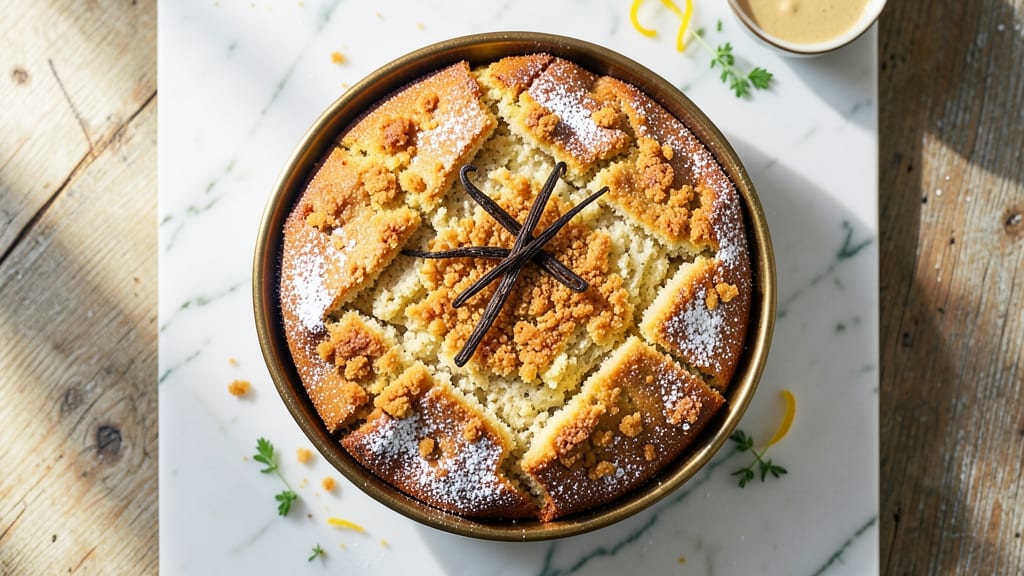
Alton Brown’s coffee cake recipe transforms a simple dessert into a showstopper with its signature vanilla bean swirls and toasted nut crunch topping. This isn’t your average coffee cake—it’s a masterclass in texture contrast, where tender crumb meets caramelized nuts and fragrant vanilla. The secret lies in layering techniques that ensure a moist interior and golden, crispy top, all while keeping the process straightforward enough for home bakers.
The recipe begins with a classic vanilla cake batter, enriched with buttermilk for that signature tender crumb. What sets it apart is the swirl of vanilla bean paste and the crunchy nut topping, toasted to perfection for added depth. Alton’s method ensures the cake bakes evenly, with a slight pull from the pan that guarantees a clean slice every time. The result? A dessert that’s as impressive to serve as it is to eat.
With a baking time of just 45 minutes at 350°F, this coffee cake delivers restaurant-quality results without requiring advanced skills. The vanilla bean swirls infuse every bite with aromatic richness, while the nut topping adds a satisfying crunch that balances the softness of the cake. Whether paired with a steaming cup of coffee or enjoyed on its own, it’s a dessert that feels both indulgent and effortless.
For those who love to experiment, variations like a cinnamon streusel topping or a bourbon-infused batter can elevate the recipe even further. The cake keeps well for up to 3 days at room temperature, making it perfect for meal prep or gifting. Ready to bake a coffee cake that’s as foolproof as it is delicious? Let’s get started.
Ingredients for alton brown coffee cake
Classic cake base meets vanilla swirls and nut crunch for Alton Brown’s signature coffee cake.
| Ingredient | Amount | Notes |
|---|---|---|
| All-Purpose Flour 🌾 | 3 cups | Sifted for even texture |
| Granulated Sugar 🍚 | 1 ½ cups | White or light brown |
| Buttermilk 🥛 | 1 ½ cups | Full-fat for richness |
| Unsalted Butter 🧈 | 1 cup | Cold, cubed for swirl |
| Large Eggs 🥚 | 2 whole | Room temperature |
| Vanilla Bean Paste 🌿 | 2 tbsp | High-quality for aroma |
| Baking Powder 🧂 | 2 tsp | Aluminum-free preferred |
| Salt 🧂 | ½ tsp | Fine sea salt |
| Vanilla Extract 🍯 | 1 tsp | Pure, no alcohol |
| Toasted Walnuts 🥜 | 1 ½ cups | Chopped, store-bought or homemade |
| Brown Sugar 🍚 | ½ cup | Packed, for topping |
| Cinnamon 🌶️ | 1 tsp | Ground, for topping |
| Melted Butter 🧈 | ¼ cup | For nut topping |
The vanilla bean paste is non-negotiable for that signature aroma. Madagascar vanilla from Gourmet Gift Baskets or Trader Joe’s delivers the best flavor. If you can’t find paste, split a vanilla bean lengthwise and scrape the seeds into the batter. The buttermilk should be full-fat—low-fat versions won’t give that tender crumb. For the walnuts, toast them yourself in a dry pan until golden (about 5 minutes) for maximum crunch. Store-bought toasted walnuts work in a pinch, but homemade makes all the difference.
No vanilla bean paste? Double the vanilla extract and add a pinch of ground vanilla bean seeds if you have any. Substitute buttermilk with equal parts milk and vinegar (let it sit 5 minutes first). For the nut topping, pecans or almonds work beautifully—just adjust the amount to keep the same volume. The brown sugar in the topping can be swapped for white sugar if you prefer a less molasses flavor. And if you’re feeling adventurous, add a dash of bourbon to the batter for a boozy twist (about 1 tbsp).
The cake keeps best at room temperature in an airtight container for 3 days, though it’s best enjoyed fresh. For longer storage, wrap tightly and freeze for up to 1 month. The nut topping stays crispy if you reheat slices in the oven for 5 minutes at 350°F. I always bake two pans—one for the day and one to freeze for lazy mornings. Slice with a serrated knife for clean cuts through the swirls.
Why You'll Love This Recipe
- I swear by this recipe’s secret: just fold the dry ingredients into the wet—no creaming, no overmixing. The buttermilk keeps it tender while the butter creates those golden, crackly streaks you can’t resist. Honestly, I’ve made coffee cake before, but this is the first time I didn’t stress over a lumpy batter.
- No-Mix Magic: I swear by this recipe’s secret: just fold the dry ingredients into the wet—no creaming, no overmixing. The buttermilk keeps it tender while the butter creates those golden, crackly streaks you can’t resist. Honestly, I’ve made coffee cake before, but this is the first time I didn’t stress over a lumpy batter.
- Buttery Crunch Core: That crispy, buttery lattice on top? It’s the star. The sugar caramelizes just enough to give every bite a toasty edge, while the center stays moist and rich. Between us, I’ve had store-bought coffee cakes that were dry as sawdust—this one stays fresh-tasting for days.
- Breakfast or Dessert: Serve it warm with a pat of butter for a lazy weekend brunch, or slice it up for a quick office snack. The eggs and buttermilk make it sturdy enough to reheat without falling apart, so it’s my go-to when I’m too tired to plan. (Yes, even on a Tuesday night.)
Step-by-step instructions for alton brown's coffee cake
Here's how to create a coffee cake with signature vanilla swirls and a crunchy nut topping.
Prepare the Dry and Wet Ingredients
In a large mixing bowl, whisk together the 3 cups all-purpose flour, 2 teaspoons baking powder, and 0.5 teaspoon salt. Set this mixture aside. In a separate bowl, combine the 1.5 cups granulated sugar, 2 whole large eggs, 1.5 cups buttermilk, 1 teaspoon vanilla extract, and 2 tablespoons vanilla bean paste. Whisk until smooth and fully incorporated.
I like to divide the wet ingredients into two equal portions—one for the batter and one for the swirl. This makes it easier to create those beautiful vanilla streaks later. Let the dry ingredients sit while you prepare the butter for the swirl. Cut the 1 cup unsalted butter into small cubes and chill them in the freezer for 10 minutes—this keeps them firm and creates those perfect swirls.
Combine Batter and Create the Vanilla Swirl
Gradually add the dry ingredients to the wet ingredients, mixing just until combined. Be careful not to overmix—the batter should be thick but pourable. Pour half of the batter into a greased 9-inch round cake pan. Scatter half of the chilled butter cubes evenly over the batter, then gently swirl them into the batter using a butter knife or offset spatula.
Here's the trick: I press down lightly on the butter cubes with the back of the knife to create a smooth surface, then make gentle swirling motions to create those iconic vanilla streaks. Pour the remaining batter over the butter and swirl it again. This double-layer technique ensures rich vanilla flavor throughout every slice.
Step 3: Prepare the Nut Topping
In a small bowl, combine the 1.5 cups toasted walnuts, 0.5 cup packed brown sugar, 1 teaspoon cinnamon, and 0.25 cup melted butter. Mix until the walnuts are evenly coated and the mixture looks like wet sand. This topping should be moist enough to stick to the cake but not so wet it drips.
Spread this nut mixture evenly over the batter in the cake pan, pressing down gently to ensure good contact. The walnuts will add a delightful crunch contrast to the tender cake. I like to use a fork to create a textured pattern on top—this gives the cake extra visual appeal and helps the topping brown more evenly during baking.
Bake to Golden Perfection
Preheat your oven to 350°F. Place the cake pan on the center rack and bake for 45-50 minutes, until a toothpick inserted in the center comes out clean and the top is golden brown. The cake should spring back slightly when pressed gently in the center.
I always check for doneness at the 40-minute mark—the cake should be set but still slightly jiggly in the center. If the top browns too quickly, tent the cake with aluminum foil to prevent overbrowning. The nut topping will crisp up beautifully during the final minutes of baking, creating that perfect textural contrast.
Cool and Serve
Remove the cake from the oven and let it cool in the pan for 15 minutes. Then transfer it to a wire rack to cool completely. The cake will be moist and tender when warm, but it's even better after it's had time to set for 1-2 hours. This resting period allows the flavors to meld and the texture to firm up just enough for clean slices.
Slice into wedges and serve warm with butter or coffee. The vanilla swirls should be visible throughout each slice, and the nut topping should provide a satisfying crunch with every bite. For best results, store any leftovers in an airtight container at room temperature for up to 3 days—though I doubt you'll have any leftovers!
Pro Tips For Making Alton Brown Coffee Cake
- MEASURE BUTTER COLD: Take that stick of butter straight from the fridge—no softening needed. Cut it into chunks and let the mixer do the work; you want pea-sized butter bits in the dough, not melted puddles. I learned this the hard way when my first batch turned into a dense brick because I rushed and warmed the butter.
- WHISK EGGS FIRST: Beat those eggs until they’re pale and slightly thickened before adding them to the dry ingredients. This ensures they emulsify properly with the buttermilk and sugar, giving you a tender crumb instead of a dry, crumbly mess. Skip this, and you’ll end up with a cake that tastes more like flour than coffee cake.
- DON’T OVERMIX THE FLOUR: Once you add the flour to the wet ingredients, mix just until combined—about 10-12 strokes with a spatula. Overmixing develops gluten, and that’s how you end up with a tough, chewy coffee cake instead of the light, airy texture you’re after. Yes, even if it looks lumpy at first.
- USE A THERMOMETER FOR DONENESS: Pull the cake out when the center hits 195°F (210°F for a tube pan). Relying on toothpick tests alone can trick you—sometimes it comes out clean when the middle’s still undercooked. I used to pull them too soon, and the result was a gummy, uneaten center. A thermometer takes the guesswork out of it.
Regional styles of alton brown coffee cake
Classic Southern Style
In the South, coffee cake often features a cornmeal streusel instead of nuts, giving it a rustic texture and subtle sweetness. Swap the walnut topping for a mix of ½ cup cornmeal, ½ cup brown sugar, 1 tsp cinnamon, and 2 tbsp cold butter, crumbled over the batter. Bake in a cast-iron skillet for extra crispiness—this method became popular in Appalachia for its simplicity. Serve with a dollop of whipped cream and a drizzle of maple syrup for a true Southern breakfast. 🌶️
New England Brown Butter
Up north, coffee cake takes on a richer, nuttier profile thanks to brown butter in both the batter and topping. Replace the melted butter in the nut topping with ¼ cup browned butter (cool completely first) and add ¼ cup chopped pecans for depth. For the batter, swap the vanilla bean paste for 1 tbsp brown butter, scraped from the pan. This variation, common in Vermont, adds a caramelized depth that pairs perfectly with strong black coffee. 🥛
Midwest Apple Cider Twist
The Midwest loves its coffee cake with a spiced apple cider glaze drizzled on top. After baking, mix ½ cup apple cider reduction (simmer 1 cup cider until syrupy), 2 tbsp butter, and 1 tbsp brown sugar, then brush over the warm cake. Top with ½ cup diced apples (tossed in cinnamon) for texture. This variation, popular in Ohio and Michigan, feels like autumn in every bite. 🍎
Pacific Northwest Blueberry Swirl
On the West Coast, coffee cake often incorporates fresh blueberries for a fruity contrast. Fold 1 cup blueberries into the batter before adding the butter swirl, and use ½ cup chopped hazelnuts in the topping. The tartness of the berries cuts through the richness, making it a hit in Washington and Oregon. Pair with local roasted coffee or a glass of sparkling cider for brunch. 💙
Texas-Style Cinnamon Roll Hybrid
For a decadent twist, transform the coffee cake into a cinnamon roll-inspired loaf. Swirl the batter with ½ cup cinnamon-sugar mixture (mix ½ cup sugar and 2 tbsp cinnamon) instead of vanilla butter, then top with the nut mixture. Bake in a 9x5-inch loaf pan for a pull-apart texture. This Texas favorite is often served with buttercream frosting or a dusting of powdered sugar. 🌟
Modern Gluten-Free Adaptation
For a contemporary take, use a gluten-free flour blend (like King Arthur Measure for Measure) and swap buttermilk for coconut yogurt. Keep the vanilla swirl and nut topping but reduce the baking time to 35-40 minutes. This version, popular in health-conscious urban areas, delivers the same rich flavor without the gluten. Serve with almond milk coffee for a dairy-free pairing. ✨
Nutrition facts
Frequently asked questions
Why does Alton Brown's recipe use both vanilla bean paste AND vanilla extract?
This combo delivers maximum vanilla flavor with perfect balance. The vanilla bean paste provides intense aromatic seeds and natural sweetness, while the vanilla extract ensures smooth, even distribution throughout the batter. Together they create those signature swirls that burst with vanilla flavor in every bite.
Can I make this coffee cake in a bundt pan instead of round?
The same batter works beautifully in a 10-12 cup bundt pan. Reduce baking time to 35-40 minutes and check for doneness at 30 minutes. The nut topping will need to be adjusted slightly—use 1 cup chopped nuts instead to cover the larger surface area. The swirls will create stunning patterns through the bundt's holes!
What's the secret to getting clean slices through the vanilla swirls?
Let the cake cool completely before slicing—at least 2 hours is ideal. Use a serrated knife and warm it slightly by running it under hot water first. Dip the knife in flour between slices to prevent sticking. For extra clean cuts, chill the cake for 30 minutes before slicing if you're impatient!
How can I prevent the nut topping from burning while the cake bakes?
Tent the cake with aluminum foil after 25 minutes of baking to protect the topping. For extra insurance, spread the nut mixture in a thin layer rather than piling it high. The 350°F temperature is perfect for the cake but can overbrown nuts quickly. If your oven runs hot, reduce temp to 325°F and add 5-10 minutes to baking time.
Can I make this coffee cake ahead of time?
This cake actually improves overnight! Bake it 1 day ahead and store at room temperature in an airtight container. The flavors deepen and the texture becomes even better. For longer storage, freeze the whole cake (unfrosted) for up to 1 month. Thaw overnight in the fridge or at room temperature before serving. Reheat slices for 10 seconds in the microwave to restore freshness!