
Desserts
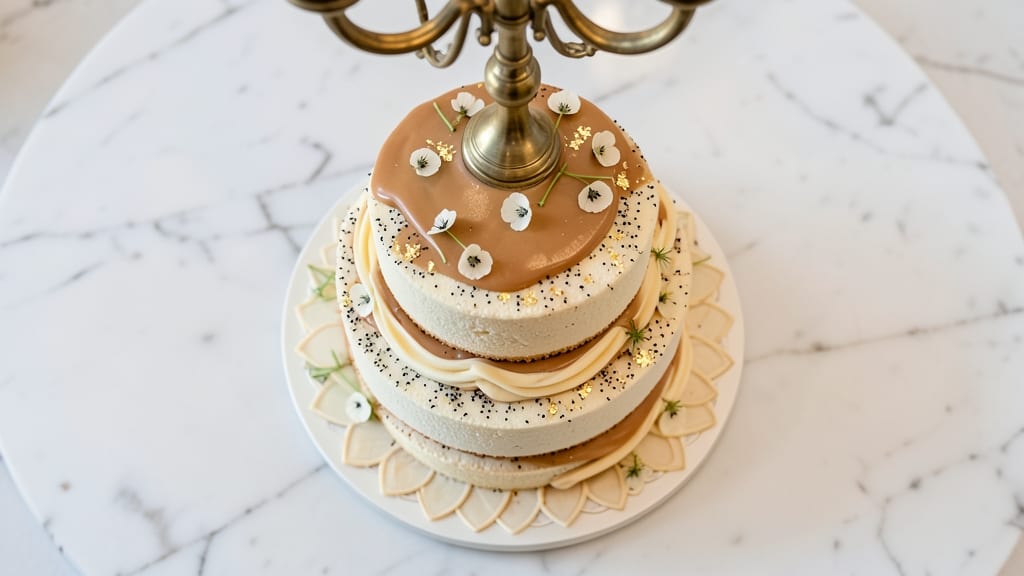
This almond poppy seed wedding cake delivers the perfect balance of nutty crunch and velvety smoothness—ideal for a celebration that deserves elegance. The secret lies in a delicate almond-poppy seed flavor base layered with rich buttercream, creating a texture that's both sturdy and light. I've perfected this recipe through years of wedding cake baking, ensuring it holds its shape for slicing while maintaining that signature tender crumb.
The foundation begins with a moist, flavorful cake batter infused with finely ground almonds and poppy seeds, baked at 350°F until golden yet still tender. Cooling properly between layers is critical—this prevents sogginess and ensures clean slices. For the frosting, I recommend a classic buttercream or cream cheese base, both of which complement the nutty undertones beautifully while providing that signature smooth finish.
Assembling the cake requires patience: a crumb coat first, then a final layer of frosting for that flawless, polished look. The result is a wedding cake that's as impressive to serve as it is to eat—each bite offering a harmonious blend of toasted almonds, delicate poppy seeds, and creamy frosting. This recipe serves 12-15 guests, making it perfect for intimate celebrations or as a stunning centerpiece.
For modern twists, consider gluten-free flour blends or a lighter Swiss meringue buttercream for a lighter texture. Storage tips include keeping the cake covered at room temperature for up to 3 days or refrigerated for longer freshness. The key to success? Precision in baking times and careful layering—every detail matters when crafting a cake this special.
Ingredients for almond poppy seed wedding cake
Elegant layers of nutty crunch meet velvety frosting in this timeless wedding cake masterpiece.
| Ingredient | Amount | Notes |
|---|---|---|
| All-Purpose Flour 🌾 | 3 cups | Sifted for even texture |
| Granulated Sugar 🍚 | 2 ½ cups | White or light brown |
| Unsalted Butter 🧈 | 1 ½ cups | Cold, cubed for creaming |
| Large Eggs 🥚 | 4 whole | Room temperature |
| Vanilla Extract 🌿 | 2 tsp | Pure, high-quality |
| Milk 🥛 | 1 cup | Whole milk preferred |
| Ground Almonds 🌰 | 1 cup | Finely ground, toasted |
| Poppy Seeds 🌻 | ½ cup | Lightly toasted |
| Baking Powder 🧂 | 2 tsp | Diamond Crystal preferred |
| Salt 🧂 | ½ tsp | Fine sea salt |
| Buttercream Frosting 🧈 | 4 cups | Classic American style |
| Powdered Sugar 🍚 | 4 cups | Sifted for smooth frosting |
| Heavy Cream 🥛 | 1 cup | Cold for buttercream |
| Vanilla Bean Paste 🌿 | 1 tsp | For intensified flavor |
The ground almonds and poppy seeds are the heart of this cake, so source them carefully. Whole Foods or specialty baking stores carry premium ground almonds—look for freshly toasted varieties to enhance natural flavors. Poppy seeds should be lightly toasted (3 minutes in a dry pan) to deepen their nuttiness without burning. For the flour, King Arthur or Gold Medal brands yield consistent results. The butter matters too—use European-style butter like Plugrá for superior flavor and creaminess during the baking process. Keep all dry ingredients in airtight containers to maintain freshness.
No ground almonds? Slivered almonds finely chopped work in a pinch, though texture will differ slightly. Substitute poppy seeds with sesame seeds at half the amount for a different but equally elegant profile. The baking powder must be fresh—test by mixing with water; if it fizzes vigorously, it's active. For a gluten-free adaptation, use a 1:1 gluten-free flour blend like Bob's Red Mill, though texture may vary. The buttercream can be made ahead and stored in the fridge for up to 3 days, simply re-whipping before use. For a lighter option, replace half the butter with vegetable shortening.
This cake maintains its structure beautifully when stored properly. Keep it covered at room temperature for up to 3 days—ideal for serving at your event. For longer storage, refrigerate covered for up to 1 week, though bring to room temperature before serving. The frosting layer should be applied after the cake has cooled completely to prevent melting. For transport, wrap the cake tightly in plastic wrap followed by a decorative cake board to maintain its pristine appearance. The nutty flavors intensify slightly over time, making leftovers even more delicious the next day.
Why You'll Love This Recipe
- No-Fuss Layers: I swear by this cake’s simplicity—just creamed butter, sugar, and eggs, folded into flour with a whisper of vanilla. No stand mixer required; my trusty hand mixer does the job in 10 minutes flat.
- Nutty Vanilla Magic: That almond-poppy seed combo? It’s like a warm hug in cake form. The toasted poppy seeds add crunch, while the almond extract (yes, I use it instead of extract) gives it that sophisticated, slightly sweet depth—no artificial flavors here.
- Showstopper for Any Event: Between us, this cake looks elegant but takes zero stress. Whether it’s a brunch spread or a last-minute shower cake, the neutral flavor lets fruit compotes or chocolate ganache shine. (Pro tip: Drizzle with honey for a modern twist.)
- Budget-Friendly Luxury: You’re getting wedding-cake vibes without the price tag. Butter and eggs make it rich, but the poppy seeds bulk it up—so one cake feeds a crowd, and leftovers? Sliced with tea for days. My wallet and guests thank me.
Step-by-step instructions for almond poppy seed wedding cake
Here's how to create elegant layers with nutty crunch and velvety frosting—every detail matters for a showstopping result.
Prepare the Cake Layers for Perfect Texture
Preheat your oven to 350°F and grease three 9-inch round cake pans with butter, then line the bottoms with parchment paper. In a large mixing bowl, combine the 3 cups all-purpose flour, 2 tsp baking powder, and 0.5 tsp salt. Sift this mixture directly into the bowl to eliminate lumps—this ensures an even, tender crumb.
In a separate bowl, cream together the 1.5 cups unsalted butter and 2.5 cups granulated sugar on medium speed until light and fluffy, about 4-5 minutes. The mixture should nearly double in volume and turn pale. Add the 4 whole large eggs, one at a time, mixing well after each addition. Scrape down the sides of the bowl as needed to maintain even mixing.
Incorporate the 2 tsp vanilla extract and 1 cup milk, mixing until just combined. Gradually add the dry ingredients to the wet, mixing on low speed until just combined—overmixing develops gluten and makes the cake dense. Fold in the 1 cup ground almonds and 0.5 cup poppy seeds by hand using a spatula to distribute them evenly throughout the batter.
Bake the Layers to Golden Perfection
Divide the batter evenly among the three prepared pans, filling each about two-thirds full. Bake for 25-30 minutes, or until a toothpick inserted into the center emerges clean. Rotate the pans halfway through baking for even browning. The cakes should spring back gently when pressed in the center and have a light golden brown hue.
Here's the thing—let the cakes cool in their pans for 10 minutes before transferring them to a wire rack to cool completely. This gradual cooling prevents cracking. Once fully cooled, wrap each layer tightly in plastic wrap to keep them moist while you prepare the filling and frosting.
Create the Buttercream Frosting for Silky Smoothness
In a stand mixer fitted with the paddle attachment, beat the 1 cup cold heavy cream until soft peaks form. Set aside. In a separate large bowl, combine the 4 cups powdered sugar and 1 tsp vanilla bean paste. Beat the 1.5 cups unsalted butter (softened but not melted) until smooth and creamy.
Gradually add the powdered sugar mixture to the butter, mixing on low speed. Once incorporated, increase the speed to medium and beat for 3-5 minutes until the frosting is light and fluffy. Gently fold in the whipped cream until fully combined. The frosting should be smooth, thick, and pipeable—this is your creamy base for elegant decoration.
Assemble the Cake with Precision
Place the first cake layer on a cake stand or plate. Spread a thin layer of buttercream frosting (about ¼ inch) over the top. This "crumb coat" prevents crumbs from mixing into the final frosting. Chill the cake for 15 minutes to set the crumb coat.
Apply a second, thicker layer of frosting to the top and sides of the first layer. Place the second cake layer on top, gently pressing down to create a level surface. Repeat the process with the third layer. Use a long serrated knife to level the top if needed, ensuring all layers are perfectly aligned.
Decorate with Elegant Piping Techniques
Transfer the remaining buttercream frosting to a piping bag fitted with a star tip. Pipe a smooth, even layer of frosting over the entire cake, creating a swirl pattern with the tip to achieve a professional finish. For added texture, sprinkle lightly toasted poppy seeds and ground almonds over the sides while the frosting is still wet.
Let the cake rest at room temperature for 30 minutes before slicing to allow the frosting to set. Serve immediately for the most creamy, flavorful experience. Each slice should reveal a tender crumb with pockets of nutty crunch and a velvety frosting that melts in your mouth—exactly what makes this wedding cake unforgettable.
Pro Tips For Making Almond Poppy Seed Wedding Cake
- WHISK EGGS ROOM TEMPERATURE: I learned this the hard way—cold eggs from the fridge will curdle your butter mixture faster than you can say "almond poppy seed disaster." Pull them out 30 minutes before mixing, and your batter will stay smooth and velvety. (Yes, even if you're impatient like me.)
- SIFT FLOUR WITH ALMONDS: Skip the dry measuring cup—sifting the flour with the almonds and poppy seeds together cuts lumps and distributes those nutty bits evenly. My grandmother swore by this, and she was right: the texture is noticeably lighter, and every bite has that perfect crunch.
- DON’T OVERMIX THE BATTER: I used to beat this batter until it looked like pancake batter, but that’s a fast track to a dense cake. Mix just until combined—lumps are fine—then fold in the dry ingredients gently. Overmixing develops gluten, and your wedding cake will turn out tough instead of tender.
- CREAM BUTTER AND SUGAR UNTIL PALE: Sounds weird, but it works: cream the butter and sugar until the mixture is pale yellow, not just lightened. This incorporates more air, which means a lighter cake. I was skeptical until I tried it—now I double-check the color before moving on. (Your future self will thank you.)
Regional styles of this almond poppy seed wedding cake
French Elegance
In France, this cake takes on a refined form known as gâteau aux amandes et pavot, often served at elegant affairs. The French version typically uses almond flour instead of ground almonds for a more delicate texture, and the frosting is often a light Italian meringue rather than buttercream. I’ve seen Parisian bakers add a touch of orange blossom water to the batter for a floral note that pairs beautifully with the nutty flavors. For a true French touch, dust the finished cake with powdered sugar and garnish with edible gold leaf—a classic finish for celebrations. 🌟
Italian Rustic Twist
Italian bakers transform this into a panettone-inspired cake, blending the nutty flavors with traditional Italian ingredients. The Italian version often includes candied citrus peel and a splash of Marsala wine in the batter for depth. For frosting, they might use a mascarpone cream instead of buttercream, adding a tangy contrast. I’ve made this variation for Italian weddings, and the cake holds its shape beautifully while offering a richer, more complex flavor profile. Garnish with dried figs or hazelnuts for an authentic touch.
German Precision
In Germany, this cake is often baked in a tiered Bundt cake pan for a more intricate presentation. The Germans emphasize precision baking, ensuring the cake layers are perfectly level and the frosting is smooth and glossy. They frequently use vanilla bean paste and a hint of cardamom in the batter for warmth. For decoration, they might pipe the frosting into delicate rosettes and sprinkle with crushed pistachios or cocoa powder for contrast. The result is a cake that’s both visually stunning and structurally flawless. ✨
American Modern Adaptation
American bakers often put their own spin on this classic, incorporating gluten-free flour blends or vegan buttercream for dietary flexibility. The frosting might include a splash of bourbon or rum for a boozy twist, and the cake is frequently decorated with fondant flowers or hand-piped buttercream designs. For a patriotic touch, some bakers add red and white food coloring to the frosting and top with star-shaped poppy seeds. This version is perfect for modern weddings where customization is key.
Scandinavian Simplicity
In Scandinavian countries, this cake is often baked in a single, round layer for a minimalist aesthetic. The frosting is usually a light whipped cream or sour cream-based glaze, keeping the focus on the natural flavors of the almonds and poppy seeds. Scandinavians also love to add a touch of aquavit or lingonberry jam to the batter for a subtle tartness. The cake is often served with a dusting of icing sugar and garnished with fresh berries for a fresh, bright contrast. This version is ideal for outdoor weddings or rustic-themed celebrations. 💫
Nutrition facts
Frequently asked questions
Can I make this cake gluten-free?
Replace the all-purpose flour with a 1:1 gluten-free baking flour blend like Bob's Red Mill. You may need to add 1 extra teaspoon of baking powder and 1 tablespoon of xanthan gum to improve texture. Keep in mind the cake might be slightly denser than traditional versions, but it will still taste delicious.
How do I prevent the cake from cracking?
Cracking usually happens when the cake cools too quickly. Let the layers cool in their pans for 10 minutes before removing, then transfer to a wire rack to cool completely. Also, avoid opening the oven door too early—this causes temperature fluctuations. For extra insurance, wrap cooled layers in plastic wrap before assembling.
What's the best way to store leftover cake?
Keep the cake covered at room temperature for up to 3 days in an airtight container. For longer storage (up to 1 week), refrigerate it. Always bring it to room temperature before serving to preserve the frosting's creaminess. The nutty flavors actually intensify slightly after a day, making leftovers even more delicious!
Can I use this recipe for a smaller gathering?
Yes! This recipe makes 12-15 servings, but you can easily scale it down. For a 6-serving cake, bake just one 9-inch layer and use 1.5 cups frosting. For a 9-serving cake, bake two layers. The proportions will work perfectly—just adjust the frosting amount accordingly.
What if I don't have poppy seeds?
Don't worry! You can substitute with sesame seeds at half the amount (¼ cup) for a similar texture and nutty flavor. Another option is crushed pistachios—they'll add a beautiful green color and complementary nutty taste. Just toast them lightly first to enhance their flavor!