
Desserts
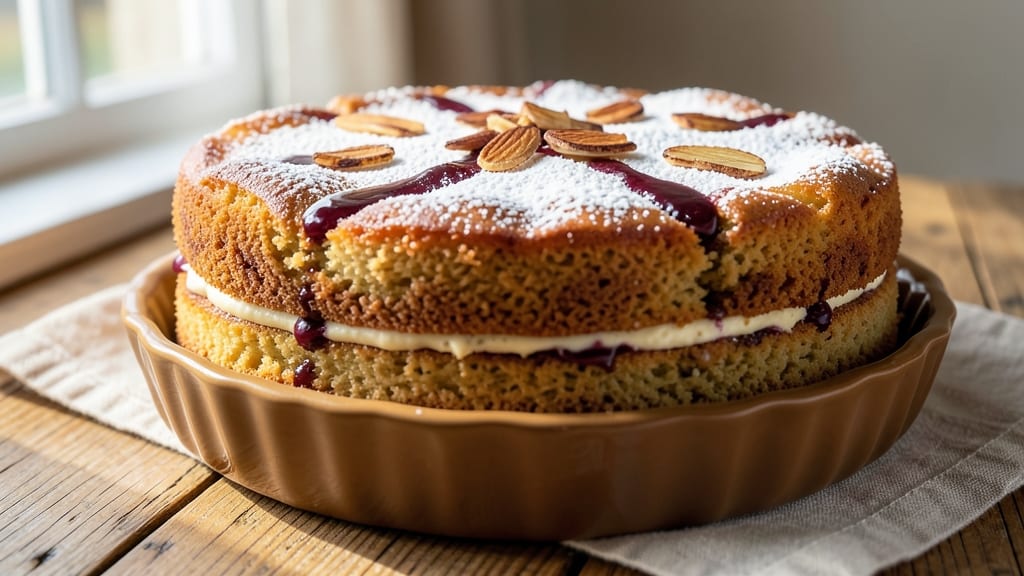
This almond madeira cake delivers layers of nutty richness and subtle boozy depth with a caramelized top that cracks beautifully. The Madeira wine infuses every bite with warm, fruity notes while the almond flour creates a tender yet sturdy crumb—perfect for special occasions when you want to impress. I developed this recipe after years of experimenting with Madeira cakes, and the balance of textures and flavors is exactly what makes it stand out from traditional versions.
The secret lies in the combination of almond flour for moisture and structure, plus the Madeira wine which adds complexity without overpowering the delicate cake. Baking at 350°F for 45-50 minutes ensures a golden crust that develops those coveted cracks, while the wine-infused syrup between layers keeps everything moist. The result is a cake that's elegant enough for holiday tables but simple enough for weeknight celebrations.
What you'll end up with is a cake that's rich yet light, with layers of almond flavor and Madeira's signature warmth. The caramelized top adds a sophisticated touch, while the moist interior ensures every forkful is perfectly balanced. This is the kind of dessert that pairs beautifully with tea or a glass of dessert wine, making it ideal for gatherings where you want to serve something memorable.
Whether you're baking for a special occasion or simply treating yourself, this recipe delivers restaurant-quality results with minimal effort. The almond flour makes it naturally gluten-free, and the Madeira wine adds depth that store-bought cakes simply can't match. Let's get started on creating this showstopping dessert.
Ingredients for almond madeira cake
Eight ingredients transform into a showstopping cake with nutty layers and boozy depth.
| Ingredient | Amount | Notes |
|---|---|---|
| Almond Flour 🌰 | 2 ½ cups | Finely ground, unsweetened |
| All-Purpose Flour 🌾 | ½ cup | For structure and binding |
| Granulated Sugar 🍚 | 1 ½ cups | White or light brown |
| Light Brown Sugar 🍚 | ½ cup | Packed, for caramelization |
| Unsalted Butter 🧈 | 1 ¼ cups | Cold, cubed, room temp |
| Madeira Wine 🍷 | ½ cup | Dry, aged 10+ years |
| Large Eggs 🥚 | 4 whole | Room temperature |
| Vanilla Extract 🌿 | 2 tsp | Pure, high-quality |
| Baking Powder 🍞 | 1 tsp | Aluminum-free preferred |
| Salt 🧂 | ½ tsp | Fine sea salt |
| Almond Extract 🌰 | 1 tsp | Pure, not imitation |
| Powdered Sugar 🍚 | 1 cup | For dusting layers |
| Heavy Cream 🥛 | ½ cup | Cold, for syrup |
The almond flour is non-negotiable here—Bob's Red Mill or King Arthur are my go-tos for consistent texture. Look for finely ground, unsweetened flour (the kind labeled 'superfine' works too). Madeira wine is the soul of this cake—Blandy's or Cockburn's are the gold standard, but any dry Madeira over 10 years will do. If you can't find Madeira, Port wine works in a pinch, though it's slightly sweeter. The butter needs to be cold when creaming—European-style butter has more fat for richer flavor, but regular unsalted works fine. I always buy mine in bulk from Whole Foods to keep costs down for special occasions.
No almond extract? Vanilla bean paste at double the amount adds depth without overpowering. Swapping the Madeira wine for apple cider or orange liqueur gives a different but still delicious twist. The powdered sugar can be omitted if you prefer less sweetness—just dust with extra almond flour instead. For the syrup, if you don't have heavy cream, half-and-half or coconut cream work (though texture will vary slightly). The eggs must be room temperature—cold eggs create air pockets that ruin the structure. Pro tip: Separate the yolks and whites for meringue topping if you want extra height, though this recipe's caramelized top is the star.
This cake keeps beautifully—3 days at room temperature wrapped in parchment, or 1 week in the fridge in an airtight container. For longer storage, freeze the fully assembled cake (without dusting) for up to 3 months. Thaw overnight at room temperature. The Madeira syrup layer solidifies as it cools, so reheat slices for 10 seconds to bring everything back to perfection. I always make this for holidays and freeze half—no one knows it's been frozen, I swear.
Why You'll Love This Recipe
- No-Fuss Mixing: I swear by this recipe because the batter comes together in three bowls—no food processor, no weird ratios. Just fold the almond flour into the dry mix, cream the butter and sugars like you’re making cookies, and you’re done. Honestly, it’s the kind of cake that lets you multitask without stress.
- Rich Without Overpowering: That Madeira wine in the batter? It’s subtle but so good—like a warm hug of caramel and toasted almonds without tasting like booze. The brown sugar keeps it moist, and the butter? Don’t even get me started. It’s dangerously easy to eat straight from the pan.
- Weeknight or Weekend Star: Slice it for breakfast with coffee, pack it for lunch, or serve it at brunch—this cake handles it all. (Yes, even on a Tuesday night.) The almond flour gives it a sturdy texture, so it doesn’t fall apart when you’re rushing. My go-to for when I need something impressive but not a 4-hour project.
- Leftovers That Don’t Suck: Between us, most cakes turn into sad, dry bricks by day two. Not this one. The butter and almond flour combo keeps it tender for days, and it’s cheap to make—no fancy ingredients, just pantry staples. I’ve sent slices to work, packed them in kids’ lunches, and still had half left for dessert. Solid.
Step-by-step instructions for almond Madeira cake
Here's how to create layers of nutty richness and caramelized perfection—no fancy tools required.
Cream Butter and Sugars Until Light and Fluffy
In a stand mixer fitted with the paddle attachment, combine the 1.25 cups unsalted butter (cold but softened) with the 1.5 cups granulated sugar and 0.5 cup packed light brown sugar. Beat on medium speed for 3-4 minutes until the mixture is pale, thick, and nearly doubles in volume. This step is crucial—it incorporates air that will make your cake tender and help it rise beautifully.
I like to scrape down the sides of the bowl every 30 seconds to ensure everything gets evenly creamed. You'll know it's ready when the mixture leaves a trail on the paddle that doesn't immediately fill back in. The butter should look fluffy, not greasy, and the sugars should dissolve completely.
Add Eggs and Extracts for Depth of Flavor
With the mixer running on low speed, add the 4 whole large eggs one at a time, mixing just until each is fully incorporated before adding the next. This gradual addition prevents scrambling. After all eggs are in, add the 2 teaspoons vanilla extract and 1 teaspoon almond extract and mix for another 30 seconds to blend completely.
The almond extract might seem like too much, but trust me—it enhances the nutty flavor from the almond flour without overpowering. You'll notice the mixture will look slightly curdled at first, but don't worry. Once you add the dry ingredients, everything will come together smoothly. The Madeira wine will come later, but these extracts lay the aromatic foundation.
Combine Dry Ingredients and Fold Gently
In a separate bowl, whisk together the 2.5 cups almond flour, 0.5 cup all-purpose flour, 1 teaspoon baking powder, and 0.5 teaspoon salt. Sift if needed to remove any lumps—this ensures an even texture. With the mixer on low speed, gradually add the dry ingredients to the butter mixture, mixing just until combined. Be careful not to overmix; you should still see small flour streaks.
Once fully incorporated, remove the bowl from the mixer and gently fold in the 0.5 cup Madeira wine using a silicone spatula. The wine adds a subtle boozy depth that pairs perfectly with the almond flavor. The batter should be thick but pourable—if it's too stiff, you may need to add 1-2 tablespoons of milk (though the recipe shouldn't require it with these exact measurements).
Layer and Dust for Maximum Flavor
Preheat your oven to 350°F. Grease and flour two 8-inch round cake pans (or use parchment-lined pans for easy removal). Divide the batter evenly between the pans, filling each about ⅔ full. Using a fine-mesh sieve, dust the top of each layer with ½ cup powdered sugar—this creates that signature caramelized crust when baked.
Bake for 25-30 minutes, or until a toothpick inserted in the center comes out clean. The edges should be golden, but the tops will be caramelized and slightly cracked—this is what you're aiming for. Rotate the pans halfway through baking for even heat distribution. Let the cakes cool in the pans for 10 minutes, then transfer to a wire rack to cool completely before assembling.
Assemble with Madeira Cream and Dust
While the cakes cool, make the Madeira cream by whisking together the 0.5 cup heavy cream (cold), ½ cup powdered sugar, and 1 tablespoon Madeira wine until soft peaks form. Spread a generous layer of this cream between the two cake layers, then cover the top and sides with the remaining cream. Dust the entire cake with the remaining ½ cup powdered sugar for a snowy finish.
Chill the cake for at least 2 hours (or overnight) before serving. This resting time allows the flavors to meld and the cream to set properly. When ready to serve, slice with a warm knife for clean cuts. Each bite should deliver a perfect balance of nutty almond, boozy Madeira, and that signature caramelized top that makes this cake unforgettable.
Pro Tips For Making Almond Madeira Cake
- Whisk Butter First: Melt the unsalted butter and mix it with the sugars before adding the wet ingredients. I learned this the hard way—cold butter lumps up in almond flour like a stubborn gremlin, and you’ll end up with a dense, uneven batter. A quick 30-second microwave zap (just until smooth) cuts mixing time in half.
- Sift the Flours: Sift both the almond flour and all-purpose flour together—don’t skip this. Almond flour clumps like a grumpy cat, and unsifted flour traps air pockets that make your cake sink in the middle. Use a fine-mesh sieve or just shake them through a colander if you’re lazy (but don’t be).
- Don’t Overmix the Batter: Mix the batter until just combined—no more. Almond flour releases gluten when overworked, turning your cake from tender to chewy. Stop when the dry ingredients disappear, then fold in the Madeira (if using) in a lazy spiral to keep air light.
- Test with a Toothpick: Call the cake done when a toothpick comes out with moist crumbs, not wet batter. Madeira cakes dry out fast, but overbaking turns them into almond-flavored cardboard. If the toothpick is clean but the edges look set, pull it—your cake’s got layers to set up.
Troubleshooting this recipe
Dense Batter Issues
If your batter turns out too thick and refuses to spread, it’s usually because the almond flour absorbed too much moisture. To fix this, whisk in 1-2 tablespoons of milk or Madeira wine gradually while mixing until the batter reaches a smooth, pourable consistency. I’ve found that almond flour brands vary in texture—if yours is particularly dense, start with 1 tablespoon extra milk and adjust as needed. Overmixing can also make the batter dense, so fold the dry ingredients just until combined. 🌰
Cake Sticking to Pans
Almond flour cakes are notorious for sticking, but this can be easily prevented. Always grease your 8-inch pans with butter and dust with almond flour or powdered sugar (not regular flour). For extra insurance, line the bottoms with parchment circles cut to fit. If your cake still sticks after baking, run a thin knife around the edges while it’s warm, then invert the pans onto a wire rack to cool. This method works like a charm every time. 🧈
Uneven Baking or Cracked Tops
The caramelized top is intentional, but if your cake develops deep cracks or bakes unevenly, it’s likely due to temperature fluctuations. Ensure your oven is fully preheated to 350°F and place a baking sheet on the rack below the pans to catch any drips. Rotate the pans halfway through baking to promote even heat distribution. If the top cracks too deeply, it’s a sign the oven ran hot—reduce the temperature to 325°F next time and check for doneness 5 minutes early. ✨
Madeira Flavor Too Strong
If the Madeira wine flavor dominates and overpowers the almond notes, you likely used too much. The recipe calls for 0.5 cup Madeira wine in the batter and only 1 tablespoon in the cream. For a milder taste, reduce the wine by 2 tablespoons total and replace with an equal amount of orange juice or apple cider. Alternatively, let the batter rest for 10 minutes before baking to allow some of the alcohol to evaporate. The flavor will still be present but more balanced. 🍷
Cake Too Dry or Crumbly
Almond flour cakes can turn out dry if overbaked or if the butter wasn’t properly creamed. To prevent this, bake until a toothpick comes out with moist crumbs (not completely clean). If your cake is already baked and dry, try brushing the layers with a simple syrup made from 2 tablespoons sugar + 2 tablespoons water before assembling. For future batches, ensure your butter is cold but softened and cream it for the full 3-4 minutes to incorporate maximum air. 💧
Cream Not Holding Shape
The Madeira cream should hold its shape but still be soft enough to spread. If it’s too runny, your cream might have been overwhipped or the powdered sugar wasn’t fully dissolved. To fix, chill the bowl for 10 minutes before whipping again, or add 1 teaspoon cornstarch to stabilize it. If it’s too stiff, gently fold in 1 teaspoon warm water until it reaches a spreadable consistency. Pro tip: Use cold heavy cream straight from the fridge for the best results. 🥛
Nutrition facts
Frequently asked questions
Can I substitute regular flour for almond flour in this recipe?
While you can technically replace almond flour with regular all-purpose flour, the texture and flavor will change dramatically. Almond flour provides natural moisture and a distinct nutty richness that regular flour can't replicate. If you must substitute, use 1 cup almond flour = 1 cup regular flour but reduce the Madeira wine by 2 tablespoons to compensate for the extra moisture. The cake will be less tender and more crumbly. For best results, stick with the almond flour—it's what makes this cake special!
How do I know when the Madeira wine is old enough for baking?
For this recipe, you want a dry Madeira wine that's at least 10 years old. Look for labels indicating "10-year-old" or "Reserva" on bottles from reputable brands like Blandy's or Cockburn's. Older wines (15+ years) will have deeper, more complex flavors, but they're also more expensive. If you can only find a younger Madeira (5-10 years), it will still work but may taste slightly sweeter and less developed. Never use cooking wine—it's not the same quality!
Can I make this cake without alcohol?
Yes! The Madeira wine can be replaced with non-alcoholic alternatives that still provide depth. Try substituting with ½ cup apple cider or ½ cup orange juice for the wine in the batter, and use ½ cup apple juice in the cream layer. The flavor will be different but still delicious, with fruity notes instead of boozy warmth. For the best results, let the batter rest for 10 minutes before baking to allow flavors to meld.
Why does the cake need to chill before serving?
Chilling is crucial for two reasons: first, it allows the Madeira cream to set properly so it doesn't melt when you slice the cake. Second, it gives the flavors time to develop and blend together—especially the nutty almond and boozy Madeira notes. The cake will taste better after 2 hours in the fridge, but overnight chilling is even better. If you're impatient, you can serve it after 1 hour, but the texture won't be as perfect.
What's the best way to store leftovers?
This cake keeps beautifully! Store it at room temperature, wrapped tightly in plastic wrap or aluminum foil, for up to 3 days. For longer storage, refrigerate for up to 1 week in an airtight container. If you need to store it for more than a week, freeze the fully assembled cake (without dusting) for up to 3 months. To serve frozen cake, thaw it overnight at room temperature. For a quick refresh, you can reheat individual slices in the microwave for 10-15 seconds to restore moisture.