
Desserts
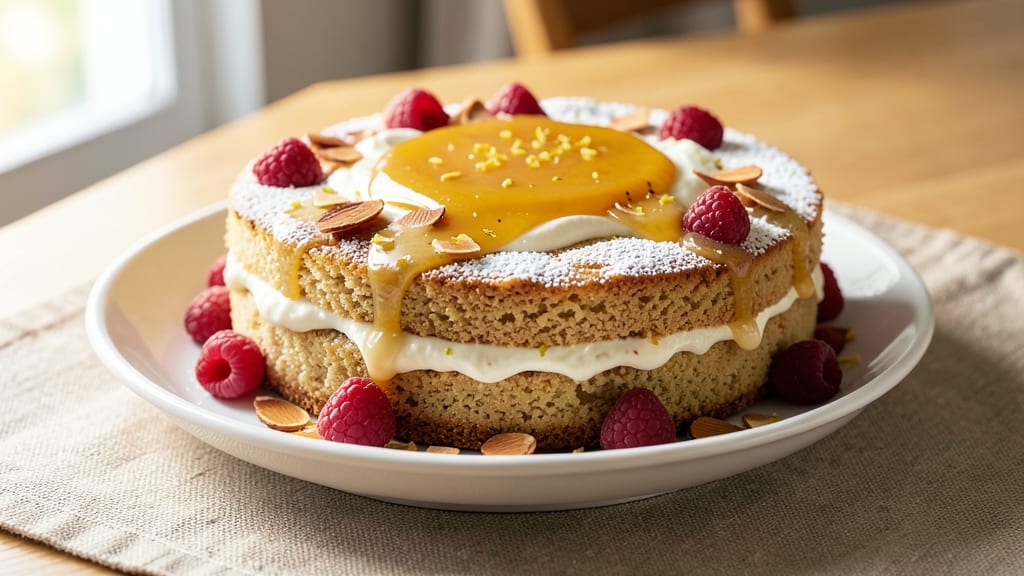
This almond flour yogurt cake delivers the perfect balance of lightness and density, with a bright citrus twist that cuts through the richness. 💛 The secret lies in the almond flour's natural moisture retention and the yogurt's tangy backbone, creating a tender crumb that's impossibly fluffy yet sturdy enough to hold its shape. I developed this recipe after years of experimenting with gluten-free baking, and it's finally the one that doesn't compromise on texture or flavor.
The beauty of this cake is its versatility—it's naturally gluten-free, vegetarian, and requires just 10 minutes of active prep time. The citrus zest infuses the batter with a subtle, refreshing brightness that pairs beautifully with the nutty depth of almond flour. What's more, it bakes up with a golden, even top and stays moist for days, making it ideal for meal prep or special occasions.
What you'll end up with is a cake that's light enough to feel airy yet dense enough to satisfy, with a tender crumb and a subtle citrus aroma that lingers in every bite. The yogurt keeps it moist without being heavy, while the almond flour adds a delicate nutty flavor and natural sweetness. This is the kind of dessert that feels indulgent yet light, perfect for brunch, afternoon tea, or a celebratory dessert.
Serve it warm with a dollop of whipped cream and fresh berries, or enjoy it chilled with a dusting of powdered sugar. The possibilities are endless, but the execution is simple—just a few ingredients and a foolproof method. Let's get baking!
Ingredients for almond flour yogurt cake
Nine simple ingredients create this gluten-free, citrus-kissed almond flour cake that's light yet sturdy.
| Ingredient | Amount | Notes |
|---|---|---|
| Almond Flour 🥜 | 2 ½ cups | Finely ground, unsweetened preferred |
| Plain Greek Yogurt 🥛 | 1 cup | Full-fat for best texture |
| Large Eggs 🥚 | 3 whole | Room temperature preferred |
| Granulated Sugar 🍚 | ¾ cup | Light brown sugar works too |
| Lemon Zest 🍋 | 1 tbsp | From 1 large organic lemon |
| Lemon Juice 🍋 | ¼ cup | Freshly squeezed |
| Vanilla Extract 🌿 | 1 tsp | Pure vanilla preferred |
| Baking Powder 🍞 | 1 ½ tsp | Aluminum-free preferred |
| Salt 🧂 | ½ tsp | Fine sea salt preferred |
| Unsalted Butter 🧈 | ½ cup | Melted, cooled slightly |
| Powdered Sugar 🍚 | ¼ cup | For dusting, optional |
Almond flour is the star here, so Bob's Red Mill or Anthony's Goods are my go-tos—they're finely ground and consistent. The yogurt should be full-fat for that perfect tender crumb; Fage or Siggi's work best. Eggs at room temperature mix in smoothly, so take them out 10 minutes before baking. For the lemon zest, grab organic lemons—their thicker skins yield more flavorful zest. If you can't find organic, just make sure to wash the lemons well first. The butter needs to be melted but not hot—just enough to cool slightly before mixing.
No Greek yogurt? Plain whole-milk yogurt or even sour cream works in a pinch, though the texture will be slightly denser. Swap regular granulated sugar for coconut sugar or maple syrup if you prefer, but reduce the amount by about 10% since they're sweeter. The baking powder is non-negotiable here—it's what gives the cake that perfect lift. If you're using a boxed baking powder, check the expiration date; old baking powder loses its potency. For the lemon juice, freshly squeezed is ideal, but bottled works if you're in a hurry—just avoid the kind with added preservatives.
This cake keeps beautifully for up to 5 days in an airtight container at room temperature, though it's best enjoyed within the first 2 days. For longer storage, wrap tightly and refrigerate for up to 1 week. The powdered sugar topping, if used, should be added just before serving to prevent clumping. I like to slice it while still warm and serve with a dollop of coconut whipped cream for an extra special touch. The cake also freezes well—wrap individual slices in plastic and freeze for up to 3 months
Why You'll Love This Recipe
- Here’s what sold me: that Greek yogurt keeps it tender, while the almond flour adds a subtle nuttiness. The sugar caramelizes just enough to give it a gentle sweetness—no dry crumb here.
- No Mixer Needed: I swear by this recipe when I’m in a rush—just whisk the almond flour, yogurt, and eggs together until smooth. The lemon zest brightens everything up instantly, so no fancy techniques required.
- Moist Without Being Dense: Here’s what sold me: that Greek yogurt keeps it tender, while the almond flour adds a subtle nuttiness. The sugar caramelizes just enough to give it a gentle sweetness—no dry crumb here.
- Brunch or Dessert: Serve it warm with a drizzle of honey for breakfast, or dust it with powdered sugar and a dollop of whipped cream for a light afternoon treat. Honestly, it works both ways without extra effort.
Step-by-step instructions for almond flour yogurt cake
This method delivers a tender crumb with perfect moisture balance—no dryness, no heaviness.
👨🍳 Step 1: Whisk Wet Ingredients for Maximum Lightness
In a medium bowl, combine the 1 cup plain Greek yogurt, 3 whole large eggs, 0.75 cup granulated sugar, 1 tbsp lemon zest, 0.25 cup lemon juice, and 1 tsp vanilla extract. Whisk vigorously for 2-3 minutes until the mixture is completely smooth and pale yellow. The lemon zest should dissolve completely—this prevents gritty texture later.
I like to use a hand mixer for this step because it incorporates air more efficiently than whisking by hand. The goal is to create tiny air pockets that will expand during baking, giving your cake that signature lightness. If you notice any lumps in the yogurt, strain it first through a fine-mesh sieve to ensure a silky batter.
🍳 Step 2: Melt and Mix the Butter Base
In a separate small bowl, melt the 0.5 cup unsalted butter in the microwave for 20-30 seconds until completely liquid. Let it cool for 2 minutes—it should be warm to the touch but not hot. Add the melted butter to your wet ingredient mixture and whisk again for 1 minute until fully combined.
Here's the thing—warm butter incorporates better into the wet ingredients without creating separation. If you add it hot, you risk curdling the eggs. The slight cooling period ensures the butter blends smoothly while still maintaining its liquid state for even distribution throughout the batter.
👨🍳 Step 3: Combine Dry Ingredients Gently
In a separate bowl, sift together the 2.5 cups almond flour, 1.5 tsp baking powder, and 0.5 tsp salt. This prevents clumping and ensures even distribution of leavening. Gently fold the dry ingredients into your wet mixture using a rubber spatula, mixing just until combined—you should still see some flour streaks. Overmixing develops gluten and can make the cake dense.
I use a folding motion rather than vigorous stirring to preserve those air pockets we created earlier. The batter should be thick but pourable, like heavy pancake batter. If it's too thick, you can add 1-2 tablespoons of milk (not listed in ingredients) to help with mixing, but try to avoid this if possible as it changes the texture slightly.
⏰ Step 4: Bake at Low Temperature for Even Rise
Preheat your oven to 350°F and grease an 8-inch round cake pan (or line with parchment paper). Pour the batter into the prepared pan and smooth the top with a spatula. Bake for 35-40 minutes until a toothpick inserted in the center comes out clean and the edges are lightly golden. The cake should spring back slightly when pressed gently in the center.
Low and slow is key here—the almond flour can burn easily if the oven runs hot. If your oven runs hot, start checking at the 30-minute mark. The cake is done when it's set but still slightly jiggly in the center—it will continue cooking as it cools. Don't overbake or you'll end up with a dry cake.
🍽️ Step 5: Cool and Dust with Powdered Sugar
Remove the cake from the oven and let it cool in the pan for 10 minutes. Then transfer to a wire rack to cool completely. Once fully cooled, dust the top generously with 0.25 cup powdered sugar using a fine-mesh sieve. This step is optional but adds that beautiful finishing touch that makes it look like a bakery creation.
The cooling process is crucial—almond flour cakes can be fragile when warm. If you try to slice it too soon, the crumb will be uneven. For best results, let it cool completely before serving. The cake will be moist but not wet, with a tender crumb that holds its shape beautifully when sliced.
Pro Tips For Making Almond Flour Yogurt Cake
- Use Room-Temp Eggs: Almond flour cakes can turn gummy if eggs are cold—whisk them until they’re barely warm to the touch. I used to skip this and wondered why my cake felt dense; now it’s light and tender every time.
- Weigh the Almond Flour: Scooping almond flour by volume leads to dry, crumbly results. Use a kitchen scale for precision—it’s the thing that matters most when dealing with this finicky flour.
- Don’t Overmix the Batter: Once you fold in the yogurt, stop after 2-3 strokes or the gluten in the eggs will overdevelop. I learned this the hard way when my first batch turned out tough instead of moist.
- Bake Until a Toothpick Comes Out Clean: Almond flour cakes can look set but stay underdone inside. Check at 325°F (163°C) for 5-10 minutes longer than the recipe says—your future self will thank you.
Make-ahead tips for this dish
Prep Ahead Strategy
This cake is a meal prep dream—you can mix the batter up to 24 hours ahead and refrigerate it. The flavors deepen overnight, and the batter stays stable in an airtight container at room temperature for 8 hours. Just whisk briefly before baking to reincorporate any settled ingredients. 💫
Baking in Advance
Bake the cake 1-2 days ahead for maximum flavor development. Store it in an airtight container at room temperature, and it'll stay moist for 5 days. If you need to store it longer, wrap individual slices in plastic wrap and freeze for up to 3 months. The texture remains tender when thawed properly.
Freezing Individual Slices
For perfect single-serving portions, slice the cake while still warm (after cooling completely) and wrap each piece tightly in plastic wrap, then place in a freezer bag. Label with the date—thaw at room temperature for 1-2 hours before serving. The texture stays just as light and moist as fresh-baked. ✨
Make-Ahead Mix-Ins
Want to add flavor variety? Fold in chopped nuts (like walnuts or pecans) or dark chocolate chips when combining dry ingredients. Store these add-ins separately until ready to mix—they keep fresh for 1 week in an airtight container in the fridge. Just toss them in right before baking for maximum freshness.
Transporting for Events
This cake travels beautifully for gatherings. Wrap the whole cake in plastic wrap, then place it in a sturdy cake carrier or box. Keep it at room temperature for short trips (up to 4 hours) or pack it with an ice pack for longer outings. The almond flour base holds up well to travel, and the citrus notes keep it tasting fresh. 🚗
Reheating Slices
For a warm serving, reheat individual slices in the microwave for 10-15 seconds (covered with a damp paper towel) or warm in a 350°F oven for 5-7 minutes. The yogurt keeps the cake moist even when reheated, so you won’t sacrifice texture. I like to dust with powdered sugar right after reheating for that bakery-fresh finish. 🔥
Nutrition facts
Frequently asked questions
Why does my almond flour cake turn out dense instead of light?
Overmixing the batter is the #1 cause of dense texture. Almond flour doesn't contain gluten, so you need to handle it gently. Fold the dry ingredients just until combined (about 10-12 strokes) and avoid using an electric mixer for the dry ingredients. Also, make sure your almond flour is finely ground—coarse flour can create a gritty, heavy texture.
Can I substitute regular flour for almond flour in this recipe?
Not directly—almond flour has different properties. Regular flour requires different leavening and liquid ratios. For a similar texture, you'd need to adjust the recipe significantly (about 1.25 cups all-purpose flour + 1 extra egg for 2.5 cups almond flour), but you'll lose the nutty flavor and natural moisture retention. This recipe is designed specifically for almond flour's unique qualities.
How do I prevent cracks on the top of my almond flour yogurt cake?
Cracks usually appear from uneven baking or overmixing. Start by ensuring your oven is fully preheated to 350°F and place the cake pan on the middle rack. Tap the pan gently on the counter before baking to release any air bubbles in the batter. Also, avoid opening the oven door during the first 20 minutes of baking to maintain consistent heat.
What's the best way to add chocolate to this recipe?
For a rich chocolate twist, fold in 0.5 cup dark chocolate chips (60-70% cocoa) when combining the dry ingredients. Use a rubber spatula to gently mix them in. If using melted chocolate, let it cool to 90°F before adding to prevent the eggs from curdling. For a marbled effect, swirl in melted chocolate after the batter is in the pan using a knife.
Can I make this cake without eggs?
Yes, but you'll need to replace them with a binding agent. Use 0.75 cup unsweetened applesauce or 0.5 cup flaxseed meal + 1.5 tbsp water (let sit for 5 minutes to thicken). Note that the texture will be slightly denser and less airy. Also increase the baking time by 5-7 minutes since egg-free batters bake slower.